Survey covers 18 banks, 13 brokerages
BOK examines financial institutions' virtual asset market entry
Digital asset, stock market correlation grows
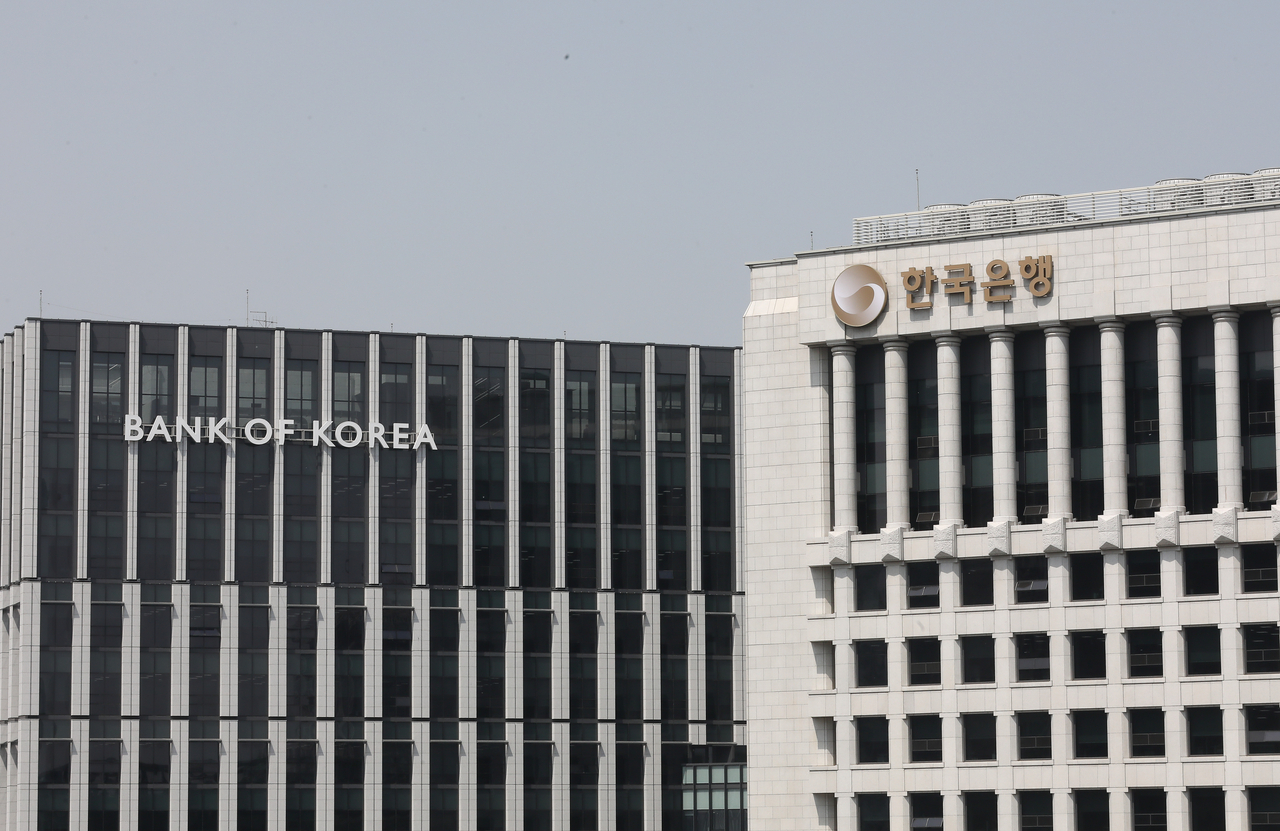
As major financial institutions begin moving into the virtual asset business one by one, the Bank of Korea has launched a preliminary review of their activities in the sector — including potential risks such as the fallout from hacking incidents or a sharp contraction in trading.
According to financial industry sources Monday, the BOK has been conducting a "Survey on Financial Institutions' Entry into the Virtual Asset Market" since Oct. 23, covering 18 banks — including the five major lenders KB Kookmin, Shinhan, Hana, Woori and NH NongHyup Bank — and 13 brokerages. It is the first time the BOK has carried out such a survey.
The questionnaire covers detailed items including each institution's virtual asset-related organizational structure and budget, current market entry status and future plans, risk assessments tied to virtual asset business, and risk management measures in place.
The survey aims to compile internal reference data on how financial firms are positioning themselves in the virtual asset market, amid broader efforts to bring virtual assets into the mainstream regulatory framework.
"Financial institutions are making their own preparations even as virtual asset legislation is moving more slowly than the market expected," a BOK official said. "The purpose is to take stock of the current situation and get an early read on what lies ahead."
More specifically, the survey asks about each institution's progress in pursuing virtual asset business, the key drivers behind their push into the market, and the amounts invested in domestic and overseas virtual asset-related companies.
The survey also reportedly asked how financial firms would be affected if the country's top virtual asset exchange by market share were to suspend operations due to a large-scale hacking incident or similar event. Tensions in South Korea's virtual asset industry have been rising after Binance, the world's largest virtual asset exchange, suffered a hack worth $6.3 billion.
The survey further asked about the risks of a sharp drop in virtual asset prices such as bitcoin leading to a prolonged trading slump, or of another financial firm suffering heavy losses from a virtual asset-related incident.
In its Financial Stability Report released in June, the BOK analyzed that linkages between the digital asset market and traditional financial markets have been strengthening. Correlation between the digital asset market and the stock market rose during periods of heightened volatility — including the spread of COVID-19 in 2020 and the global interest rate hikes of 2022 — and has remained higher than historical levels since the United States introduced spot ETFs in 2024, the BOK assessed.
In a report on "Key Issues and Responses Regarding Won-Denominated Stablecoins" released in November last year, the BOK also warned that "the issuance and operational structure of stablecoins, and the resulting changes in the financial environment, could give rise to various side effects and risks — including greater short-term interest rate volatility, collateral shortfalls, and the transmission of risk between virtual asset and traditional financial markets through coin runs."
"Existing financial institutions file business reports and share information with the Financial Supervisory Service, but coverage of virtual asset-related activities is still lacking," another BOK official said. "We are trying to gather and review basic data from individual banks and brokerages."
kimstar@heraldcorp.com