Prices up 0.2% excluding farm and fishery products
Petroleum products rise 1.9%, chemicals 1.5%
Oil prices down 15% so far in November; city gas rates up
South Korea's producer prices fell in October for the first time in three months, as a bumper apple harvest and fading Chuseok demand pushed agricultural and livestock prices sharply lower. Manufactured goods, however, continued to rise on the back of higher global oil prices.
According to the Bank of Korea's preliminary producer price index data for October 2026, released Friday, the index fell 0.1 percent from the previous month — reversing a rising trend for the first time since July, when it dropped 0.4 percent. Year on year, producer prices rose 7.2 percent, narrowing for a second consecutive month after a 7.6 percent gain in September.
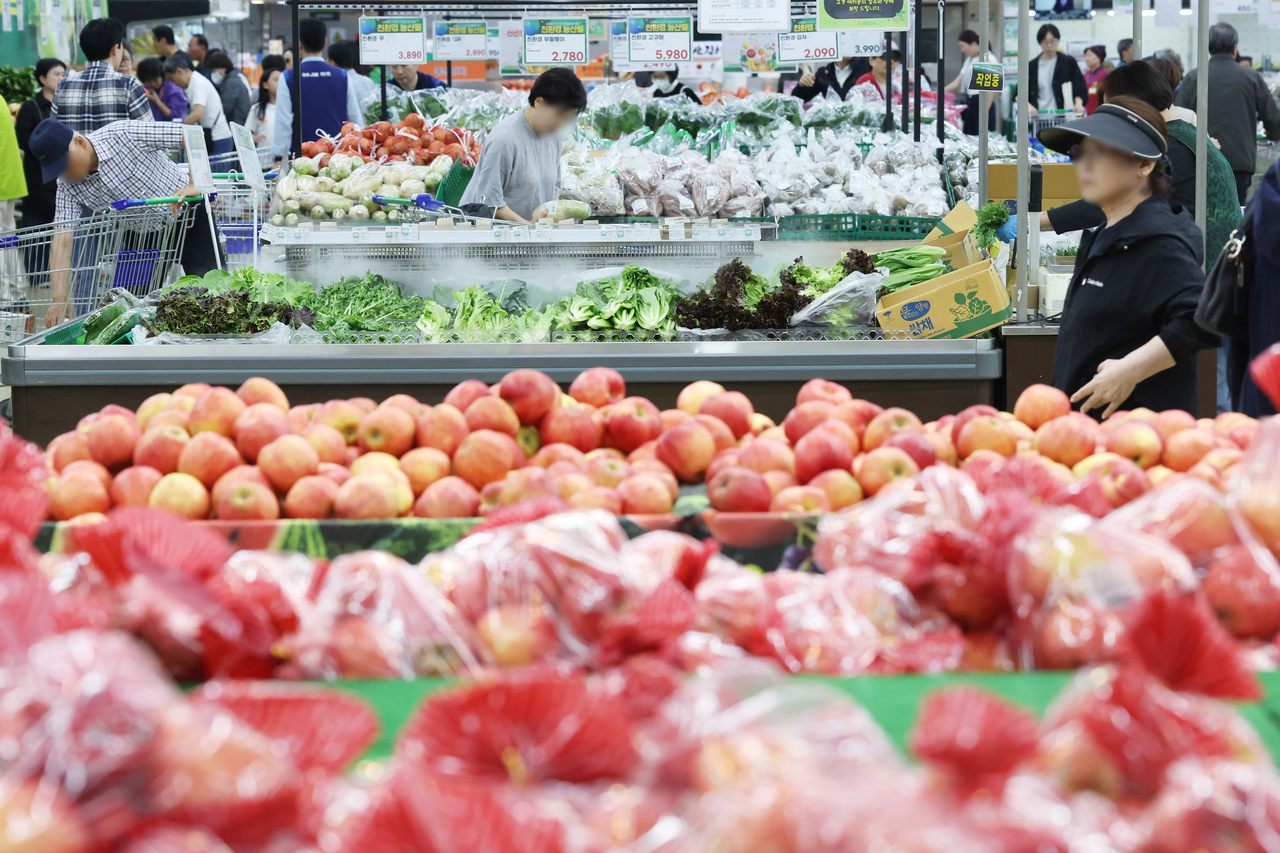
By category, farm, forestry and fishery products fell 8.3 percent from the previous month, dragged down by a 29.2 percent drop in apple prices and an 11.8 percent decline in agricultural products overall, as well as a 12.8 percent fall in pork prices and a 7.3 percent decline in livestock products. Favorable weather conditions boosted the apple harvest, while pork demand eased after the Chuseok holiday in September.
Manufactured goods rose 0.3 percent from the previous month. Primary metal products slipped 0.8 percent, with silver bullion down 12.3 percent and gold bullion down 6.4 percent. Those declines were more than offset by gains in coal and petroleum products, up 1.9 percent — with naphtha rising 7.8 percent and jet fuel 10.6 percent — and chemical products, up 1.5 percent, led by sulfuric acid at 14.5 percent and container boxes at 5.9 percent. Computers, electronics and optical equipment also edged up 0.2 percent, with DRAM chips rising 5.7 percent and mobile phones 5.2 percent.
Electricity, gas, water and waste services rose 0.2 percent from the previous month, as industrial city gas prices climbed 3.3 percent on higher oil prices.
Services were flat overall. Hotels rose 9 percent, helping lift food and accommodation services by 0.7 percent, while charter buses gained 6.2 percent and international air passenger fares rose 2.7 percent, pushing transport services up 0.6 percent. Those gains were offset by a 3.9 percent drop in financial and insurance services, as brokerage commissions fell 10 percent amid declining share prices.
Lee Heung-hu, head of the Bank of Korea's price statistics team, said producer prices would have risen 0.2 percent in October had farm, forestry and fishery prices remained unchanged. "The increase was driven mainly by manufactured goods prices," he said. "Raw material cost increases fed through with a lag, pushing up coal and petroleum products and chemicals in particular."
On the outlook for this month, Lee said international oil prices had fallen about 15 percent below the October average as of Wednesday, which would weigh on producer prices. He noted, however, that upside risks remain: wholesale industrial city gas rates are rising in November, aviation fuel surcharges have been increased, and the trajectory of farm and fishery prices — which fell in October — will need to be monitored.
The domestic supply price index, which combines producer and import prices to measure changes in the cost of goods and services, rose 0.7 percent from the previous month. Final goods fell 0.2 percent, led by consumer goods down 1.0 percent and capital goods down 0.3 percent. Raw materials, however, surged 7.3 percent, driven by a 10.8 percent jump in imports, and intermediate goods edged up 0.1 percent. Year on year, the domestic supply price index rose 8.2 percent.
The total output price index, which covers both domestic shipments and exports, rose 0.3 percent from the previous month. Manufactured goods gained 0.7 percent, led by a 1.2 percent rise in exports of computers, electronics and optical equipment. Services were flat. Year on year, the total output price index rose 13.6 percent.
kimstar@heraldcorp.com