OCI's semiconductor materials sales up 36.8% year-on-year in Q3
Company establishes new semiconductor materials division
Lotte Fine Chemical's TMAC sales climb on strong demand
13 billion won investment to expand TMAC capacity
LG Chem and others also developing specialty materials
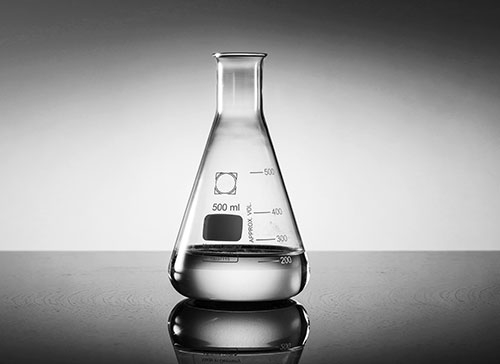
OCI and Lotte Fine Chemical are reaping the benefits of a booming semiconductor industry, with their materials businesses posting strong gains as demand from chipmakers surges to record levels.
OCI's semiconductor materials sales reached 93 billion won ($69.5 million) in the third quarter of this year, up 36.8 percent from 68 billion won in the same period last year, according to industry data released Tuesday. Semiconductor materials now account for about 16 percent of OCI's total sales.
OCI mass-produces a range of semiconductor materials, including phosphoric acid, hydrogen peroxide and polysilicon for semiconductor use. Phosphoric acid — the company's flagship product — is a colorless, transparent liquid used in semiconductor manufacturing processes that require fine etching. Hydrogen peroxide is used for etching and cleaning during chip production, while polysilicon serves as a raw material for semiconductor-grade ingots.
At Lotte Fine Chemical, TMAC — the raw material for semiconductor developer TMAH — has been a standout performer. Sales in the chlorine-series other segment, which includes TMAC, reached 57 billion won in the third quarter, up 10.5 percent from 51.6 billion won in the same period last year.
"TMAC accounts for the largest share of sales in the other segment," a Lotte Fine Chemical official said. "The sales volume is smaller than other businesses, but the profitability is high." Lotte Fine Chemical has an annual TMAC production capacity of 55,000 tons, the largest in the world.
The surge in semiconductor demand driven by AI infrastructure investment is seen as the key factor behind both companies' earnings growth. OCI's phosphoric acid and Lotte Fine Chemical's TMAC are supplied to Samsung Electronics and SK hynix.
With analysts expecting semiconductor demand to remain robust, OCI and Lotte Fine Chemical plan to strengthen their materials competitiveness and sustain the upward trend. OCI recently established a semiconductor materials division under its business operations unit to reinforce its position in the sector. The company is also raising the operating rate of its hydrogen peroxide production lines and working to diversify its polysilicon customer base. During its third-quarter earnings conference call, OCI said it plans to expand its semiconductor business next year to increase the segment's share of total sales.
Lotte Fine Chemical is investing 13 billion won to expand its TMAC capacity. Once the expansion is complete, its annual TMAC production capacity is expected to grow from the current 55,000 tons to 64,000 tons.
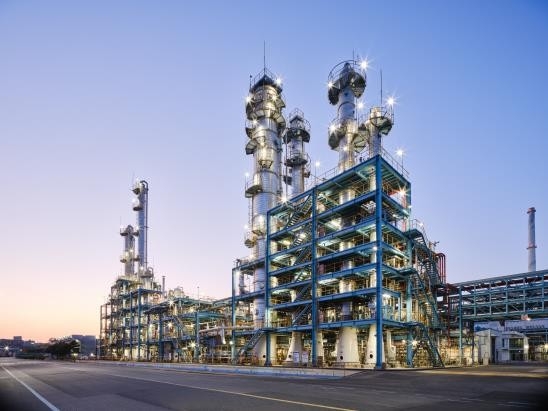
Other petrochemical companies are also stepping up their push into semiconductor materials, pursuing a strategy of leading with high-value specialty products — including semiconductor materials — to counter the risk of oversupply from China.
LG Chem is investing more than 10 trillion won in research and development to build up its materials businesses in semiconductors, mobility and robotics. In semiconductor materials, the company is expanding development of high-value products such as packaging adhesives, thermal management materials and glass substrates.
Last month, LG Chem signed an MOU with Chinese fine chemical materials company Zhanghua Wei to cooperate on ultra-high-purity (HP) IPA for semiconductor use. HP IPA is an essential cleaning material used across the entire semiconductor manufacturing process; LG Chem produces C3-IPA, the feedstock for HP IPA.
Handuk Chemical, an affiliate within Lotte's chemicals group, is investing 130 billion won ($96.9 million) to build a TMAH factory for semiconductors and displays. The move strengthens Lotte's chemicals group portfolio to cover both TMAC and TMAH materials.

yeongdai@heraldcorp.com