Most finance committee members back postponement, plan to recommend to party leadership
Gaps in overseas transaction data, digital asset law cited as reasons for delay

The Democratic Party of Korea has moved toward delaying a virtual asset tax — set to take effect in January — by an additional two years, concluding that the relevant regime should be overhauled before taxation begins, taking into account policy developments such as international tax information exchange and the enactment of a basic digital asset law.
Oh Ki-hyung, the Democratic Party lawmaker who leads the party's side on the National Assembly's Finance and Economy Committee, spoke to reporters Tuesday after a ruling party-government meeting at the National Assembly. "Many people have continued to raise the basic tax principle that income should be taxed where it is earned," Oh said. "But there was a majority view that, given various external policy conditions, implementation would have to proceed after an additional period of preparation." Oh added that the committee members had agreed to recommend as much to the party leadership.
Democratic Party members of the finance committee gathered opinions through a meeting with party leadership, the policy committee and the government on Wednesday, followed by a separate session last week with virtual asset exchanges and industry representatives. Building on that groundwork, a majority at Tuesday's ruling party-government meeting — attended by some committee members — coalesced around postponing the tax.
A two-year delay is the leading option under discussion. On timing, Oh said, "Most people seem to be talking about around two years," adding, "For now we only discussed the postponement itself, and we plan to examine the idea with roughly that timeframe in mind."
A key reason for the delay is that conditions for using transaction data from overseas exchanges in domestic tax enforcement are not yet sufficiently in place. Regarding international tax information exchange frameworks such as the Crypto-Asset Reporting Framework, Oh said the full rollout "is expected around 2029, and that was one consideration," explaining that "using this data for taxation is what makes it effective."
The possibility that market and transaction structures could change following the enactment of a basic digital asset law was also factored in. The Democratic Party believes the relevant legislation could be institutionalized as early as the first half of next year.
"It seems people are saying there is a possibility of institutionalization as early as the first half of next year," Oh said. "There have been ongoing views about changes in market and transaction frameworks, new business ratio structures and the like, so if a basic digital asset law is introduced, changes to the tax framework will also need to be considered." Oh went on to say, "With that in mind, wouldn't it be better to get things in order first and then move to taxation?"
Using actual transaction data for tax purposes and ensuring system stability are also on the review agenda. The National Tax Service's systems are broadly in order, Oh said, but issues raised by exchanges need to be examined before implementation.
The Democratic Party is expected to discuss amendments to the income tax law and related measures at the finance committee's tax subcommittee, while further deliberations at the party leadership and policy committee level will determine whether to postpone and, if so, when to implement the tax.
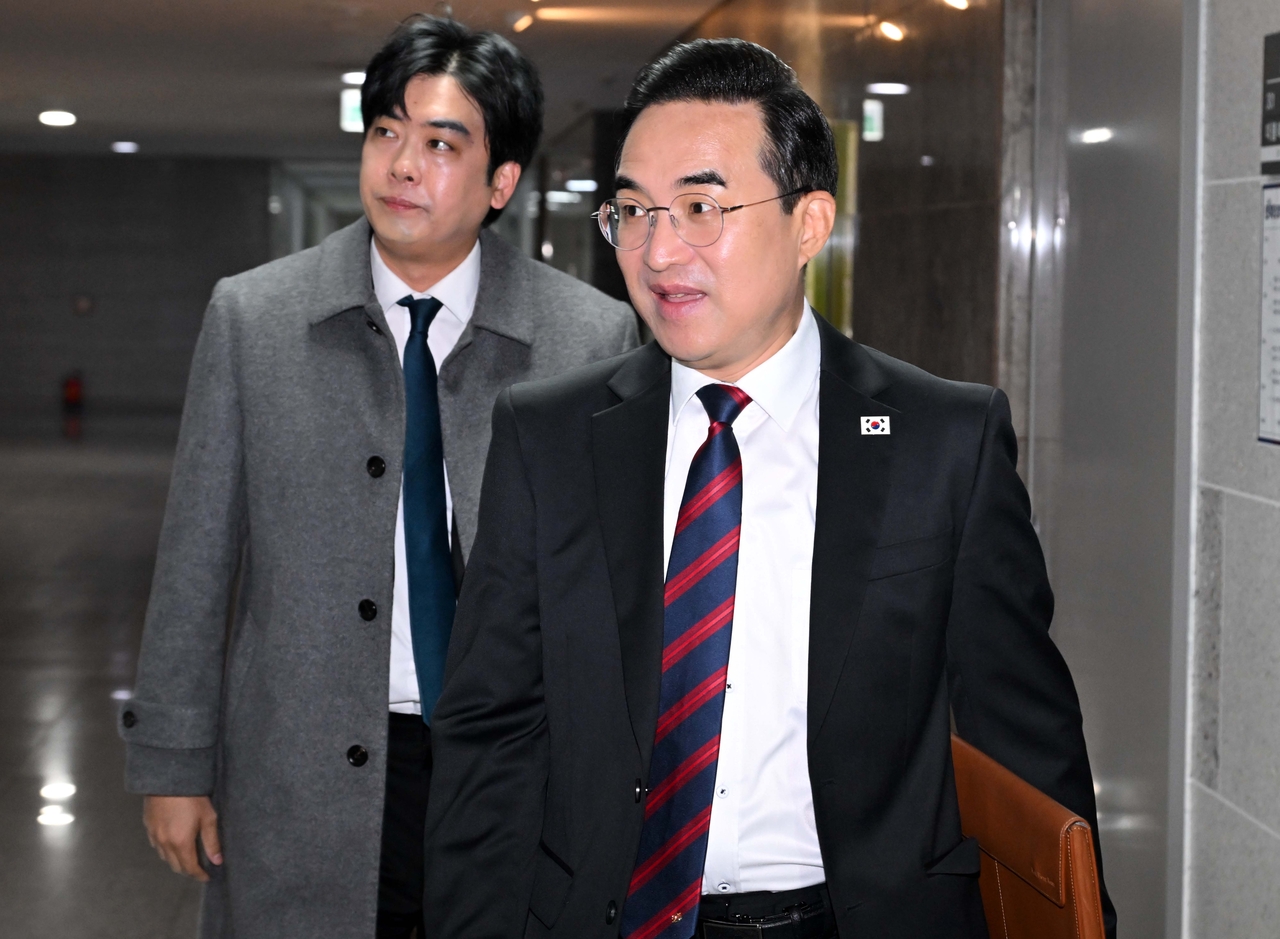
Meanwhile, Democratic Party members of the finance committee held a ruling party-government meeting Tuesday with Ministry of Planning and Budget Minister Park Hong-keun, Vice Minister Jo Yong-beom and other government officials, discussing major issues related to next year's budget proposal, including a future response fund worth 162 trillion won ($121 billion).
thanks@heraldcorp.com