Race to transfer ownership before management and disposal plan approval
10 of 14 September deals used seller financing
'Capital gains tax savings and relocation loans both at play'
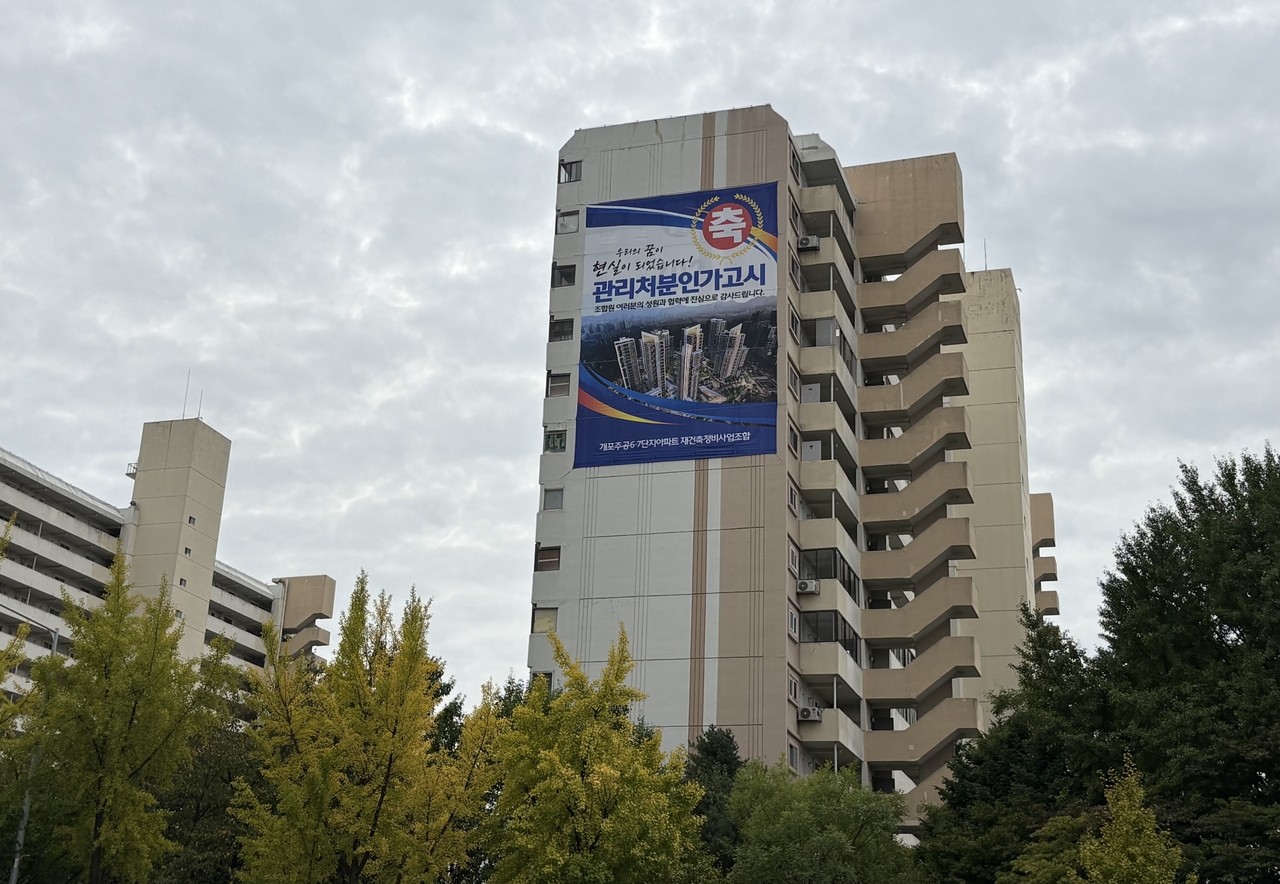
A wave of seller-financing deals — in which sellers lend buyers the funds needed to complete a purchase — has emerged at Gaepo Jugong complexes 6 and 7 in Gangnam-gu, Seoul, ahead of the projects' management and disposal plan approval. Sellers have rushed to transfer ownership by setting up collateral mortgages of as much as 2.4 billion won ($1.79 million), signaling the spread of a new transaction method on the eve of a critical regulatory milestone in the reconstruction process.
An analysis of the Ministry of Land, Infrastructure and Transport's actual transaction price disclosure system and Supreme Court registry records found that 10 of the 14 sale contracts — 71.4 percent — concluded at the two complexes from September through early October used seller financing.
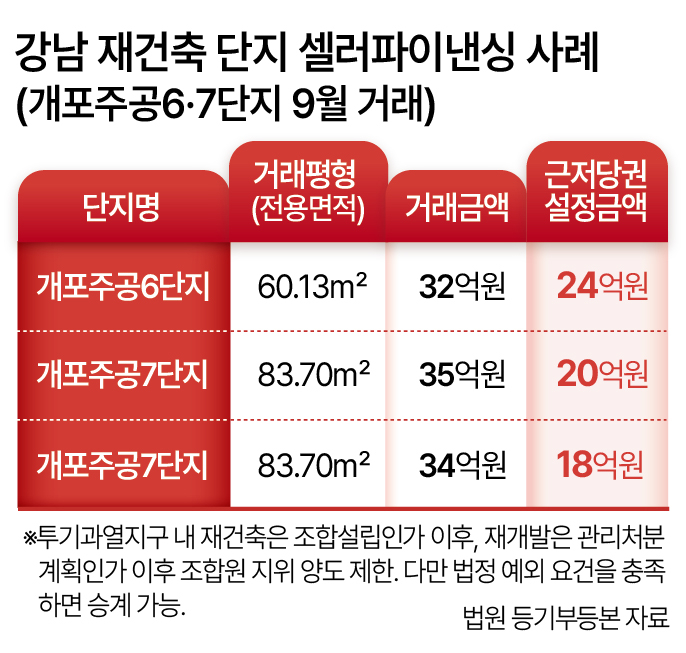
In those deals, the maximum secured debt amount, with the seller listed as the mortgagee, ranged from 425 million won to 2.4 billion won. Eight of the 10 transactions involved mortgages of 1 billion won or more.
The largest single deal involved a 60.13-square-meter unit in Building 601 of Complex 6, where a 2.4 billion won mortgage was registered alongside the ownership transfer. At Complex 7, an 83.70-square-meter unit in Building 704 carried a combined mortgage ceiling of 2 billion won, while an identical-sized unit in Building 701 had one set at 1.8 billion won. In every case, the seller was recorded as the mortgagee, and ownership transfer registration was completed within 10 days of the sale contract.
Seller financing is an arrangement in which a seller defers receipt of part of the purchase price — or lends the buyer the shortfall directly — and secures the outstanding amount by placing a mortgage on the property. The buyer can complete the ownership transfer without a bank loan, while the seller holds collateral against the unpaid balance.
At reconstruction sites in particular, the combination of restrictions on transferring union membership status and tight permit timelines can create strong incentives for sellers to use seller financing to accelerate ownership transfers.
Under the current Act on the Improvement of Urban Areas and Residential Environments, transfers of union membership status are in principle prohibited at reconstruction projects in speculation-overheated zones after union establishment approval, and at redevelopment projects after management and disposal plan approval. An exception applies when a single-household homeowner has held the property for at least 10 years and resided there for at least five, allowing the membership status to be passed on.
Tax considerations add another layer of motivation. Gaepo Jugong complexes 6 and 7 received union establishment approval in January 2021, meaning restrictions on transferring union membership status were already in effect. The management and disposal plan was approved Oct. 8, with the relevant notice published Oct. 15.
Against that backdrop, analysts believe the urgency to transfer ownership — even at the cost of lending money to buyers — was driven in part by single-household owners who had held the property for 10 years and resided there for five, seeking to reduce their capital gains tax burden.
Under current income tax law, the long-term holding special deduction for reconstruction union members applies only to capital gains on the original land and building accrued before management and disposal plan approval. The deduction does not apply to the membership right premium that arises after approval.
The head of a licensed real estate agency in Gaepo-dong explained: "After the management and disposal plan approval, the long-term holding special deduction applies only to capital gains generated before the approval, calculated on the basis of the assessed value of the original property transferred to the union. Because the deduction does not apply to the membership right premium above that assessed value, the capital gains tax burden can differ substantially depending on whether a sale takes place before or after the approval."
The agent added that at complexes like Gaepo Jugong 6 and 7, which have entered the management and disposal stage, buyers are also taking over and using the previous owner's relocation loans to repay the funds borrowed from the seller within the loan term. "That is why seller financing is even more active at complexes where the reconstruction project is well advanced," the agent said.
Experts said seller financing can serve as a temporary funding bridge at reconstruction complexes. Ham Young-jin, head of the real estate research lab at Woori Bank, described the arrangement as "a kind of bridge loan that fills a funding gap, with the interests of both parties aligning." Ham added that the practice is likely to spread further, particularly at high-priced Gangnam reconstruction complexes approaching management and disposal plan approval after receiving project implementation authorization.
quq@heraldcorp.com