100-meter grid analysis identifies 130 security-vulnerable zones, five patrol routes built across district
Joint patrols with police and volunteer crime-prevention teams held six times, showcasing data-driven public safety
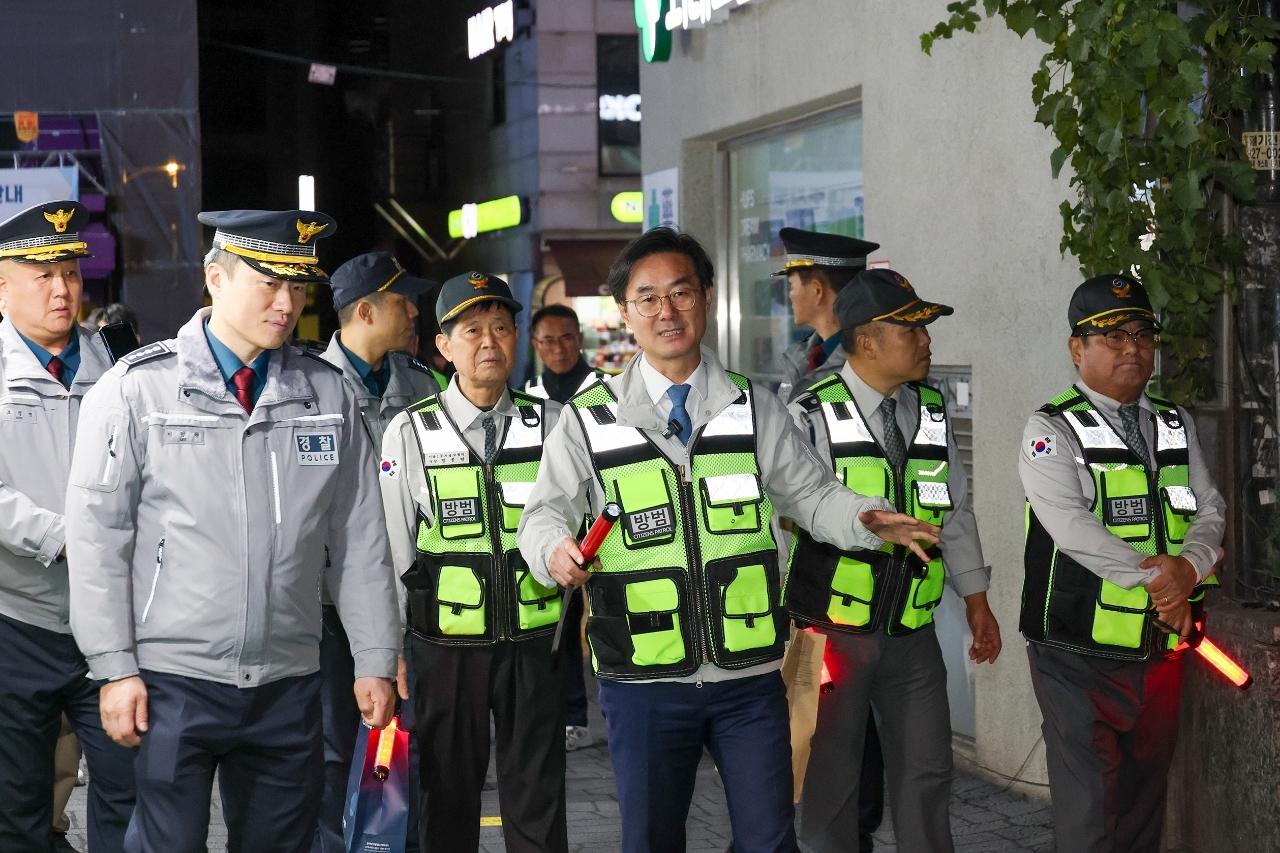
Seoul's Dongdaemun-gu has been recognized for using big data analysis to identify nighttime pedestrian safety risks and build a tailored patrol system across the district.
Dongdaemun-gu announced Tuesday that it received an encouragement award at the "2026 Regional Statistics and Data Best Practices Competition," hosted by the Gyeonggi-Incheon Regional Data Office under the Ministry of Statistics, for its case study titled "Finding Neighborhood Safety Through Big Data: Analysis of Volunteer Crime-Prevention Patrol Routes."
The competition was designed to identify outstanding examples of data-driven policymaking and improved public services using regional statistics over the past three years. A total of 12 institutions submitted 13 cases, evaluated on effectiveness, scalability, data reliability and originality. Two institutions received excellence awards and four received encouragement awards.
Dongdaemun-gu focused on replacing patrol planning that had relied on experience and geographic intuition with a data-based approach. The district divided its entire area into 100-meter grid squares, calculated a composite public safety index for each, and identified 130 vulnerable grid zones falling in the bottom 20 percent.
Using geographic information system spatial network analysis, the district then designed patrol routes connecting those vulnerable areas. Five zone-specific patrol routes were established, reflecting the pedestrian environment and characteristics of each area — including corridors linking transit-oriented areas and residential streets used by commuters heading home, back alleys within residential neighborhoods, and school commuting paths.
Translating the analysis into on-the-ground action was also noted as a strength. Working with the Dongdaemun Police Station and local volunteer crime-prevention teams, the district conducted six joint civilian-government-police patrols centered on the designated routes.
The project is significant for pinpointing alley-level safety vulnerabilities that neighborhood-unit statistics cannot capture, and for providing a data-backed basis to concentrate limited patrol personnel in higher-risk areas. It stands as an example of extending data analysis beyond administrative records into frontline public safety work directly affecting residents' daily lives.
"The importance of scientific and objective policymaking grounded in data is only growing," Dongdaemun-gu District Mayor Choi Dong-min said. "We will continue to pursue rational policymaking and decision-making through tailored big data analysis that reflects local characteristics, and work toward building a smart, safe city that residents can feel in their everyday lives."
The awards ceremony was held Tuesday at the "2026 Greater Seoul Statistics and Data Development Council" meeting.
seouldream01@heraldcorp.com