Gangwon Special Self-Governing Province tops all provinces and cities in selections
Seven areas named Type 1 attention zones, Chuncheon designated Type 2
Gangwon Special Self-Governing Province has secured the most designations of any province or metropolitan city in the Ministry of Education's newly established education innovation zone program.
The education innovation zone program, a revamped version of a previous special education district pilot initiative, brings together provincial education offices, local governments and communities to develop education innovation models tailored to each region's conditions.
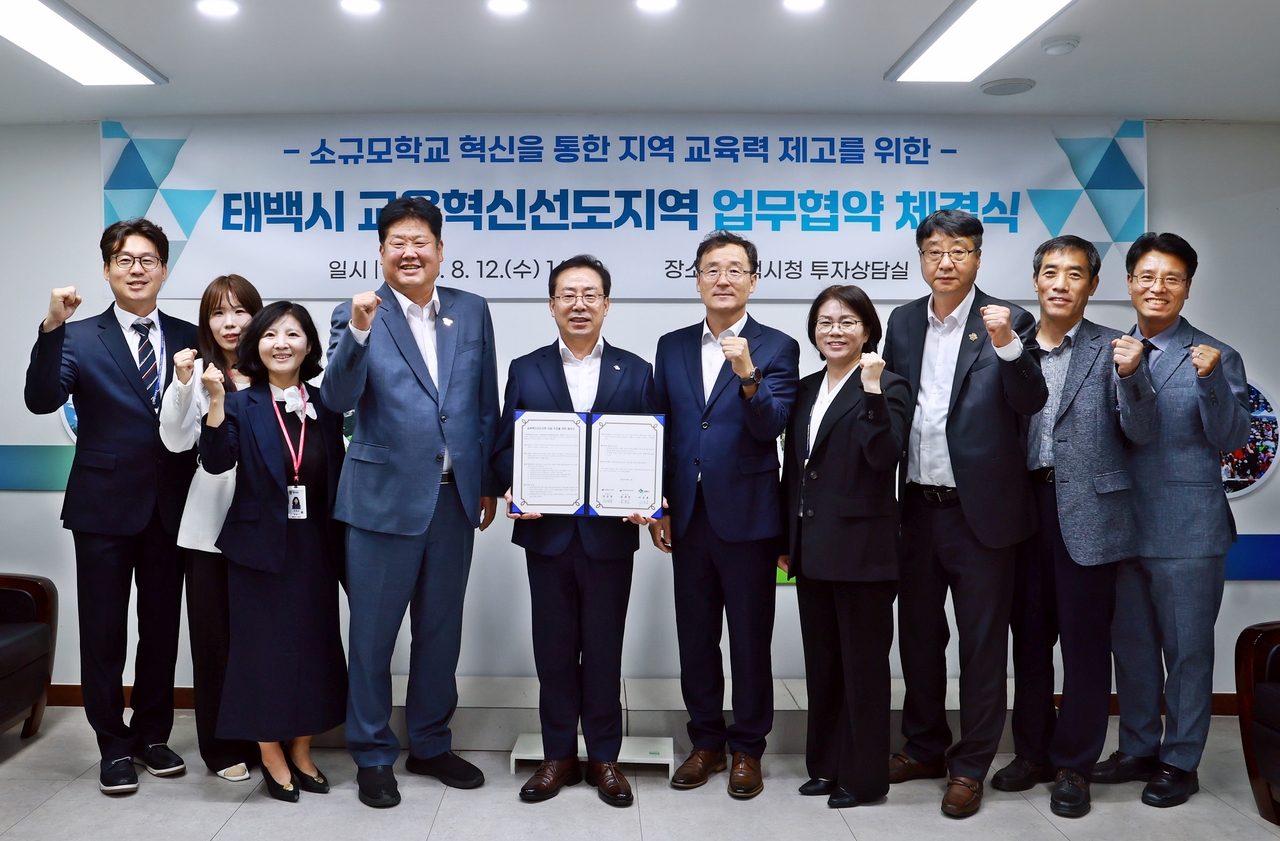
Eight cities and counties in Gangwon Province were named education innovation zones out of 43 selected nationwide — 32 under Type 1 and 11 under Type 2 — the most of any single province or metropolitan city, the Ministry of Education and the Gangwon Provincial Office of Education said Wednesday.
Seven municipalities — Gangneung, Goseong-gun, Donghae, Samcheok, Cheorwon-gun, Taebaek and Hoengseong-gun — were designated Type 1 zones, which target areas with declining populations, while Chuncheon was selected as a Type 2 zone covering non-Greater Seoul regions.
Type 1 zones are required to pursue quality education ecosystem development through small-school innovation, while Type 2 zones must focus on narrowing the education gap and strengthening ties between universities and industry.
Starting in 2027, designated areas will receive special grants of up to 2 billion won ($1.49 million) per zone per year for up to five years — three years of operation followed by an evaluation and a possible two-year extension — with matching investment from local governments.
The Gangwon Provincial Office of Education formed a dedicated task force headed by the deputy superintendent and supported all 17 cities and counties in preparing their operational plans and evaluation materials through joint workshops with local education support offices and tailored consulting sessions.
Given that the proportion of small schools in the province far exceeds the national average, the office said it focused on identifying small-school innovation models that draw on each city and county's own resources and characteristics — including shared curricula across schools, integrated school operations and specialized programs using local assets.
Cities and counties that were not selected will still receive support through the provincial office's own "future growth career zone" program, the office said.
"This nationwide top ranking is the result of education offices, local governments and communities working together to overcome the education crisis facing our region," Superintendent Kang Sam-young said. "We will turn this crisis into an opportunity — revitalizing schools through education and revitalizing communities through schools — to build a Gangwon-style education innovation model." Kang added that the provincial office would ensure no education gap emerges between selected and non-selected areas, "so that children, wherever they live in Gangwon, can nurture their dreams in the place where they were born and raised."
abc@heraldcorp.com