City warns reduced state support will strain municipal finances; says regulatory burden must be fairly reflected
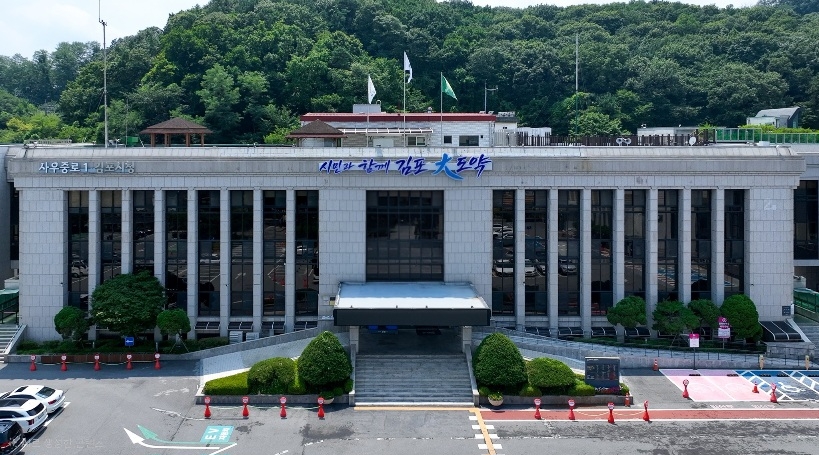
Gimpo City in Gyeonggi Province has formally asked the government to fairly reflect the city's status as a border area — and the heavy layers of overlapping regulations that come with it — in the Ministry of Interior and Safety's proposed "local preference index" zoning criteria.
Critics say it is unfair to penalize the city uniformly simply because it is geographically close to Seoul and has seen population growth, ignoring the reality of a border city that has long endured disadvantages in the name of national security.
According to Gimpo City, it recently submitted a formal petition to the Ministry of Interior and Safety calling for improvements to the local preference index calculation system.
Under a draft ordinance the ministry announced for administrative notice in October, Gimpo was classified in "Zone 1" — the lowest tier for government support — alongside other major cities in Gyeonggi Province, including Suwon, Seongnam, Goyang, Yongin, Paju and Hwaseong.
The local preference index ranks municipalities nationwide into four zones based on a composite score of distance from Seoul, risk of population decline and level of economic development, then applies differentiated rates of central government support across fiscal, tax, regulatory and procurement areas.
If the draft takes effect as written in 2027, Gimpo's national subsidy rate for local gift certificates would fall to 3 percent — the lowest level, compared with 9 percent for Zone 4 cities — and the city would suffer significant financial losses across 23 major government support programs, including youth employment incentive grants.
In its petition, Gimpo noted that 72.6 percent of its total area of 276.59 square kilometers is subject to various regulatory restrictions, with military facility protection zones alone accounting for 69.8 percent.
Because the city borders North Korea across the Han River estuary, it has faced not only military regulations but also overlapping restrictions under the Seoul Metropolitan Area Readjustment Planning Act and environmental conservation rules, severely hampering private investment and the city's ability to build its own growth engine.
The petition also flagged a chronic shortage of infrastructure relative to the city's rapid growth.
While the population has surged with the development of new towns, construction of a wider transportation network has been delayed. Residents' quality-of-life infrastructure — including the number of cultural facilities per 100,000 people (ranked in the bottom 25 in Gyeonggi Province) and public sports facilities (ranked 30th out of 31 cities and counties in the province) — remains among the worst in the province, making large-scale fiscal investment urgent.
The city urged the ministry to address five issues: reflecting the area and regulatory intensity of military facility protection zones; accounting for the real fiscal demands of expanding basic living infrastructure; supplementing the assessment of development gaps between new towns, older urban areas and rural communities within the city; establishing separate preferential criteria for border areas; and disclosing the basis for index calculations while clarifying the recalculation cycle.
"True local preference can only be achieved by comprehensively evaluating the regulatory burden and infrastructure deficits that a municipality actually bears — not simply its distance from Seoul," a Gimpo City official said. "We will continue to monitor the ministry's progress on the ordinance and work with other border-area municipalities to push for ongoing improvements to the system."
gilbert@heraldcorp.com