Budget office estimates 24.2 trillion won revenue loss from 2021 to 2025
Including two measures would push last year's tax-exemption total from 76.1 trillion won to 80.2 trillion won
Office urges review of whether repeatedly extended temporary cuts should count as tax expenditures
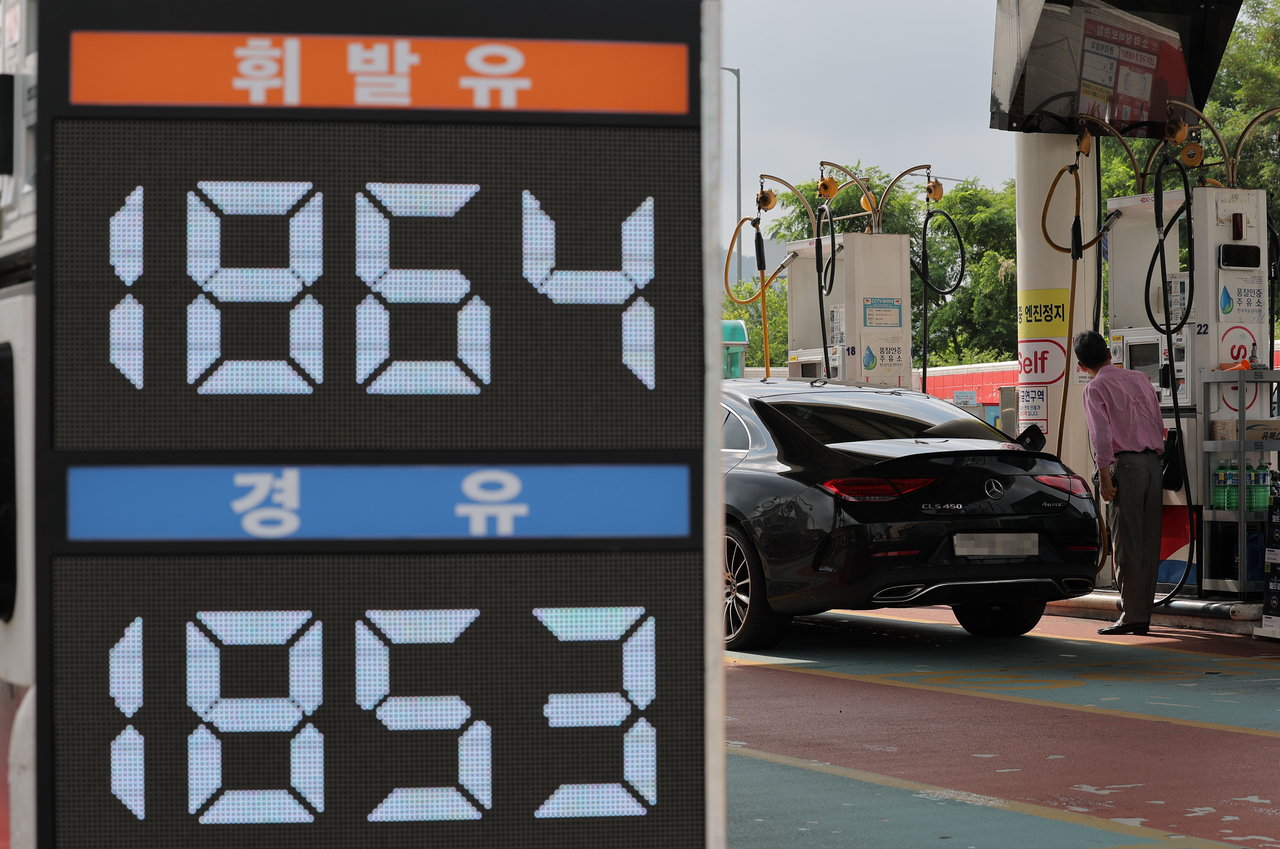
The government's five-year campaign to hold down prices through fuel tax cuts and reduced tariffs on imports cost 24.2 trillion won ($18 billion) in lost revenue between 2021 and last year, the National Assembly Budget Office said.
Fuel tax reductions accounted for 18.2 trillion won of that total, or 75 percent. Neither measure is currently reflected in the government's official tally of national tax exemptions. Adding them in would push last year's exemption figure from 76.1 trillion won to 80.2 trillion won.
According to the budget office's analysis of the 2027 tax-expenditure budget released Wednesday, the annual revenue loss from fuel tax cuts rose from 300 billion won in 2021 to 4.7 trillion won in 2022. It peaked at 5.1 trillion won in 2023, then eased to 4.8 trillion won in 2024 and 3.3 trillion won last year. Revenue lost to reduced import tariffs over the same five-year period totaled 6 trillion won, with 2022 alone accounting for 2 trillion won.
Fuel tax cuts work by applying flexible tax rates to lower levies on gasoline, diesel and other fuels. Reduced import tariffs adjust duty rates on set volumes of goods — a tool used to ease the cost burden on imported raw materials and agricultural products. The revenue losses from both measures, which the government deploys in response to inflation and supply conditions, are not captured in the current tax-expenditure budget.
Last year's revenue losses from the two measures were estimated at 3.3 trillion won and 800 billion won, respectively. When the budget office added those figures to the government's published tax-exemption total, the national tax-exemption rate rose 0.7 percentage points, from 15.9 percent to 16.6 percent. For 2024, factoring in the combined 6.2 trillion won revenue loss from the two measures would push the rate from the government's stated 16.1 percent to 17.3 percent, a 1.2-percentage-point increase.
The central question is how to manage the scale of revenue losses when temporary rate cuts are repeatedly extended. When fuel tax reductions are rolled over or the same goods are repeatedly designated for reduced import tariffs, the revenue shortfall compounds across multiple years.
The budget office said the government should "review whether the flexible tax-rate system, when applied repeatedly, should be included in tax expenditures, and manage the resulting revenue losses on an ongoing basis."
fact0514@heraldcorp.com