Interview with Jang Ye-ji, dermatology professor at Hallym University Sacred Heart Hospital
Protein and vitamin C foods beat collagen supplements
Sugar triggers glycation, stiffening collagen fibers
Doctor advises cutting sweets, eating a balanced diet and sleeping well
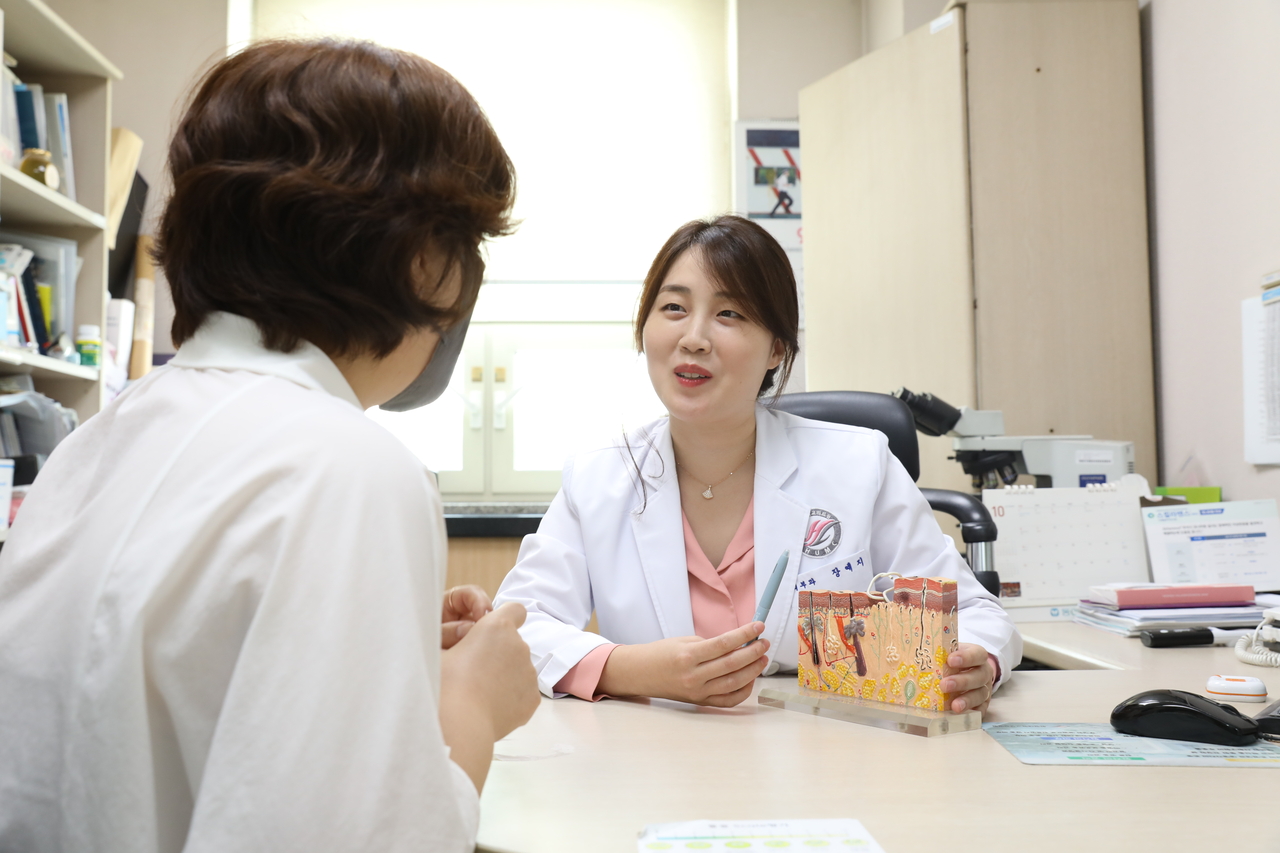
"Collagen supplements and collagen masks are flooding the market. Do they actually work for your skin?"
A brief silence followed the question. "Hmm ... " Jang Ye-ji, a dermatology professor at Hallym University Sacred Heart Hospital, chose her words carefully. After a moment, she said: "Collagen supplements are broken down in the stomach and small intestine before being absorbed, so it is difficult to say that ingested collagen acts directly on the skin." She then said that "if you are going to spend the same money and effort, eating protein and vitamin C-rich foods and applying sunscreen is far more effective." The key to maintaining collagen, she explained, is sticking to the basics that have been proven to work.
Jang graduated from Korea University College of Medicine and completed her dermatology residency at Hallym University Sacred Heart Hospital in Anyang, Gyeonggi Province, in 2017. She has been practicing dermatology there since 2023.
Jang said it has not been easy to find reliable research on collagen among domestic and international studies, noting that one must examine not only who funded the research but also the sample sizes involved.
Setting aside industry-funded studies, the most credible research she cited was a 2025 paper from the National Cancer Center Research Institute in South Korea. The team concluded that "a comprehensive analysis of 23 related randomized controlled trials found no evidence that collagen supplements have any effect on delaying skin aging."
The popular belief that eating braised pork trotters gives you firmer skin because of their collagen content is unlikely to hold up. "It is difficult for the collagen in pork trotters to be digested, transported to the skin and then produce any effect," Jang said. She recommended that "to maintain skin elasticity through collagen, it is better to pair sufficient protein with fruits and vegetables rich in vitamin C at every meal."
This is because vitamin C helps the body resynthesize absorbed collagen into the collagen needed by skin tissue. "Balancing nutrients through natural foods rather than supplements is more beneficial for skin health," Jang said.
Among foods, she recommended fresh vegetables. For fruit, she suggested low-glycemic options such as apples and pears over high-sugar varieties, along with kiwi for its high vitamin C content. Fruit juice, however, she did not recommend, as it raises blood sugar faster than eating whole fruit.
"When blood sugar stays elevated, it accelerates glycation — a process in which sugar binds to collagen, making it stiff and reducing skin elasticity," Jang said. "For skin health, cutting out sweet foods should be the first step."
She also cited a dietary study: a paper by researchers at Monash University in Australia, published in the American Journal of Clinical Nutrition in 2001. An analysis of the diets and skin of 453 adults found that higher consumption of vegetables, legumes and olive oil, combined with lower intake of butter, margarine, dairy products and sugar, was associated with fewer wrinkles on sun-exposed areas of the skin.
What about coffee, which is often said to be bad for skin? "There are several studies on coffee, and there is still no scientific evidence that it dries out the skin," Jang said. "For healthy adults, drinking up to three cups a day is unlikely to have a significant effect on skin hydration." She added, however, that "poor sleep worsens skin condition, so caffeine intake should be adjusted individually."
When acne flares up, she advised temporarily cutting back on dairy products such as milk, cheese, butter and yogurt. "Some studies have reported a link between milk consumption and acne, but it does not apply to everyone. If acne consistently worsens after consuming a particular food, it may be worth reducing that food," she said. She also noted that "drinking milk with added sugar — as in a latte — can increase sebum production and worsen acne symptoms."
The same applies to the trendy matcha latte. Although the catechins in matcha are known to slow skin aging, Jang advised that "to get the antioxidant benefits of matcha, drink it as tea mixed with water rather than as a sweet matcha latte."
The connection between diet and skin was also evident in a case Jang treated involving a 15-year-old patient. The boy had severe acne and had fallen into a routine of staying up late playing video games and eating cola and hamburgers instead of proper meals. "When we combined laser treatment with cutting out processed foods, the patient's acne gradually improved," Jang said. "As the skin cleared up, the student's expression brightened too."
"Our skin changes depending on what eating habits we maintain," she said. "Eating a varied diet of nutrient-rich natural foods and getting good sleep is the most reliable approach."


gorgeous@heraldcorp.com