9 disability-specific devices introduced, including wheelchair-compatible scales
Screenings begin this month; sign language interpretation and mobility assistance available upon booking
No out-of-pocket costs for disability-tailored services
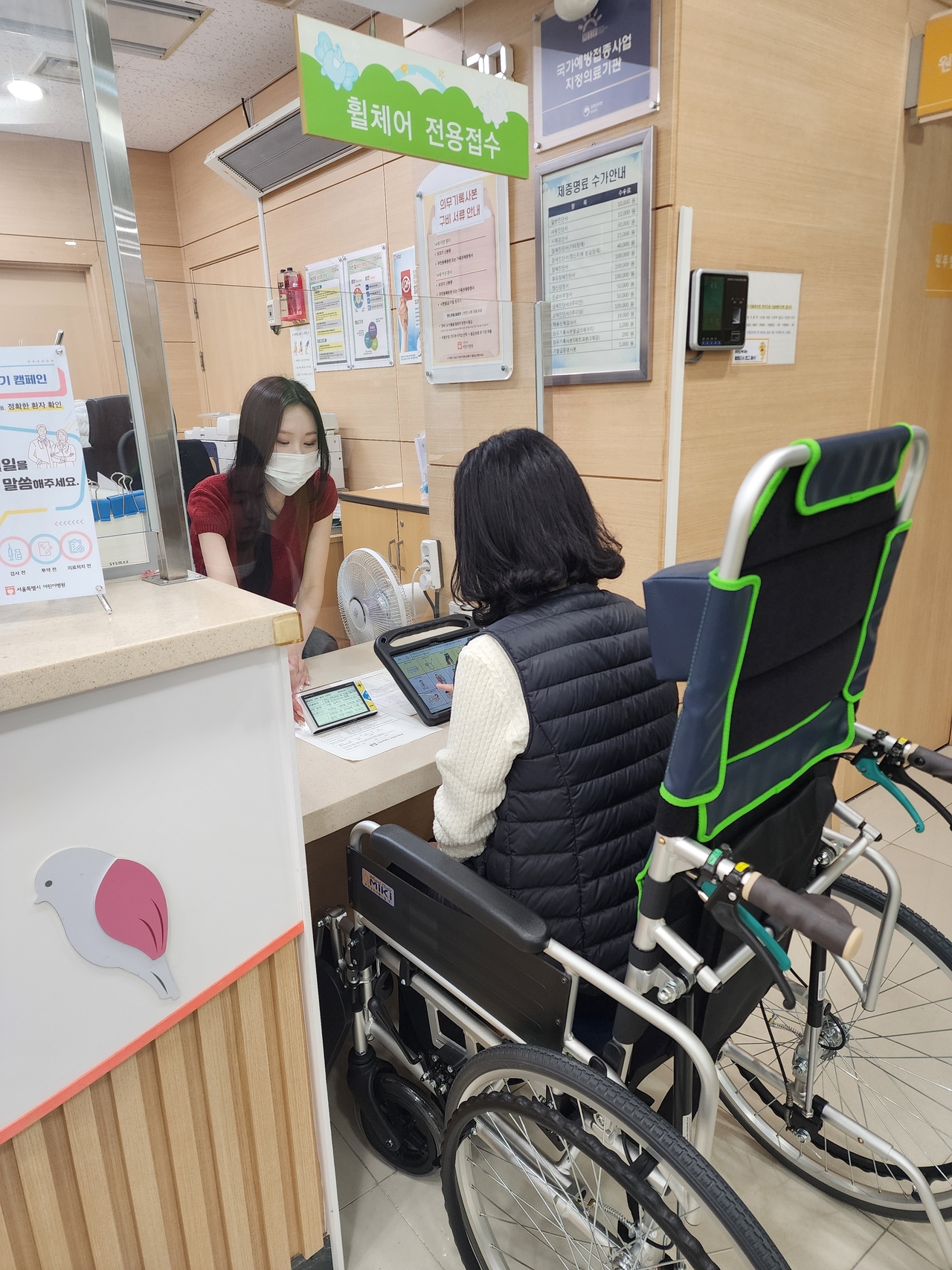
Seoul Children's Hospital launched a dedicated health screening program for people with disabilities Monday, the hospital announced Saturday. The public hospital said it is taking direct responsibility for disability screenings — a service that private medical institutions have long avoided due to low profitability — by bringing together specialized equipment, trained staff and accessibility services under one roof.
According to a Ministry of Health and Welfare announcement in January, only 111 medical institutions nationwide are designated disability health screening centers, with just 17 of those located in Seoul. Disability screenings require specialized equipment, facility upgrades, dedicated staff including sign language interpreters, and significantly more time per patient than standard checkups.
People with disabilities face particular barriers to accessing health screenings, including limited mobility, communication difficulties and a shortage of facilities and equipment suited to their needs. The general health screening rate among people with disabilities stood at 63.4 percent in 2024, compared with 75.6 percent for those without disabilities.
The 2024 Disability Health Statistics report also found that 90.6 percent of people with disabilities live with at least one chronic condition — 28.6 percentage points higher than the 62.0 percent rate among people without disabilities.
The hospital began preparing for the program last year and completed upgrades to its parking facilities, restrooms, changing rooms and elevators in September. It has since introduced nine disability-specific screening devices, including a wheelchair scale, a height-measurement tool adapted for wheelchair users, a specialized wheelchair, a portable electric lift and a mobile bed — allowing patients to have their weight measured while seated in a wheelchair, their height measured while lying down, and chest X-rays taken in accessible positions.
At the booking and registration stage, patients complete a pre-screening checklist so that staff can prepare tailored support in advance — covering wheelchair use, mobility assistance and communication needs — and deliver personalized service on the day of the screening.
The hospital has also strengthened communication support for patients with different disabilities: sign language interpretation is available through an MOU with the Seocho-gu Sign Language Interpretation Center for those with hearing impairments, while patients with visual impairments or brain lesion disabilities can access video magnification equipment and communication devices, and receive screening results in Braille.
The screening covers the same items as the general health and dental checkups offered through the National Health Insurance Service. Additional costs for specialized services provided to patients with severe disabilities are covered separately by the National Health Insurance Service's safety and accessibility management fund, meaning patients and their caregivers face no extra out-of-pocket expenses.
"Health screenings are a basic right that everyone should be able to enjoy, regardless of disability," Seoul Children's Hospital Director Nam Min said. "As a public hospital, we will do our utmost to ensure that people with disabilities can receive screenings comfortably and safely, close to where they live."
ikson@heraldcorp.com