Three AI services to launch this year, including Kanana Space and Canvas
Strategy shift adds computer-use agent approach alongside direct integration
150 billion won share buyback and cancellation announced
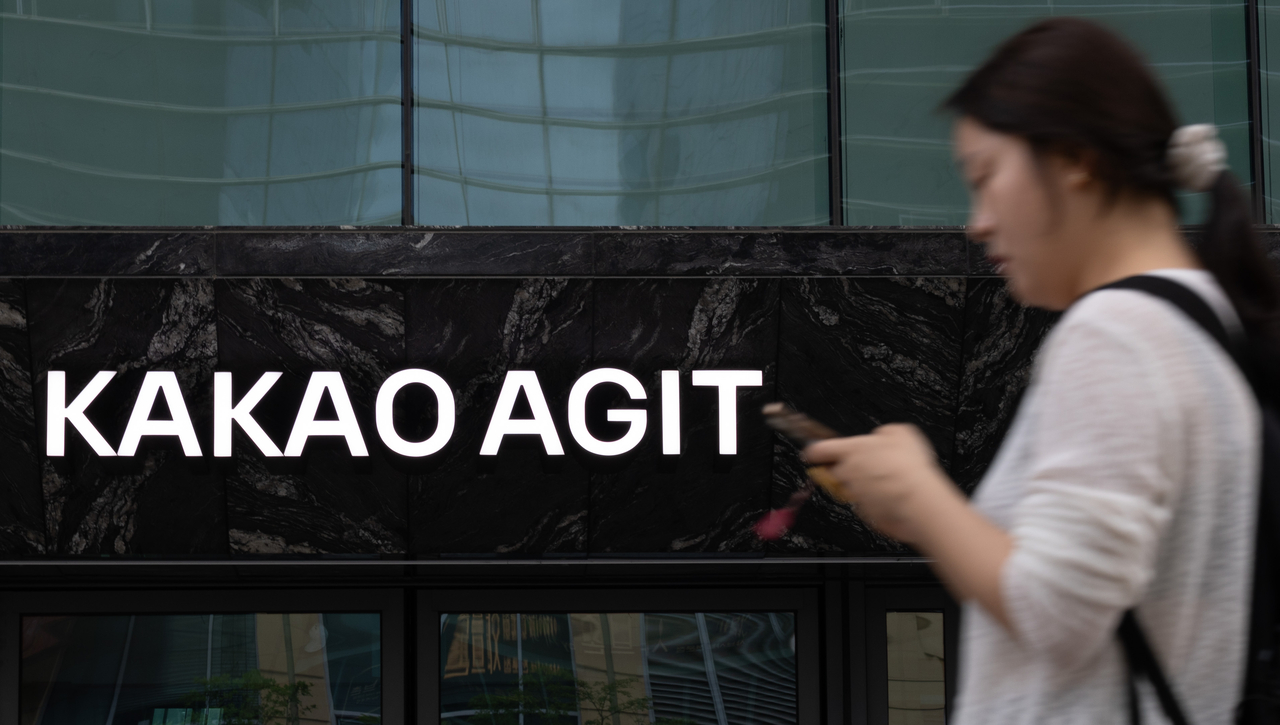
Kakao, which posted its best-ever third-quarter earnings, plans to roll out three AI services before the end of the year. The company will launch a pilot of "Kanana Space" next month, with "Canvas" and "Modu's AI" also set to debut this year. Kakao has set a target of 20 million daily active users for its AI services by 2030.
Kakao also announced a plan to buy back and cancel 150 billion won ($112 million) worth of its own shares, citing a widening gap between the market's valuation of the company and its fundamental growth potential.
Speaking on an earnings conference call Thursday after the release of third-quarter results, Kakao Chief Executive Jung Shin-a said, "In the global AI market, a company's competitiveness is increasingly determined by how many diverse services it offers and how much real value it delivers in everyday life." Jung added that the company aims to reach 10 million monthly active users by year-end on the back of the AI services to be unveiled this year.
"I believe the most important thing is to concentrate all our resources on delivering AI services that exceed market expectations," Jung said.
Kakao said it plans to accelerate its AI service expansion, centering on Kanana Space, an AI assistant built into KakaoTalk.
Kanana Space can be summoned within KakaoTalk with a two-finger swipe. Jung said the service can handle tasks such as changing basic KakaoTalk settings like fonts or carrying out gift-related functions on behalf of users. "It reads the user's questions and intent, then routes requests to the appropriate AI service — such as 'Kanana in KakaoTalk' or 'ChatGPT for Kakao' — depending on the complexity of the task," Jung said.
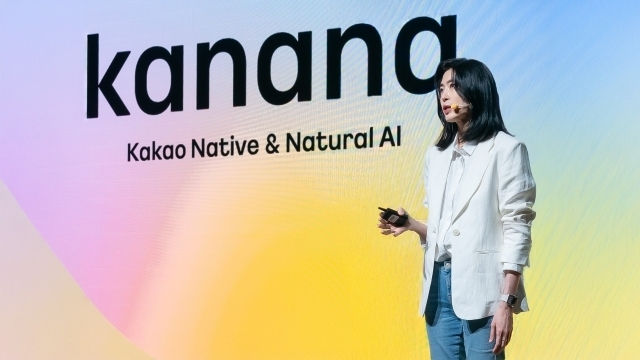
Canvas, an AI-powered productivity tool, is also slated for release this year. The service controls a user's browser directly from their PC to support tasks such as information searches, document organization and automation of repetitive work. Jung said Canvas has been undergoing internal beta testing since last week.
Kakao is also revising its AI agent strategy. While the company had previously prioritized direct integration with external services, it will now also adopt a computer-use agent, or CUA, approach — in which AI operates a browser to carry out tasks on behalf of users.
"Kakao has pursued direct integration as its primary approach, but in practice we found there are many variables — validating agent capabilities, assessing business value, and aligning stakeholder interests," Jung said. "We concluded that we need to take our strategy a step further to compete globally, and we will expand the ecosystem to cover a wider range of long-tail services through the CUA approach."
Next month, Kakao will also begin a closed beta test of "AI Crew," a service that integrates advertising into AI agents, as it looks to build profitability. "Starting next year, growth will move beyond simply expanding ad inventory, with new monetization opportunities through AI translating into sales growth," Jung said.
Kakao disclosed Thursday that it will buy back and cancel all 5,154,639 common shares acquired on the open market, at a total acquisition cost of 150 billion won — equivalent to about 1.16 percent of total shares currently outstanding.
Jung said the buyback reflects a governance transition in which "the gap between the market's assessment of Kakao and the future growth potential we see internally, based on our fundamentals, has grown wider than ever."
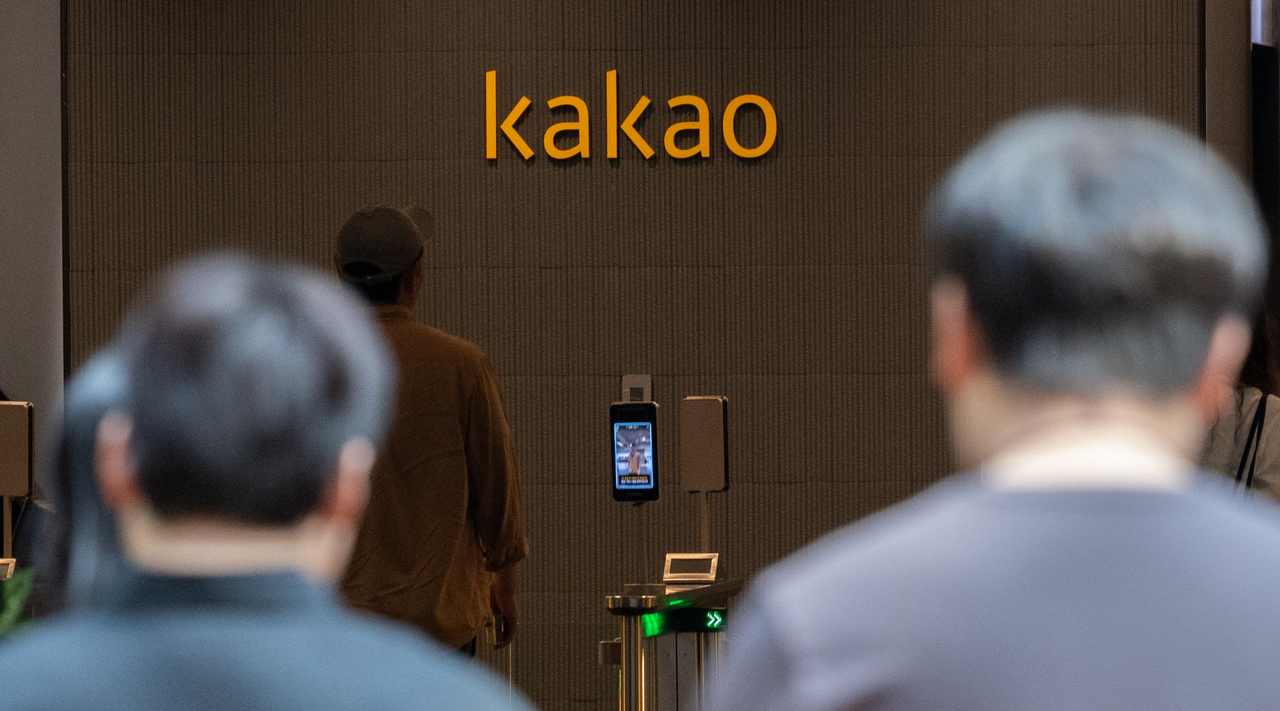
Kakao's core businesses continued to grow steadily, driven by strong performance in its platform and commerce segments. The company reported consolidated third-quarter sales of 2.09 trillion won and operating profit of 240.3 billion won Thursday, up 6.3 percent and 7.4 percent, respectively, from a year earlier. The figures reflect the reclassification of Kakao Games and Kakao Healthcare as discontinued operations following their divestiture.
Both figures were the highest ever recorded for a third quarter. Operating profit exceeded 200 billion won for six consecutive quarters.
Platform segment sales rose 17 percent year-on-year to 1.24 trillion won in the third quarter. Within the platform segment, TalkBiz revenue climbed 13 percent over the same period to 632.9 billion won. TalkBiz advertising and subscription revenue came in at 391.5 billion won, up 11 percent year-on-year. Business message revenue grew 7 percent, driven by advertiser demand despite a high base from the government's consumer coupon program in the third quarter of last year.
Third-quarter transaction volume for TalkBiz Commerce — which includes the "Gift" service — reached 2.3 trillion won, up 13 percent year-on-year. The Gift service posted its highest-ever monthly transaction volume in October, boosted by the Chuseok holiday season and a rise in self-purchases. The number of self-purchasing customers and their transaction volume grew 23 percent and 33 percent, respectively, compared with a year earlier.
Revenue from other platform services, including mobility and payment, rose 21 percent year-on-year to 602.1 billion won.
However, content segment revenue fell 6 percent year-on-year to 851.7 billion won. Music revenue dropped 10 percent to 508.3 billion won, weighed down by fewer major artist album releases and large-scale performances. Story revenue also declined 17 percent to 200.6 billion won.
chami@heraldcorp.com