Researchers trace the evolutionary origins of the brain's crossed wiring
Sensory and motor circuits were already reversed before mammals appeared
A new hypothesis synthesizing existing research
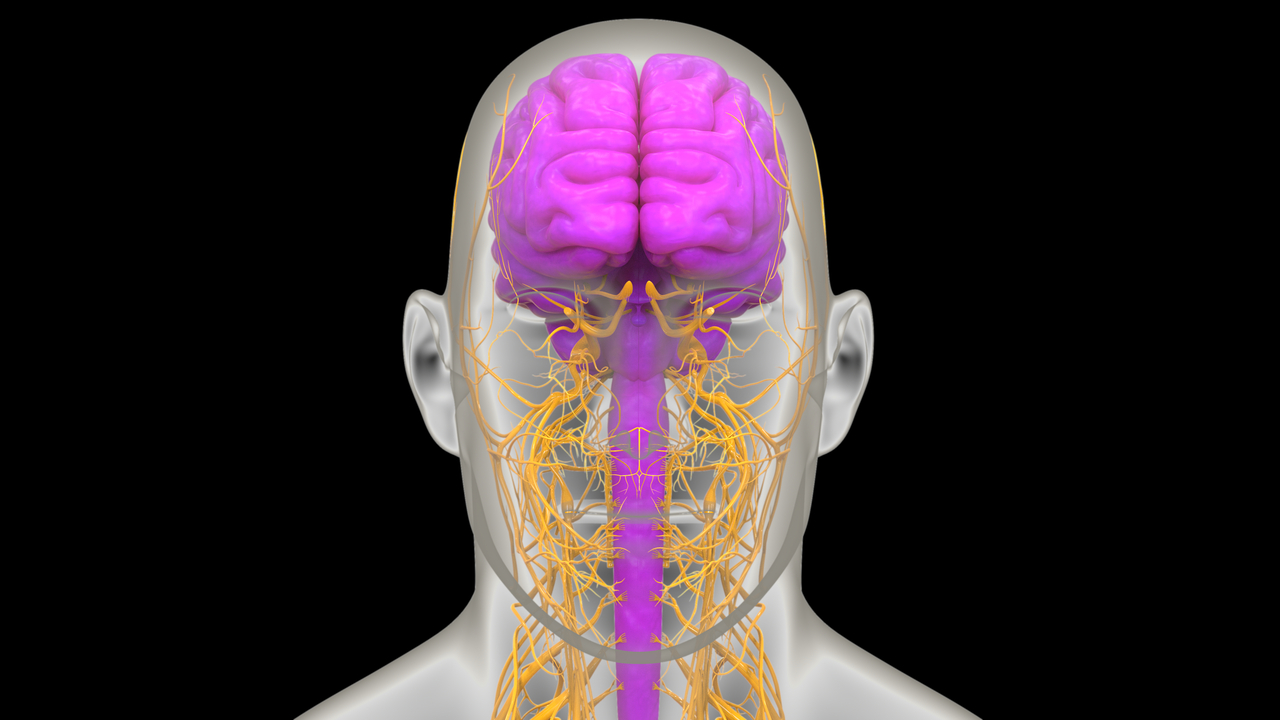
A new hypothesis proposes that the reason the right brain controls the left side of the body traces back to the eyes of a fish ancestor some 500 million years ago.
When a stroke strikes the left side of the brain, the right arm and leg go limp. That is because the human brain operates on a crossed structure — the right cerebral hemisphere controls movement on the left side of the body and receives sensory signals from it. The right brain also processes the left half of the visual field seen by both eyes.
Why the brain is wired this way has long been a puzzle. English physicist Isaac Newton proposed in 1704 that the nerves from each eye cross over and travel to the opposite side of the brain. In 1898, Spanish neuroscientist Santiago Ramón y Cajal confirmed through experiments that brain signals travel to the opposite side of the body. Many hypotheses followed, but no study had systematically traced when and in what sequence this crossed structure emerged during evolution.
A research team led by Martin Wessendorf, a professor at the University of Minnesota, has now published a paper in volume 20 of the international journal Frontiers in Neuroanatomy laying out the evolutionary history of the crossed structure in vertebrate brains and proposing a new hypothesis to explain it.
Crossed eye nerves — how the whole body ended up wired in reverse
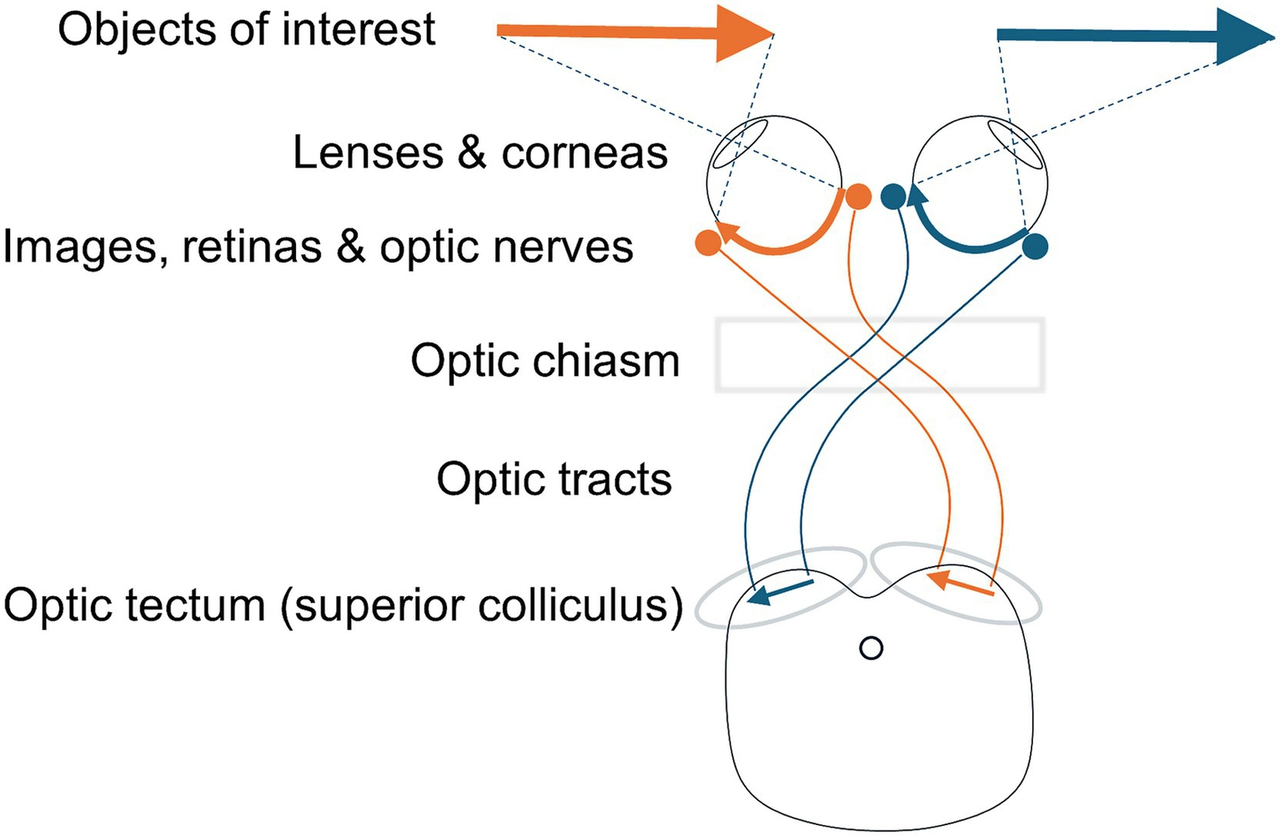
The research team compared the major neural circuits that cross sides in the brains of living vertebrates. The visual circuit was the first to cross.
Examining species from jawless primitive fish — lampreys and hagfish — all the way to humans, the team found that in every vertebrate, visual signals from the eyes travel to the opposite side of the brain.
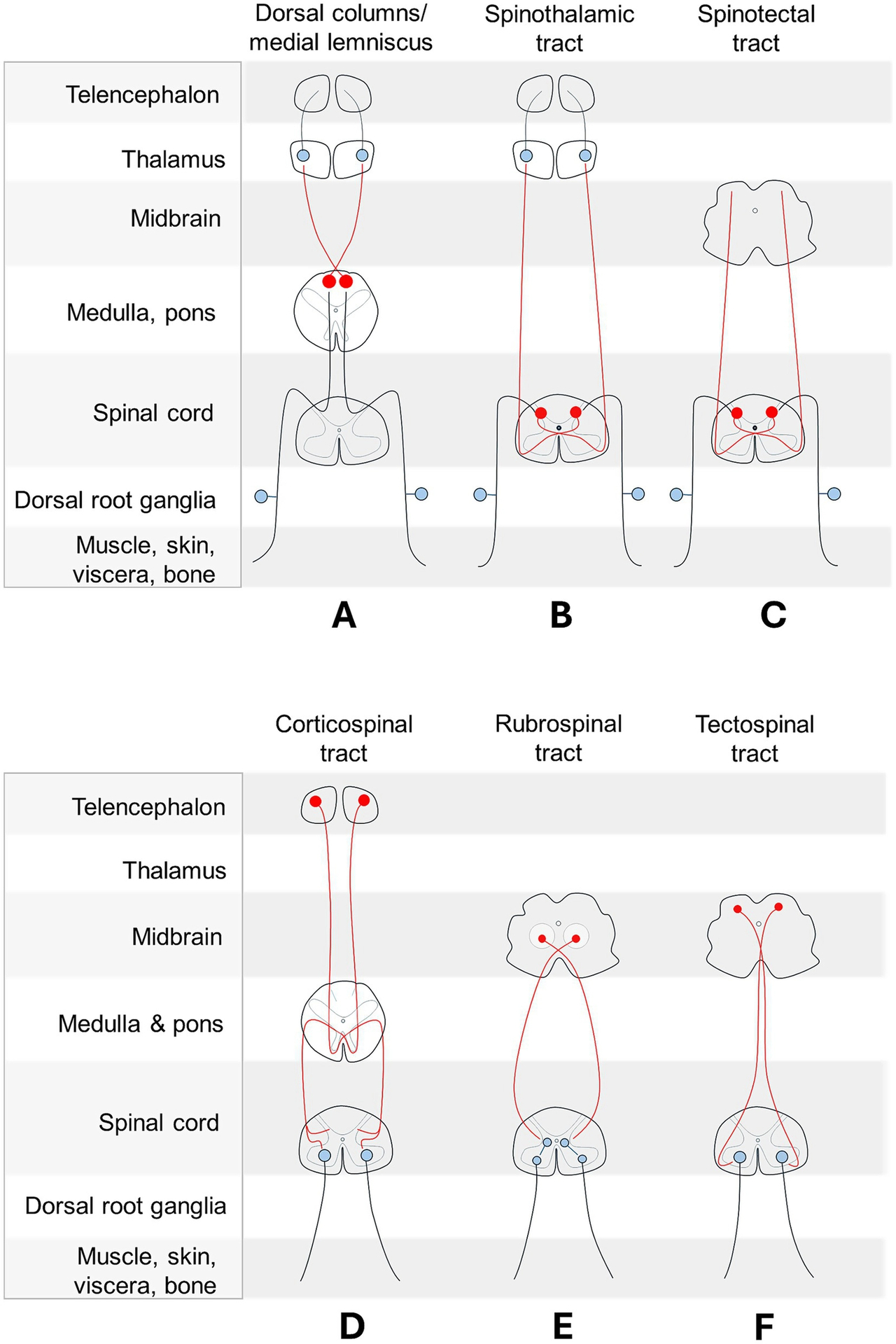
The destination of the optic nerve is a region in the midbrain called the tectum, which receives visual information and triggers the body to turn toward what is seen. The team concluded that as the tectum received crossed visual input, the other sensory and motor circuits connected to it gradually adopted the same crossed arrangement.

As four-limbed vertebrates emerged, the touch and hearing circuits crossed as well. The circuit that sends turning commands from the tectum to the spinal cord, and the circuit that controls limb movement, also took on the crossed structure.
By the time mammals appeared about 165 million years ago, the team said, the sensory and motor circuits had already been crossed for nearly 200 million years.
The neocortex — the wrinkled outer layer of the human brain — integrates and processes visual, auditory and tactile information and plans bodily movement. It is a region that evolved anew with mammals.
Being a newly evolved structure, the left neocortex could in principle have taken charge of the left side of the body in a same-side arrangement — yet the neocortex, too, ended up with the crossed structure, in which the right side governs the left body.
Same-side wiring came too late in evolutionary timing
The team explained the reason in terms of "wiring cost" — the energy and resources required to form and maintain neural connections in the brain. The longer or more numerous those connections become, the more time signals take to travel and the more energy the brain consumes.
Had the neocortex been built on a same-side arrangement — with the left brain handling the left body — it would have needed to create several additional crossing circuits to relay the already-crossed visual, tactile and auditory signals back to the same side.
The team therefore wrote in the paper that "the most economical way for the neocortex to connect with the existing neural circuits was the crossed structure, in which the right brain governs the left side of the body."

The nerve bundle that carries motor commands from the cerebral cortex down to the spinal cord evolved around the same time as the neocortex, meaning it had no inherent need to conform to older circuits. Yet in most species it, too, is crossed.
The team interpreted this as a consequence of the bundle's original function: it initially regulated sensation rather than movement.
In most mammals, this nerve bundle originates near the sensory-processing regions of the cerebral cortex and reaches the part of the spinal cord that receives sensory signals — a connection essential for fine finger movements.
Natural selection is not always rational
The team said this nerve bundle adopted the crossed structure by working alongside the already-crossed sensory circuits, and that the arrangement persisted even after the bundle later took on the role of carrying motor commands.
However, in hedgehogs and moles, this nerve bundle runs to the same side rather than crossing. If the crossed structure had conferred a strong survival advantage, natural selection would have driven most mammals toward the same arrangement.
On that basis, the team suggested the crossed structure may not have evolved because it aided survival, but rather because it was inherited from ancestors and carried forward unchanged.
The team added, "Natural selection is a powerful force in evolution, but traits without a clear survival advantage can also evolve."
Among existing hypotheses for the crossed structure is the "inversion hypothesis," which holds that when vertebrates diverged from their invertebrate ancestors, the body flipped upside down, twisting the nervous system along with it.
The hypothesis draws on the observation that invertebrates such as crayfish have their main nerve cord on the ventral side, while vertebrates have it on the dorsal side.
The team said the hypothesis is elegant but difficult to sustain, given that most of the neural circuits that are crossed today did not exist in early vertebrates at all.
Reference
DOI: 10.3389/fnana.2026.1937941
Wessendorf MW and Wang DD (2026) Why is the right side of the brain responsible for the left side of the body? The evolutionary history of a puzzling trait. Front. Neuroanat. 20:1937941.
dbsdn1110@heraldcorp.com