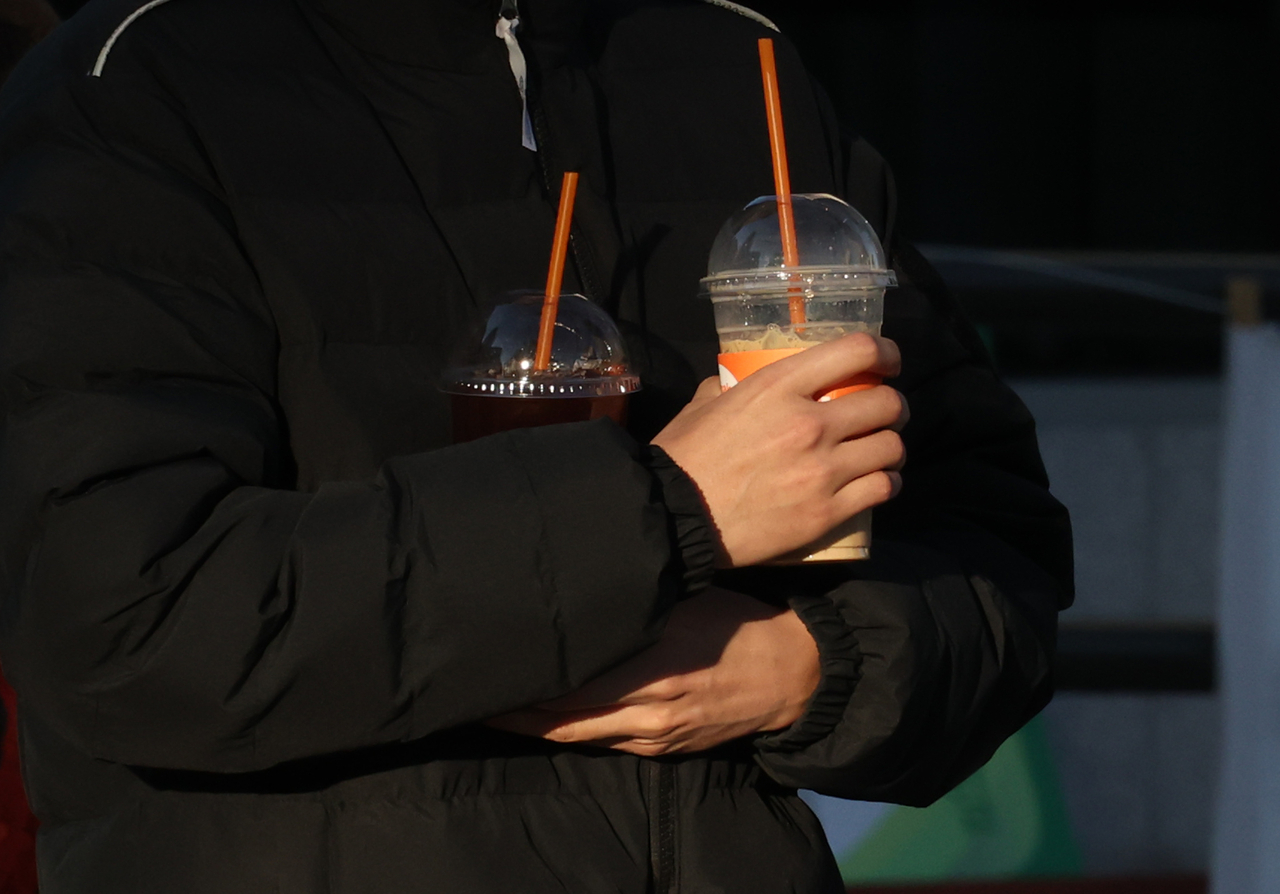
The sight of Koreans sipping ice-filled Americanos in the dead of winter has caught the attention of people abroad. A recent wave of social media posts from curious foreigners has put a fresh spotlight on Korea's distinctive "eoljuka" culture — a portmanteau meaning "I'd rather freeze to death than give up my iced Americano."
A Chinese user on X wrote recently that they could not understand why Koreans are so fond of iced Americanos. "From a Chinese person's perspective, seeing someone in a thick puffer jacket holding a cup of iced coffee just looks freezing," the post read. The user asked followers to explain whether Koreans grow up accustomed to cold drinks or simply find them tastier than hot coffee. The post drew nearly 200 comments.
Korean users offered a range of explanations. One said Koreans generally prefer cold water as a daily drink, and that an iced Americano — cheap and caffeinated — gets consumed almost like water to fight off drowsiness at work. Another pointed to Korea's well-heated indoor spaces, saying people tend to reach for iced coffee when stepping into a warm building to stay alert.
Six in 10 cups ordered cold even in winter — from barley tea to 'ppalli-ppalli' culture
Data backs up Koreans' love of iced coffee. An analysis of about 400 million coffee orders placed at more than 4,000 Mega MGC Coffee stores last year found that six out of every 10 cups ordered in midwinter were iced. At the height of summer — around July 22, the traditional "great heat" solar term — the share of iced orders soared to 97 percent.
Some observers say the habit goes beyond coffee preference and reflects a broader Korean drinking culture. They trace it to the 1980s practice of keeping barley tea in Del Monte glass bottles, arguing that today's light iced Americano fills the same role as a casual post-meal drink. Korean iced Americanos are typically made with more water than their overseas counterparts, resulting in a milder brew.
Some experts link the trend to food culture stretching back to the Joseon Dynasty. Chung Ju-yung, an adjunct professor of tourism at Hanyang University, wrote in a media column that "the eoljuka instinct did not appear overnight," noting that Koreans historically ate naengmyeon in dongchimi broth in winter, cooled watermelons in streams in summer, and routinely washed down hot gukbap with cold water.
AFP, which covered Korea's eoljuka culture last year, cited the country's "ppalli-ppalli" — hurry-up — mentality as another factor. Hot drinks require waiting; iced drinks can be consumed the moment they are handed over. That makes an iced Americano a particularly practical choice for office workers who need to squeeze in a coffee during a short lunch break.
China drinks hot water even in midsummer: 'Warm water keeps you healthy'
In China, by contrast, drinking hot tea or warm water even in the height of summer is the norm. Traditional Chinese medicine holds that warm water helps maintain the body's balance, promotes circulation and aids in flushing out toxins.
The practice also has historical roots. When cholera swept through Shanghai in 1862, southern regions reported fewer casualties, and residents came to believe their habit of drinking hot water had protected them. After the founding of the People's Republic of China in 1949, the government actively encouraged boiling drinking water as a public health measure, further cementing the warm-water culture.
Meanwhile, health authorities caution against excessive consumption of cold drinks. According to the National Health Insurance Service, cold beverages can impair gastrointestinal function and cause indigestion. In cold weather particularly, drinking cold liquids may cause blood vessels to constrict and blood pressure to rise, the agency warned.
bbo@heraldcorp.com