Health programs, communal meals and small-group activities combat isolation — 24,376 cumulative participants through September
Seniors shift from care recipients to active caregivers alongside 300 health leaders
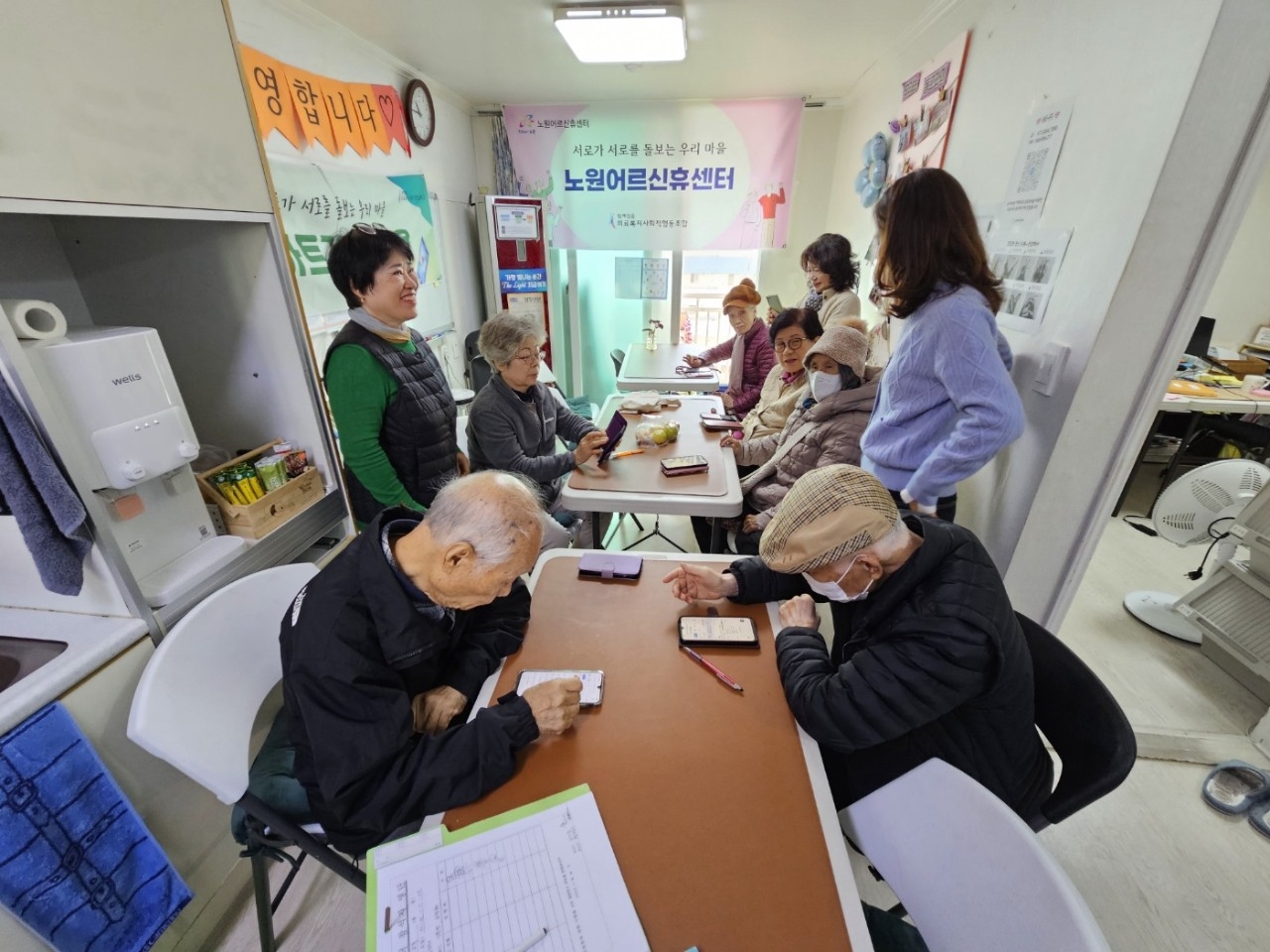
Nowon-gu in Seoul is spreading a community-centered mutual care culture through its Nowon Senior Wellness Centers, where older residents look after their health and check in on neighbors together.
As South Korea enters a super-aged society, preventing social isolation among seniors and building neighborhood support networks have emerged as pressing challenges — and Nowon-gu's resident-driven care model is drawing attention as a local answer to both.
As of late October, the district's population aged 65 and older stood at about 108,000, accounting for 22.6 percent of all residents.
The Nowon Senior Wellness Centers are multipurpose health and leisure spaces where seniors can enjoy activities and connect with neighbors close to home. What sets them apart from conventional service-delivery models is that seniors themselves take the lead in checking on one another's health and well-being, making the centers resident-driven communities rather than top-down programs.
Nowon-gu launched a pilot project in 2022 and enacted a mutual-care ordinance before rolling out the program in full in 2023. Four centers are now operating: Sanggye Jugong 7 complex, Sanggye Boram apartment complex, Junggye Jugong 2 complex, and the Wolgye Center, which opened this year.
Participation has grown steadily. Through September, 3,662 individual participants and 24,376 cumulative participants took part — already surpassing the 2,948 individual participants recorded for all of last year.
Core programs include a proper-walking exercise, communal meals, health and hobby small groups, and a neighborhood network called "Donggeurami." Resident volunteers known as health leaders help seniors join programs suited to their health conditions and interests, and facilitate connections among neighbors.
The proper-walking program supports physical activity through stretching exercises and neighborhood strolls. Seniors who cannot attend receive a check-in phone call to confirm their health and daily routine. The communal meal program, "Han-kki Bapsang," brings participants together to cook and share food, building healthy eating habits and neighborly bonds.
Health-focused small groups also run at the centers, including "Danggeurami" for diabetes management and a blood-pressure-and-diabetes walking group. A range of hobby activities — line dancing, a cooking club for older men, board games and smartphone skills sessions — help seniors maintain both physical and emotional well-being.
The heart of the model lies in turning the connections formed at the centers into everyday care. "Donggeurami" brings three to five nearby neighbors together in a small network to exchange regular greetings and serve as an emergency contact chain when needed. The approach positions seniors not as passive recipients of care but as active participants who look out for one another.
The program is already changing daily life for participants. Lee Pan-saeng, 83, of the Junggye Jugong 2 complex, said meeting neighbors at the center has deepened affection for the neighborhood. Park Mae-ja, 82, said gaining new confidence after performing at a Nowon-gu exercise competition with a line-dancing routine learned at the center.
Other local governments have taken notice. In August, staff from the Dobong-gu district office visited the Wolgye Center to study its operations as a benchmarking exercise.
On Thursday, Nowon-gu held its "2026 Senior and Health Leader Mutual Care Sports Day" in the main auditorium on the second floor of the district office, with about 300 seniors and health leaders in attendance. Participants shared the year's achievements and strengthened community bonds through activities including an OX quiz and a balloon-passing relay.
Nowon-gu District Mayor Seo Jun-o said the senior wellness centers are "spaces where seniors can meet friends close to home, take care of their health, and become a reliable neighbor to one another," adding that the district would "continue to build a denser foundation for everyday mutual care so that seniors can spend a healthy, connected old age right where they have always lived."
seouldream01@heraldcorp.com