SME completes blower installation and removal, settles for 300 million won after payment withheld
Large firm's abrupt halt to collaboration leads to 23 million won settlement — a lifeline beyond subcontracting law
105 dispute cases filed through September this year; cumulative relief reaches 30.87 billion won
Company A, a small and medium-sized enterprise, signed a contract with another SME, Company B, to install and remove industrial blowers. After completing all the work as agreed, Company A never received the remaining balance of 300 million won ($224,000). In November last year, it filed for dispute mediation with the Consignment Transaction Dispute Mediation Council to recover the unpaid amount plus late-payment interest. The two sides reached a settlement of 300 million won on March 4 this year.
In a separate case, SME Company Q was asked by large conglomerate Company R to provide services for implementing a payment system. Company Q carried out preparatory work at R's request and delivered the results in stages — only for R to abruptly notify Q that it was ending the collaboration without ever placing a formal order. Company Q filed for mediation on Nov. 25 last year, and a settlement of 23 million won was reached on Jan. 14 this year.
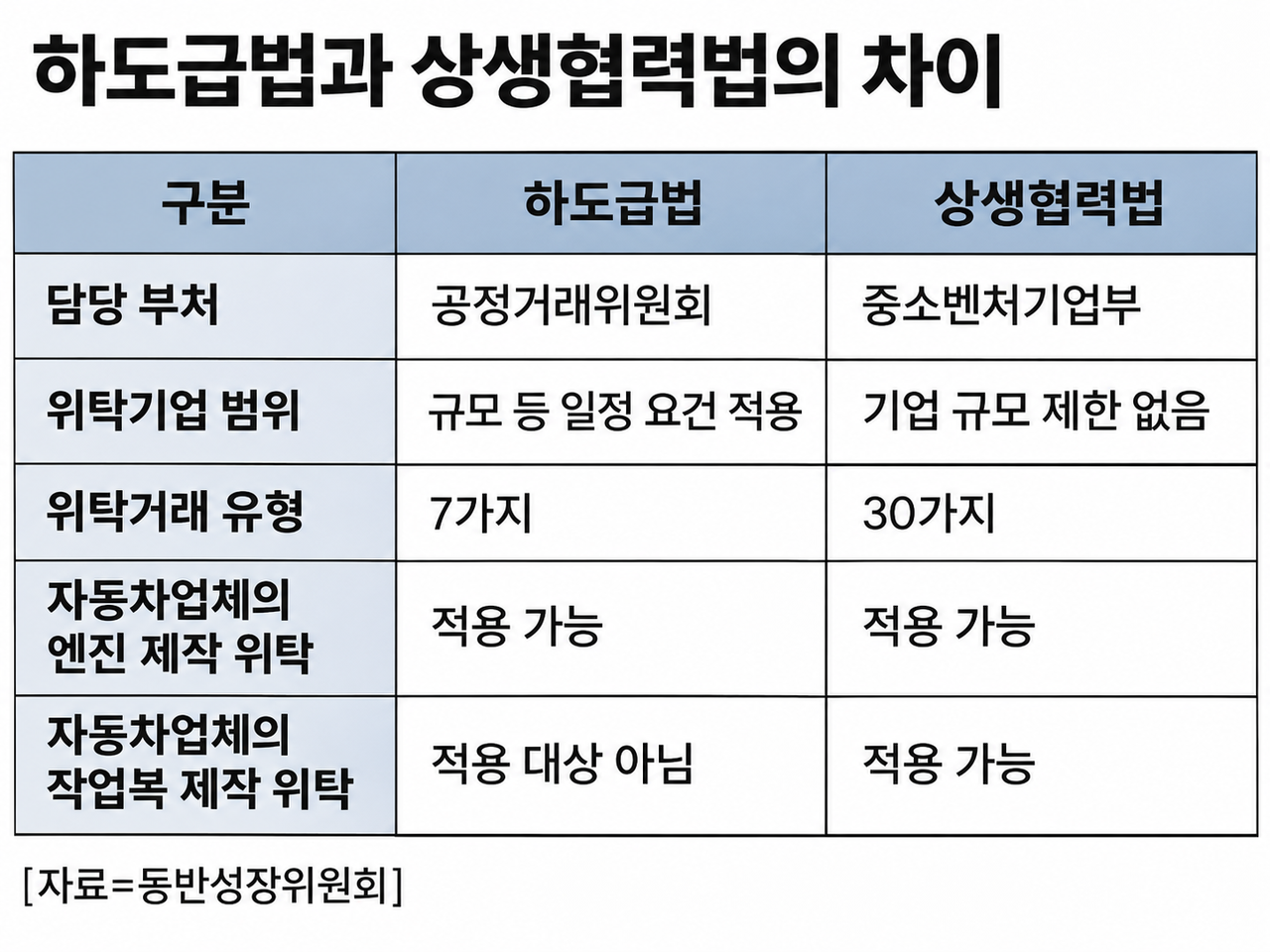
Neither transaction fell under the Act on Fair Transactions in Subcontracting. Both, however, qualified as consignment transactions under the Act on the Promotion of Mutually Beneficial Cooperation Between Large Enterprises and Small and Medium Enterprises, making dispute mediation possible.
According to the Korea Partnership Foundation, the Consignment Transaction Dispute Mediation Council mediates disputes arising from unpaid contract amounts, unilateral price reductions and order cancellations — including transactions between companies that fall outside the scope of the subcontracting act.
The council was established within the foundation under Article 28-5 of the Mutually Beneficial Cooperation Act. It helps resolve disputes between consigning and consignee companies through negotiated agreement between the parties.
The subcontracting act and the Mutually Beneficial Cooperation Act differ in scope. The subcontracting act limits its coverage based on the primary contractor's line of business, the nature of the outsourced work and company size. The Mutually Beneficial Cooperation Act, by contrast, places no restriction on the size of the consigning company and covers a comparatively broader range of outsourceable work.
For example, a transaction in which an automaker commissions another company to manufacture engines could fall under both laws. But if the same automaker outsources the production of work uniforms, that arrangement may not qualify as manufacturing consignment under the subcontracting act — yet it could still constitute a consignment transaction under the Mutually Beneficial Cooperation Act.
Disputes arising from transactions between SMEs that fall outside the subcontracting act, or from outsourcing arrangements unrelated to the primary contractor's core business, can still be resolved through the Mutually Beneficial Cooperation Act.
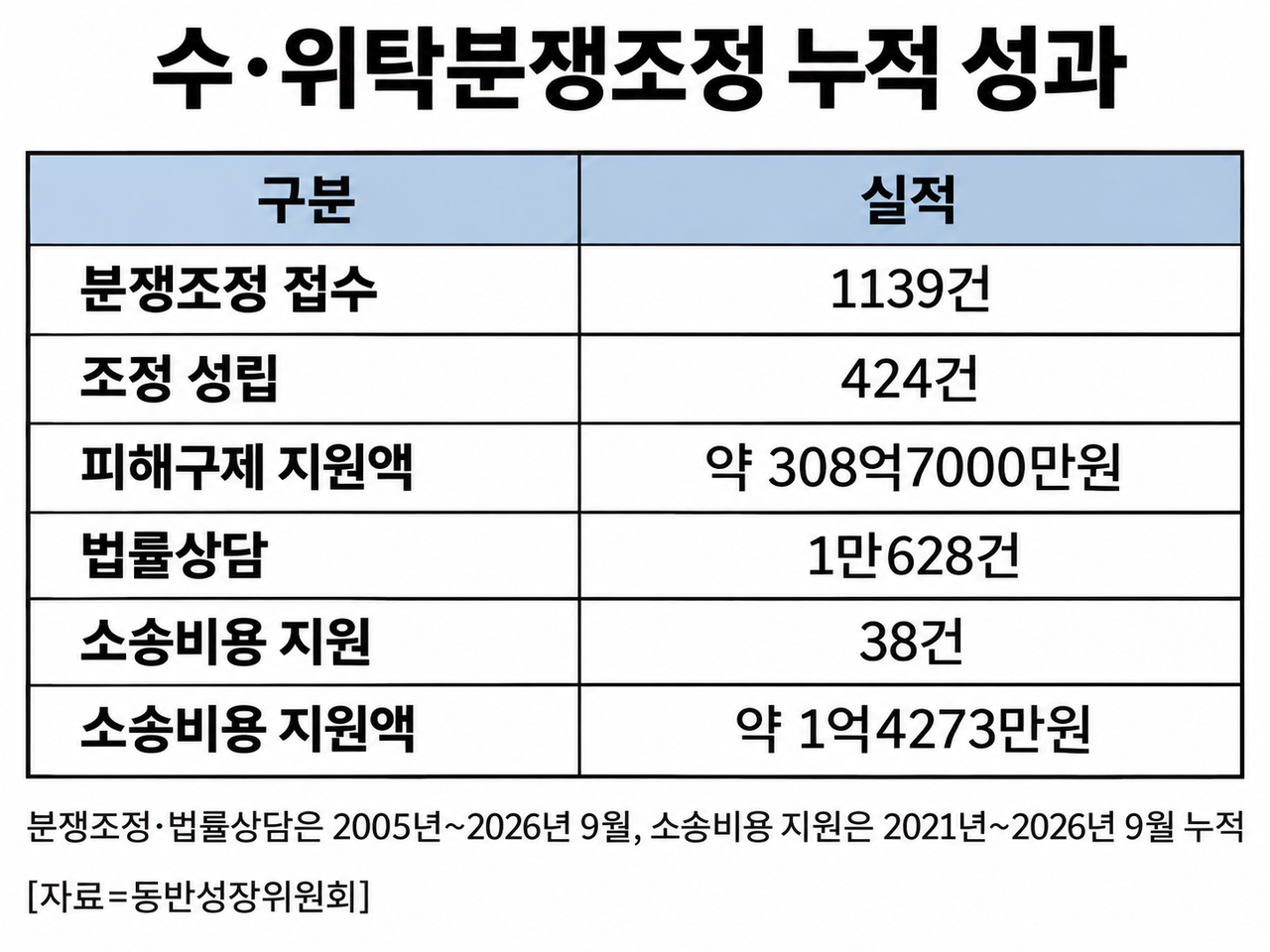
Filings with the council have grown consistently. According to the foundation, a total of 1,139 cases have been submitted to the Consignment Transaction Dispute Mediation Council from 2005 through September this year. Of those, 424 resulted in successful mediation, with total relief amounting to approximately 30.87 billion won.
During the same period, 49 cases ended without a settlement, 616 were closed for other reasons including withdrawal of applications, and 19 were dismissed. Another 31 cases are currently under mediation.
Annual filings stood at 87 cases in 2023, 94 in 2024 and 93 in 2025. This year, 105 cases had already been filed through September, surpassing last year's full-year total.
Unpaid contract amounts were by far the most common cause of disputes. Of the 1,139 total cases, 857 — or 75.2 percent — involved non-payment. Order avoidance or cancellation accounted for 104 cases (9.1 percent), price reductions or cuts for 62 cases (5.4 percent), and refusal to accept deliveries for 18 cases (1.6 percent).
By industry, manufacturing accounted for the largest share at 407 cases (35.7 percent), followed by services at 397 cases (34.9 percent) and construction at 335 cases (29.4 percent).
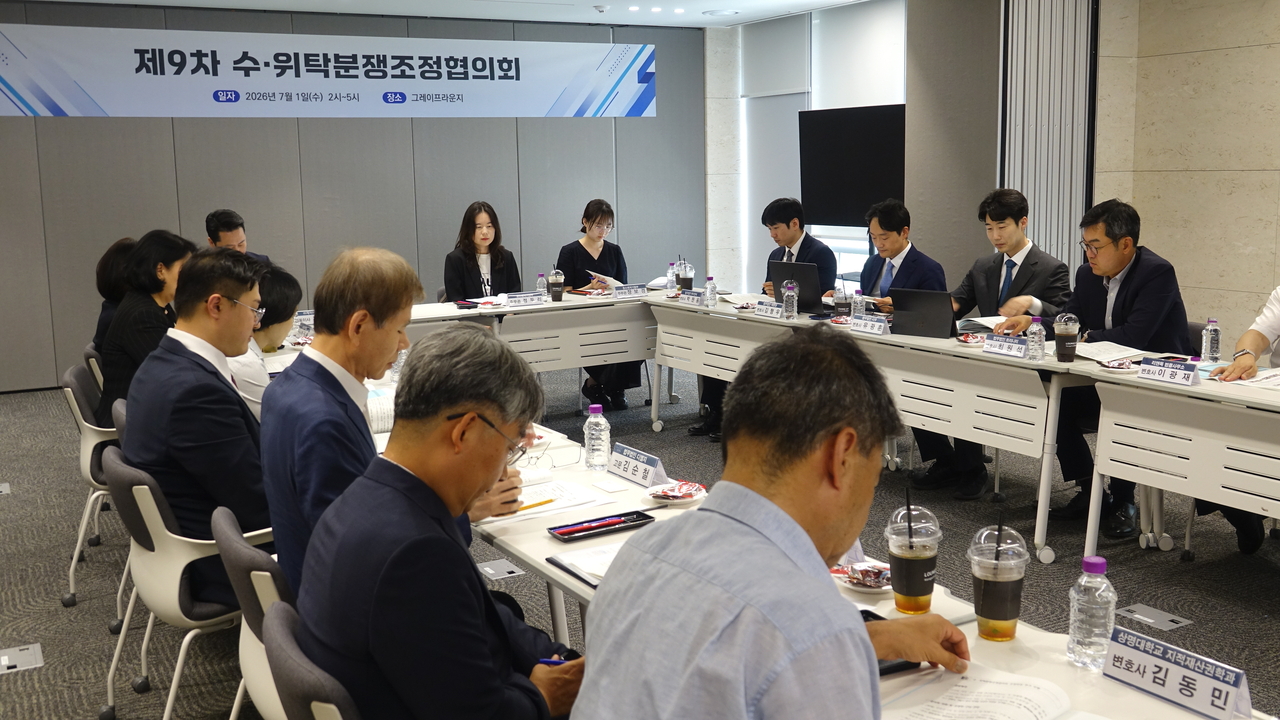
The dispute mediation council is composed of up to 30 members, including a chairperson. For case mediation, it operates five panels, each staffed by up to three members. The panels review case details and either recommend an agreement between the parties or propose a mediation plan.
Once a settlement is reached, the parties draw up a mediation agreement. If the agreement includes a clause consenting to compulsory enforcement, it carries the force of a civil enforcement order. Filing for dispute mediation also suspends the statute of limitations. If the mediation terms are fulfilled, the parties are also exempt from corrective recommendations or orders from the Ministry of SMEs and Startups.
Beyond dispute mediation, the foundation also runs legal consultation and litigation cost support programs. From 2005 through September this year, it provided legal consultations in 10,628 cases. From 2021 through September this year, it supported 38 lawsuits with a total of 142.73 million won ($106,000).
An organizational overhaul to handle business-to-business disputes more professionally is also in the works. On July 3, Democratic Party of Korea lawmaker Kwon Hyang-yeop introduced a bill to amend the Mutually Beneficial Cooperation Act that would establish a dedicated dispute mediation body for large enterprises and SMEs.
The proposed amendment would consolidate currently fragmented functions — including consignment transaction dispute mediation and technology dispute mediation — under a single body. The aim is to link dispute prevention and legal consultation with mediation and relief services, while strengthening the independence and neutrality of the mediation institution.
The contract price adjustment system is also set to expand. The delivery price linkage system, which took effect in October 2023, is scheduled to add major energy costs as a covered category starting Dec. 3. The expansion will cover electricity, gas and other energy costs that account for 10 percent or more of a contract's delivery price.
Even companies that have agreed to opt out of the delivery price linkage system may still request a contract price adjustment consultation if raw material, labor or other supply costs change after the contract is signed. If the consigning company fails to begin consultations within 10 days or reach an agreement within 30 days, the consignee may file for mediation with the Consignment Transaction Dispute Mediation Council.
hong@heraldcorp.com