Gallup Korea first-week November survey
Shift in views on judiciary most pronounced among liberals
Conservatives distrust newly created investigative agencies
More than 4 in 10 say national audit produced no results
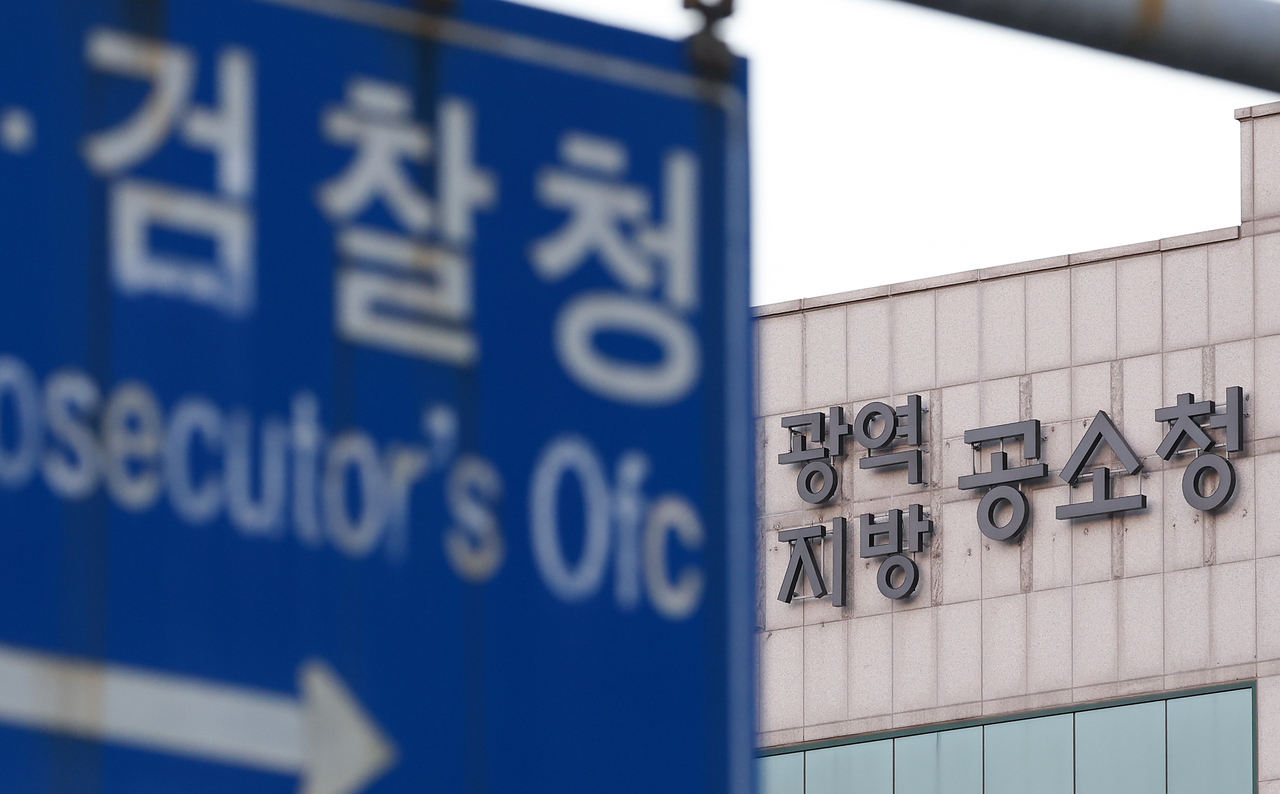
Public trust in the courts and the Constitutional Court has fallen since the impeachment ruling in April last year, a poll released Friday showed. Confidence in newly established investigative agencies — the Serious Crimes Investigation Agency and the Public Prosecution Office — varied sharply by ideological leaning.
In a Gallup Korea survey of 1,001 adults aged 18 and older conducted Tuesday through Thursday, 49 percent of respondents said they trusted the Constitutional Court and 41 percent said they trusted the courts. Trust in the Corruption Investigation Office for High-ranking Officials stood at 24 percent, the Korean National Police Agency and the Serious Crimes Investigation Agency each at 29 percent, and the Public Prosecution Office at 25 percent.
Particularly notable was the decline in trust in the Constitutional Court and the courts, both of which had drawn close attention immediately after the impeachment ruling in April last year. Trust in the Constitutional Court dropped 12 percentage points to 49 percent from 61 percent at that time, while trust in the courts fell 5 percentage points to 41 percent from 46 percent.
Gallup Korea said the shift in views on these judicial institutions was most pronounced among self-identified liberals, adding that the trend reflected the mood within ruling-party circles following recent vacancies on the Supreme Court bench.
Conservative respondents showed the strongest skepticism toward the Serious Crimes Investigation Agency and the Public Prosecution Office — both created under the ruling party's initiative — as well as the expanded Korean National Police Agency and the Corruption Investigation Office for High-ranking Officials, which was established under the Moon Jae-in administration in 2021.
Trust in all four agencies — the Serious Crimes Investigation Agency, the Public Prosecution Office, the Korean National Police Agency and the Corruption Investigation Office for High-ranking Officials — was in the 40 percent range among liberal respondents, around 30 percent among moderates, and below 20 percent among conservatives.
Negative assessments also dominated views on this year's national audit of the government. Only 15 percent of respondents said the audit produced meaningful results, while 46 percent said it did not. The remaining 39 percent withheld judgment.
Among those who gave a negative assessment, the most common criticism was "mutual attacks, political feuding and fighting" at 22 percent. That was followed by "no improvement or change" at 11 percent, "the ruling party steamrolling or abusing its majority" at 10 percent, "straying from key issues or lacking substance" at 8 percent, "generally poor performance" at 7 percent, and "partisan maneuvering or protecting one's own side" at 5 percent. "Ignoring economic and livelihood issues," "distrust of lawmakers or lack of qualifications," and "allegations left unverified or unresolved" each accounted for 3 percent.
Gallup Korea said dissatisfaction with the national audit's results was found across most respondent groups this year, including supporters of both the ruling and opposition parties. "This year's audit was fragmented across a wide range of issues beyond the judiciary," the pollster said, adding that a flood of short-form video clips edited from lawmakers' questioning sessions and heated exchanges had drawn criticism, with some calling it a "Shorts national audit."
People Power Party lawmaker Kim Tae-gyu and independent lawmaker Han Dong-hoon tied for first place as the Assembly members seen as most active during the national audit, each named by 5 percent of respondents. People Power Party lawmaker Joo Jin-woo followed at 3 percent, with People Power Party lawmaker Lee Jin-sook at 1.5 percent, Democratic Party lawmaker Seo Young-gyo at 1.3 percent, and Rebuilding Korea Party lawmaker Park Eun-jeong at 1.2 percent.
The survey was conducted via telephone interviews using randomly selected virtual mobile numbers. The margin of error is plus or minus 3.1 percentage points at the 95 percent confidence level. The contact rate was 40.8 percent and the response rate was 9.7 percent. Further details are available on the website of the National Election Survey Deliberation Commission.
mp1256@heraldcorp.com