A man who demanded compensation from a Seoul seafood restaurant, claiming all four members of his party fell ill after eating steamed clams, was found to have never set foot in the establishment. The medical receipt he submitted turned out to be an image stolen from the internet, raising alarms about a surge of new fraud schemes targeting small-business owners — including AI-manipulated refund demands.
According to JTBC's "Sageon Banjang" on Thursday, the owner of a seafood restaurant in Seoul — identified only as A — received a complaint call on Wednesday from a man.
The man claimed that four people had eaten steamed clams at the restaurant around 7 p.m. Monday and that all of them had fallen ill. "We were bedridden all day and only now recovered enough to call," he said. Citing the fact that all four were sick, he argued the food must have been the problem and demanded about 200,000 won ($149) to cover medical bills and the meal for all four.
A was startled and apologized profusely, then asked the man which table he had sat at. The restaurant operates on a policy of using up all clams the same day they are purchased, so A had some doubts — but when the caller grew aggressive and said the experience had left a bad taste, A promised compensation.
The medical receipt the man sent over, however, raised red flags. A said the receipt showed only a basic consultation fee and an injection charge, with the date cropped out, and that no restaurant receipt was included.
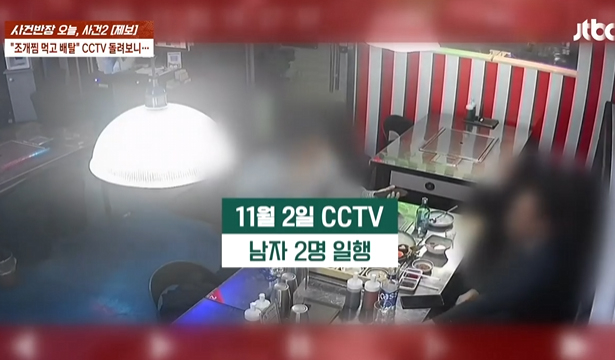
When A asked the man to resend the receipt with the date visible, along with a receipt from the restaurant, the man went silent. Suspicious, A reviewed the store's CCTV footage and confirmed that the man and his alleged companions had never visited.
The group was nowhere to be found in the footage — not on the day the man claimed to have visited, nor on Thursday or Tuesday.
"I called the number back and got a message saying the line had been suspended," A said. "Thankfully I hadn't transferred any money, but I felt completely played."
Making matters worse, the photo the man had sent as a medical receipt turned out to be an image posted online last spring. "When a customer raises a complaint, small-business owners try to resolve it amicably even if it is not their fault," A said. "Going through something like this is just heartbreaking."
Meanwhile, fraud schemes exploiting AI are also on the rise, adding to the frustrations of small-business owners.
In such cases, perpetrators use AI to manipulate photos of delivery food and then demand refunds, falsely claiming a hair was found in the food, that fried chicken was undercooked, or that a cockroach appeared in the order.
Calls are growing for a significant expansion of fraud-awareness education, given that roughly one-third of self-employed business owners in South Korea are aged 60 or older and are less familiar with the digital environment.
betterj@heraldcorp.com