Democrats' control of both chambers raises licensing and regulatory risks for US nuclear project; Cameco says $7.5b of advance payment expected to go toward AP1000 equipment; Deputy Prime Minister Lee warns of market intervention if stocks overreact
The Democratic Party's sweep of both chambers of Congress in the US midterm elections is casting a shadow over a major South Korean strategic investment project, with concerns mounting over the licensing environment for a planned nuclear power plant construction program. Amid the uncertainty, Seoul is pressing ahead with plans to transfer up to $10 billion in advance payments for the nuclear project before year's end — even though the project's specific terms and profitability have yet to be finalized.
According to the government on Friday, relevant ministries are preparing to transfer the advance payments for the US nuclear project under a strategic investment MOU between the two countries and related special legislation. A strategic investment plan the two countries announced jointly on Sept. 22 calls for transferring up to $10 billion by year's end to secure long-lead-time equipment — contingent on meeting domestic legal requirements, including a commercial viability review and a report to the National Assembly.
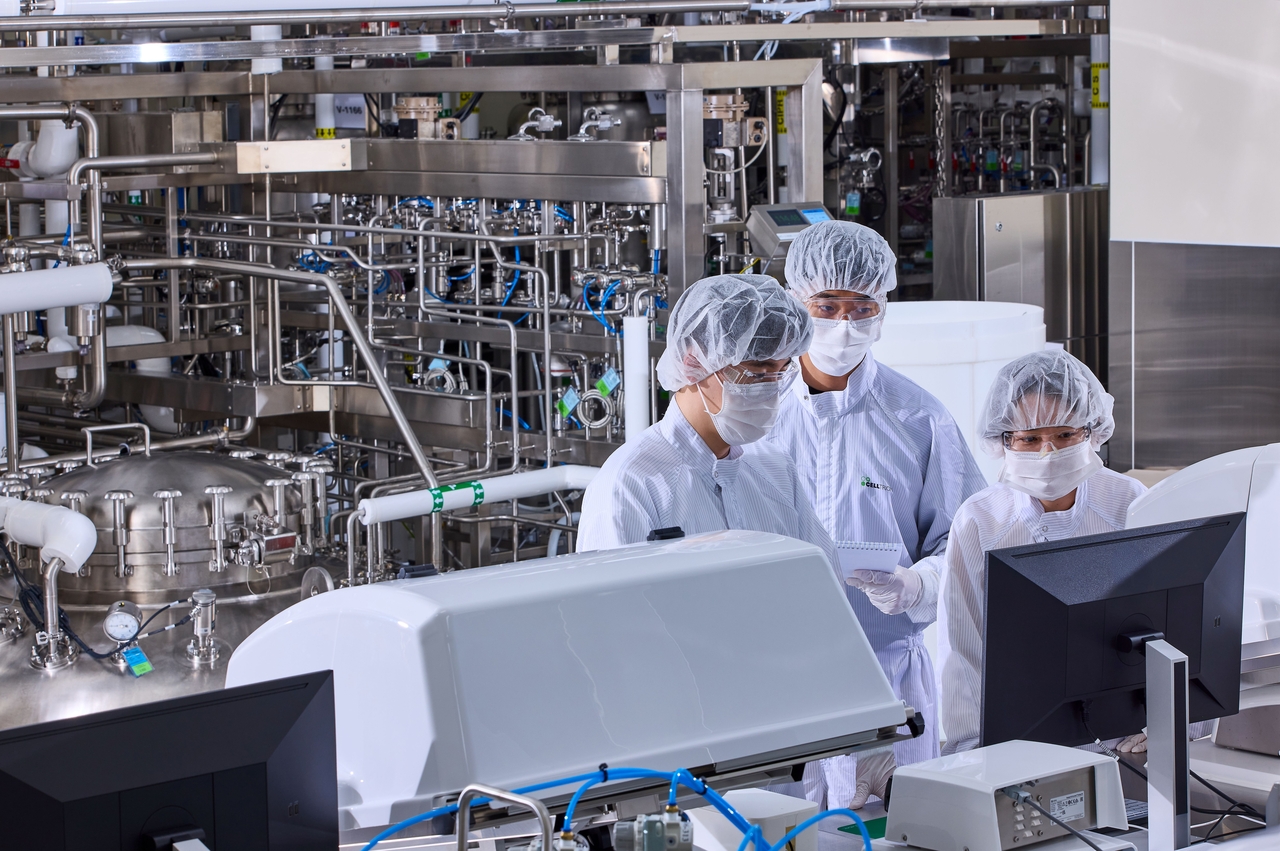
The advance payment is intended to secure key equipment needed for nuclear plant construction ahead of schedule. Major components such as reactor vessels (54-month lead time), steam generators (57 months) and reactor coolant pumps and motors (65 months) require years from order placement to delivery. Because long-lead-time items must be ordered well in advance to keep pace with construction schedules, the advance payment is considered the first step in moving the project forward. Doosan Enerbility holds a competitive edge in the technology and manufacturing of the relevant equipment.
The government says it will proceed with the transfer after completing required steps, including the commercial viability review and the National Assembly report. Observers note, however, that Seoul is likely to push ahead with the original timeline to ensure stable implementation of the bilateral agreement — particularly given the risk of US tariff retaliation and the fact that Washington has already set a year-end deadline for the payment. The implementation of the strategic investment deal is also intertwined with broader trade issues between the two countries.
Some details about how the advance payment would be used have begun to emerge. In its third-quarter earnings report released Oct. 30, Cameco — the Canadian nuclear company that holds a 49 percent stake in Westinghouse — said it expects the full $10 billion advance payment to be transferred by year's end. Of that amount, approximately $7.5 billion is expected to go toward purchasing long-lead-time equipment for Westinghouse's AP1000 reactors. The report did not specify how the remaining approximately $2.5 billion would be used.
The $7.5 billion figure Cameco cited, however, represents an expected procurement amount for AP1000 reactor equipment and does not disclose the specific suppliers or the scale of orders by country.
The US side had already made public the scale of the nuclear project and the advance payment plan. Commerce Secretary Howard Lutnick unveiled South Korea's investment plans at the White House on Sept. 30 (local time), describing the large-scale nuclear project as the biggest of three planned initiatives. He said the plan calls for building eight large nuclear reactors in the United States at a total cost of $120 billion — comprising $100 billion in core investment and a $20 billion contingency reserve.
Lutnick named Ohio, Tennessee, South Carolina and Kentucky as the states slated to host the reactors. Democrats won in Ohio and South Carolina in the midterm elections.
The Commerce Department said at the time that South Korea had agreed to provide $10 billion in advance payments by year's end, and that Korean companies would also explore acquiring a "significant" minority stake in Westinghouse. The specific investment terms and the stake acquisition structure, however, remain subject to future negotiations.
With Democrats now controlling both chambers following the midterm results, concerns are growing that the nuclear framework could be disrupted if the party moves to influence licensing and regulatory policy for nuclear plant construction. Critics argue it is premature to send a large sum of investment money when the project's uncertainties remain so significant.
Seo Wang-jin, a lawmaker of the Rebuilding Korea Party, held a press conference at the National Assembly on Thursday and urged the government to suspend the $10 billion advance payment under the Korea-US nuclear framework. "With Democrats taking control of both chambers, the conditions for nuclear investment are expected to change," Seo said.
Japan's US investment projects offer a cautionary precedent, where domestic licensing hurdles and legal disputes have emerged as complicating factors. One of Japan's first-round US investment projects — a crude oil export terminal in Texas — was halted after a US court found procedural problems with the project's approval process. The US Court of Appeals ruled on Aug. 12 that the Maritime Administration had committed serious procedural errors in approving the project and remanded the case to a lower court.
The Texas terminal is part of Japan's roughly $550 billion US investment package, with the project itself estimated to cost approximately $2.1 billion. The Maritime Administration approved the project in February last year, but a local environmental group filed a lawsuit arguing that the terminal was being developed in a zone where port construction is not permitted. The court's ruling — requiring the approval process to be reviewed again — illustrates how US investment projects can face schedule delays depending on domestic regulations and judicial decisions.
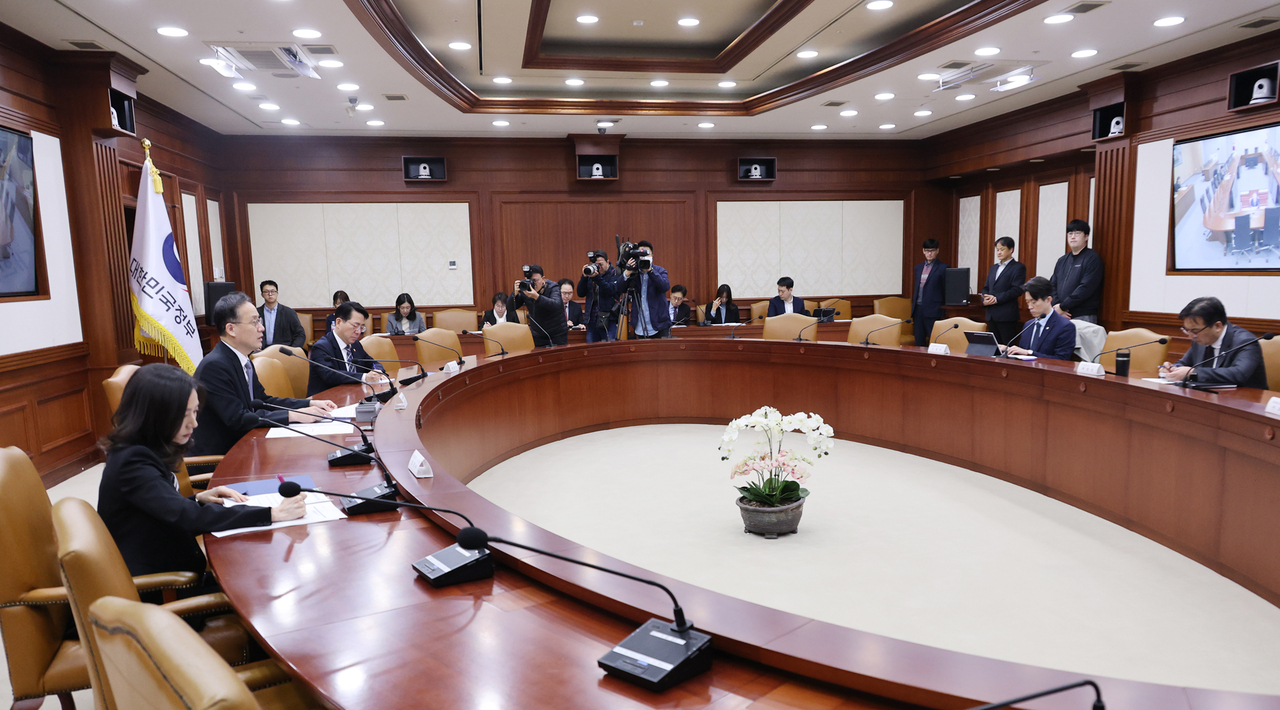
Meanwhile, financial market anxiety has also intensified in the wake of the US midterm elections. As South Korean stocks fell sharply, Deputy Prime Minister and Minister of Economy and Finance Lee Hyeong-il said at a meeting of ministers on external economic affairs on Friday that relevant agencies would "proactively prepare and promptly implement necessary measures to prevent our stock market from overreacting relative to economic fundamentals."
Lee described the US midterm elections held Tuesday (local time) as a critical inflection point for the global economy, adding that "US stocks fell sharply yesterday on concerns over tighter AI industry regulation, and we cannot rule out the possibility of spillover effects on global markets."
Lee said the government would monitor changes in US trade measures — including tariffs and export controls — as well as shifts in industrial support policies requiring congressional legislation and budget approval, and would proactively assess the impact on Korean companies.
Lee added that the government would work closely with relevant ministries to ensure stable implementation of existing Korea-US trade agreements, strengthen communication with the US administration, Congress and state governments to support steady exports and investment, and expand opportunities in strategic industries such as shipbuilding and energy.
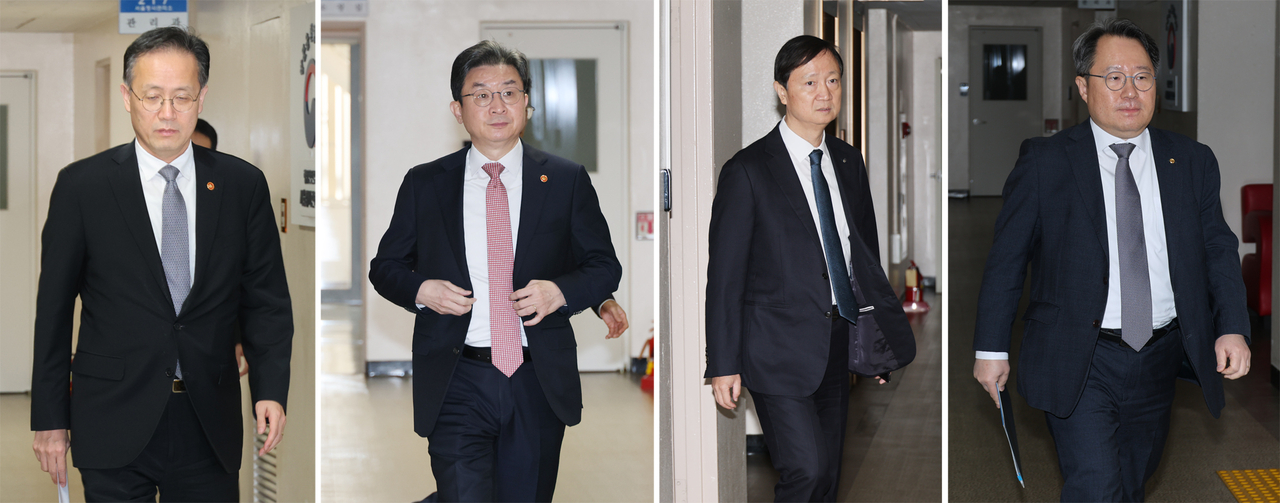
Following the ministers' meeting, Deputy Prime Minister Lee convened an emergency market situation review — the so-called F4 meeting — on Friday morning with Bank of Korea Governor Shin Hyun-song, FSC Chairman Lee Eok-won and FSS Governor Lee Chan-jin to discuss how to respond to market volatility.
oskymoon@heraldcorp.com