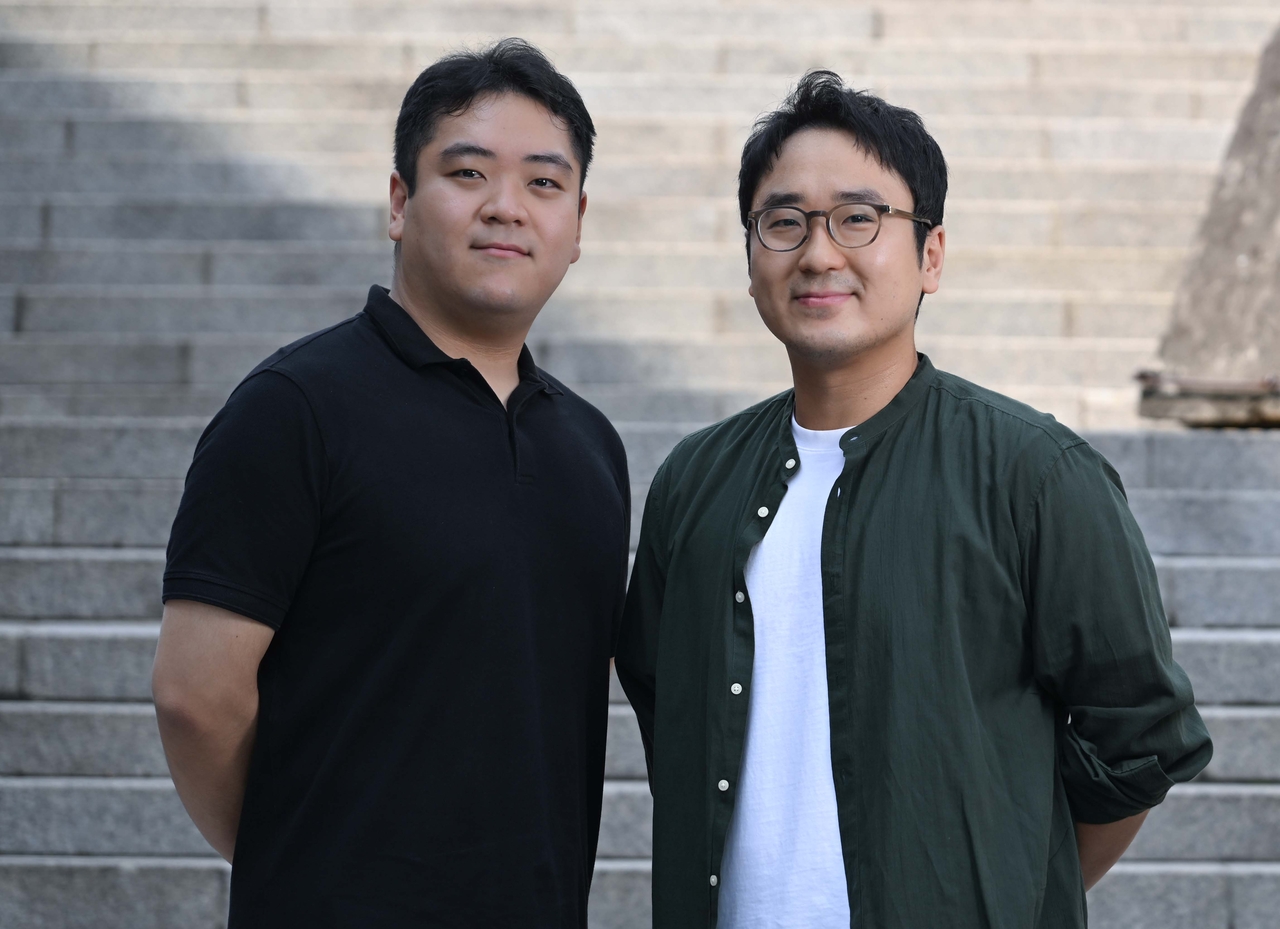
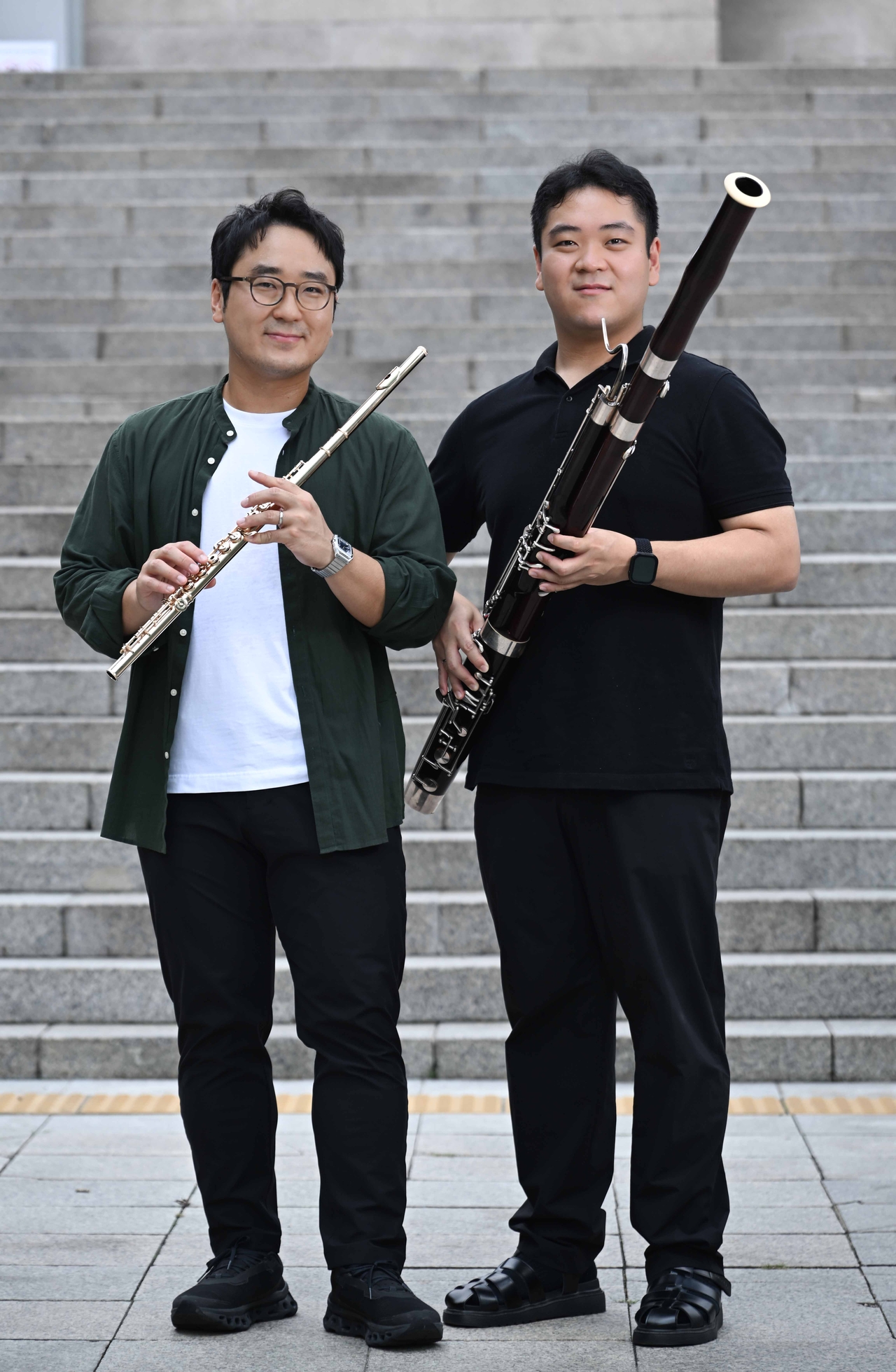
Flutist Cho Sung-hyun and bassoonist Cho Gwang-hyun
The older brother who handed over a 5-kilogram bassoon, the younger who quietly grew into it
From a cramped Berlin studio to a shared musical partnership
A brotherhood bound beyond the score, still in variation
"Why can't you get this?"
Whenever the younger brother sat struggling with the bassoon, the older one would push open the door without being called. He would walk in, pick up his own instrument and play the very passage his brother was stuck on. Different instruments, yet the notes became music as if by magic. "I really hated hearing that," Cho Gwang-hyun recalled. "And then he'd go and play it brilliantly." The unsolicited lesson always ended the same way — with the younger brother in tears. It is a scene that has played out ever since Gwang-hyun first picked up an instrument.
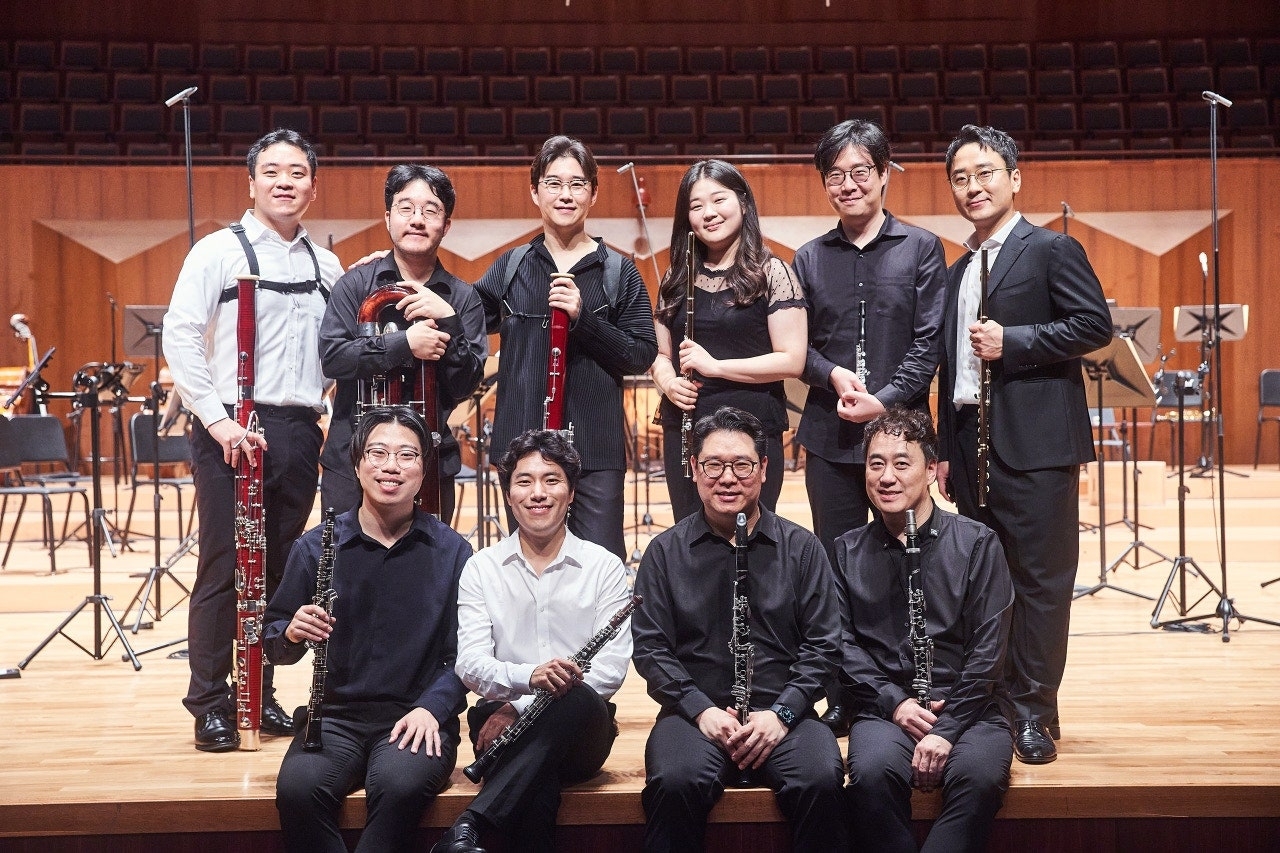
Flutist Cho Sung-hyun, 36, a professor at Yonsei University, and bassoonist Cho Gwang-hyun, 29, are a rare pair of wind-instrument siblings in the classical music world. Seven years apart, the two look alike, sound alike and even speak alike — colleagues routinely mix them up on the phone. They had kept their relationship quiet until this past summer, when they appeared side by side on a chamber music stage for the first time at the July Festival of The House Concert last August.
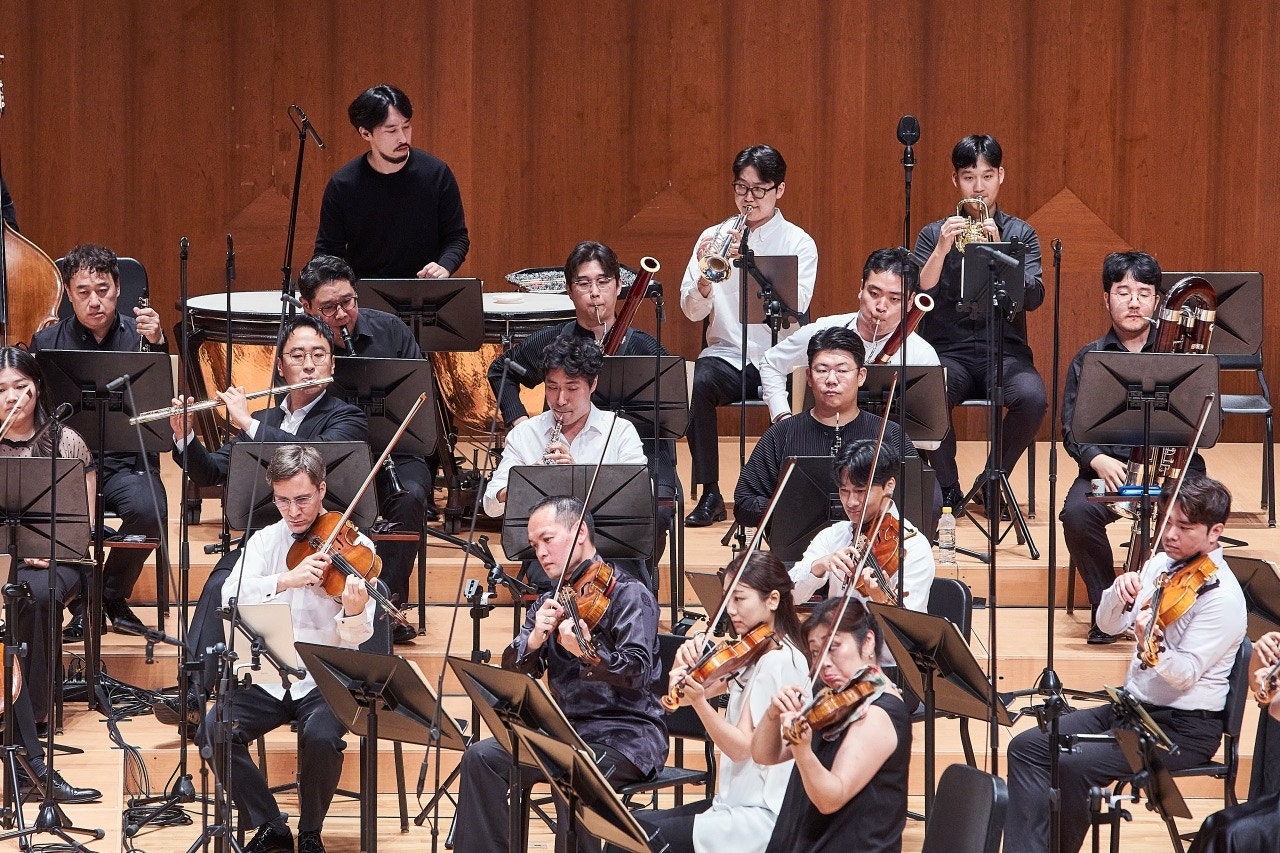
The stage placed them barely a meter from the audience. Standing together for Poulenc's Sextet, the two radiated a brotherly resemblance their gentle eyes and smiles could not hide. Sung-hyun had assembled the ensemble, yet even the organizers only learned then that the two were brothers. Gwang-hyun had performed at the same festival the year before without once mentioning he was Cho Sung-hyun's younger brother. "There was no particular reason," Gwang-hyun said. "I figured everyone would find out eventually." Listening to his brother, Sung-hyun promptly offered a confession of his own. "I put him through a lot of stress living with me," he said with a laugh.
Sitting together, the brothers opened with what amounted to a list of grievances. When Sung-hyun said he used to find Gwang-hyun "very defensive" about feedback, Gwang-hyun smiled sheepishly and admitted he had probably been "a bit closed off." Sung-hyun's feelings toward his younger brother are, in many ways, those of both a parent and a teacher. With ninety percent sincerity and ten percent humor, he said he "labors under the delusion that I raised this guy" — at which Gwang-hyun fired back on cue: "He says that all the time."
'It looked as cool as a bazooka' — the instrument his brother chose for him
Music was always part of their lives, but theirs was not a musical family. The two brothers are the only professional musicians in the entire household. The credit for nurturing their musical instincts goes to their mother, who took them to performances of every kind — opera, musicals and the homecoming recitals of performers whose names they did not even know. Young Sung-hyun spent his childhood holding his mother's hand and wandering in and out of Seoul Arts Center as if it were his own home.
Then one day, fate intervened. In 1998, on what he described as a "randomly chosen performance" he attended with his mother, the show turned out to be the Korean debut of Emmanuel Pahud, the flutist who would become his idol.
"I'd be lying if I said I truly loved the music back then — I was only in second grade," Sung-hyun said. "What I saw was this incredibly handsome man, like a movie star, walking out holding a golden instrument, and the sound of a single flute filling every level of the concert hall. That image just stunned me."
The opening piece that evening was Poulenc's Flute Sonata. The moment the concert ended, the boy told his mother he wanted to play that instrument. She acted swiftly: within the same week, she had enrolled him at a neighborhood hagwon. The poster he brought home that night became a kind of talisman for some time afterward. Gwang-hyun, listening to his brother tell the story, quietly added that Sung-hyun had kept it "laminated and treasured."
Not yet able to produce a vibrato, the young Cho Sung-hyun saw a newspaper advertisement and auditioned for the preparatory school of the Korea National University of Arts. "I was barely getting through a short Andante, but the teacher saw potential and accepted me," he said. Pahud, the object of his admiration, later became his teacher. This past summer — 28 years later — Sung-hyun performed the Poulenc sonata at the July Festival, the very piece he had first heard through his teacher, completing a long arc of his own story.
It was Sung-hyun who first suggested his brother take up an instrument. He had started the flute at age 8, and laughed recalling that he simply "could not understand" how his brother, already in middle school, still had no idea what he wanted to do.
The choice of instrument was entirely Sung-hyun's. In 2010, when Gwang-hyun entered his first year of middle school, the decision reflected one hundred percent of his older brother's taste. "I thought about what might suit him, and I just love the sound of the bassoon," Sung-hyun said with a smile. The bassoon and flute sit at opposite ends of the register, yet Sung-hyun said his favorite quality even in the flute is "a comfortable, warm low tone." He was convinced that the bassoon, which blends so naturally with the flute, would become the perfect musical companion for his brother.
Gwang-hyun burst out laughing at that account. "I had no say in the matter whatsoever," he said. Even so, he did not mind. "If it had been the same instrument as my brother's, my parents would have pressured me too. Instead, I went to a completely new teacher and started from scratch. When I was young, it looked big and strange and as cool as a bazooka."
Getting comfortable with an instrument weighing more than 5 kilograms took time. It was not love at first sight. Using his brother's music, absorbed by ear, as a kind of textbook, Gwang-hyun said he "slowly, naturally grew into it."
Sharing a Berlin studio — the years when nagging became law
Sung-hyun's campaign to shape his younger brother's life was relentless and methodical. Having gone abroad to study on his own in middle school, Sung-hyun moved from Hanover to Berlin in 2013 after being accepted into the Karajan Academy. He then summoned his brother — who had just started his first year at Seoul Arts High School — to Germany.
"I only told our parents. I told Gwang-hyun to come visit with his instrument," Sung-hyun said. "The day he arrived, I told him to practice. Then I informed him: 'You have an audition tomorrow.'"
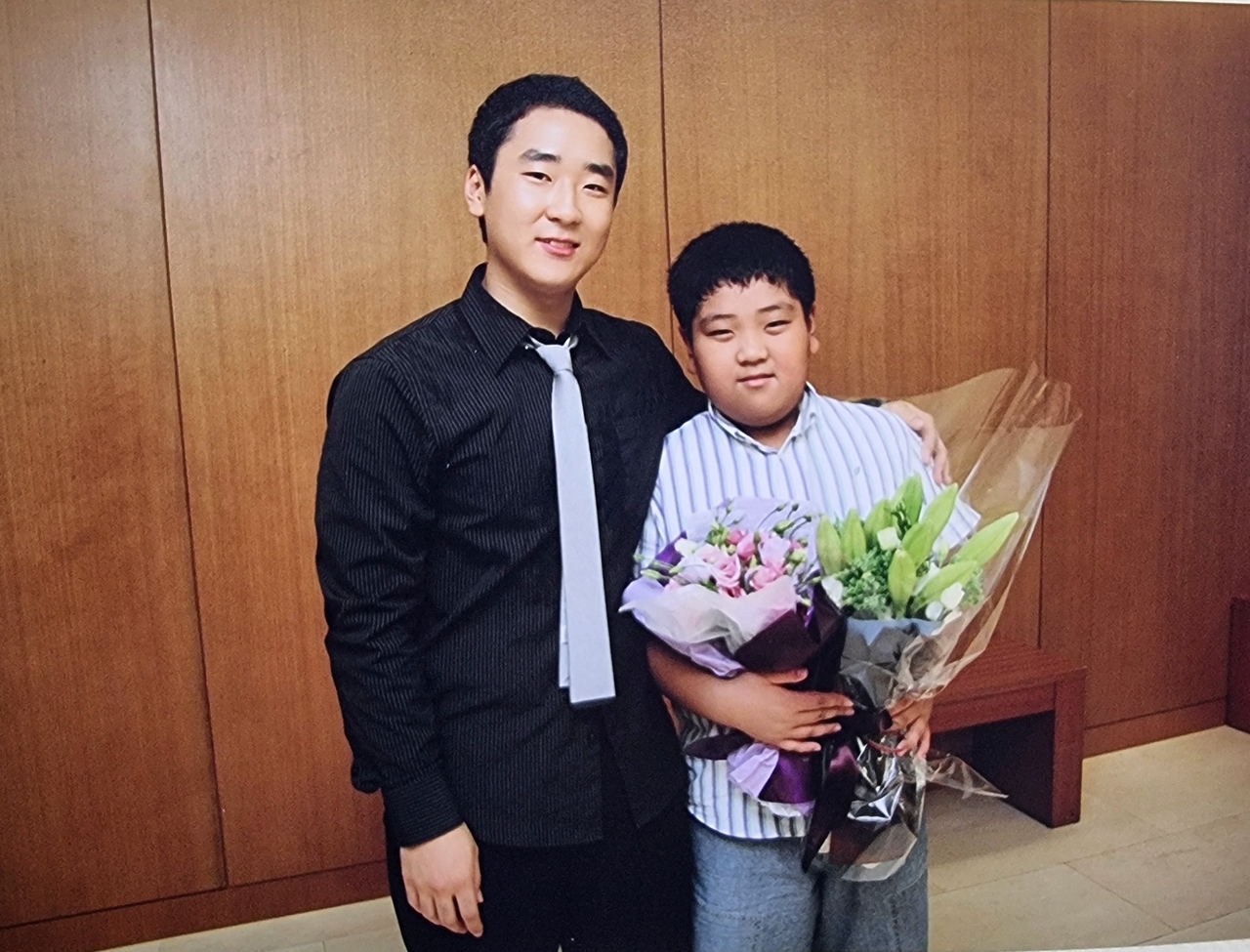
Having gone to Germany ostensibly to "visit" his brother, Gwang-hyun auditioned for the preparatory school of the Hanns Eisler School of Music Berlin the very next day. Speaking not a word of German, Gwang-hyun let the playing speak for itself, received an acceptance letter and ultimately completed both a bachelor's and a master's degree in Berlin. "Looking back now, I feel terrible about it — but at the time, Gwang-hyun had no right to resist," Sung-hyun said with a laugh. Easygoing and unflappable by nature, Gwang-hyun never once complained and took every word of his brother's criticism as gospel. "Gwang-hyun is the kindest person I know," Sung-hyun said, exhaling with quiet emotion.
"Because of the age gap, my brother was already studying abroad in the United States by the time I was in elementary school," Gwang-hyun said. "We didn't see each other often, so he felt even more like a grown-up to me. And honestly, I did try to push back once — and got an earful for it."
The brothers lived together in a cramped Berlin studio for nearly five years, nurturing their dreams as musicians through gray German winters, fueled by hamburgers, kebabs and ramyun. "We just live with whatever we have. We could eat ramyun for an entire month," Sung-hyun said. "Our favorite is mandu — we once ate it for two months straight." Sung-hyun eventually settled in Cologne, and the two finally began living apart. He passed the Berlin apartment on to his brother. Gwang-hyun went on to play with the Aachen Symphony Orchestra and has served as principal bassoonist of the Osnabrück Symphony Orchestra since 2023. "Seeing him handle his professional life so capably puts my mind at ease," Sung-hyun said.
'Why can't you get this?' — from strict mentor to trusted colleague
What began as an accidental cohabitation came to resemble a grueling conservatory dormitory. Whenever a technical flaw in Gwang-hyun's practicing caught his ear, Sung-hyun would appear unannounced in the doorway. To his gentle younger brother, he was a strict and demanding teacher.
Listening to Gwang-hyun on the bassoon, Sung-hyun said he "only heard problems." "I'd just walk in while he was practicing, even when there was no need. Because I could hear things," he said with a laugh.
Sung-hyun was at that point a consummate performer widely regarded as a standard-bearer for Korean woodwind playing, and to his younger brother he represented an enormous, almost overwhelming wall to scale. He looks back on that period with nothing but regret. "I kept pointing out technical problems instead of offering words of encouragement," he said. "I feel terrible about it."
"Back then, I hadn't developed enough objectivity about my own playing, so it felt like he was just picking on me for no reason, and my pride took a hit," Gwang-hyun said. "I even thought: why is a flutist telling me how to play the bassoon? But looking back now, he really did teach me well. I can see that everything he said back then was right. He really is good at what he does."
As the teenage boy grew into a professional musician in his own right and secured a position in a German orchestra, the dynamic between the brothers shifted. Sung-hyun — who had moved from a tenured principal position at the Gürzenich Orchestra Cologne to a professorship in woodwind studies at Yonsei University — set down the whip he had once wielded over his brother. The realization that "everyone has different tastes and pursues different music, so you cannot impose your own" had changed him. The two had gradually moved into step with each other as colleagues.
"Before, he was forceful. Now it's more like, 'I think this sounds nice … ' — even his tone has changed," Gwang-hyun said. After a performance, Sung-hyun asks his brother what he thought of his playing. "Once I opened up, he responded with respect, and we started talking purely as one musician to another," Gwang-hyun said.
Contrasting nuances, perfectly matched ears
Their sounds are similar yet distinct. Whether performing or teaching, Sung-hyun's guiding principle is to "release tension" — to play in a way that is natural and unforced. He sees his brother's strengths as "the power to push all the way through" and "a dense, solid core." Even so, he once nagged Gwang-hyun constantly to "let go of the tension." Gwang-hyun smiled and said he is "working on that these days too."
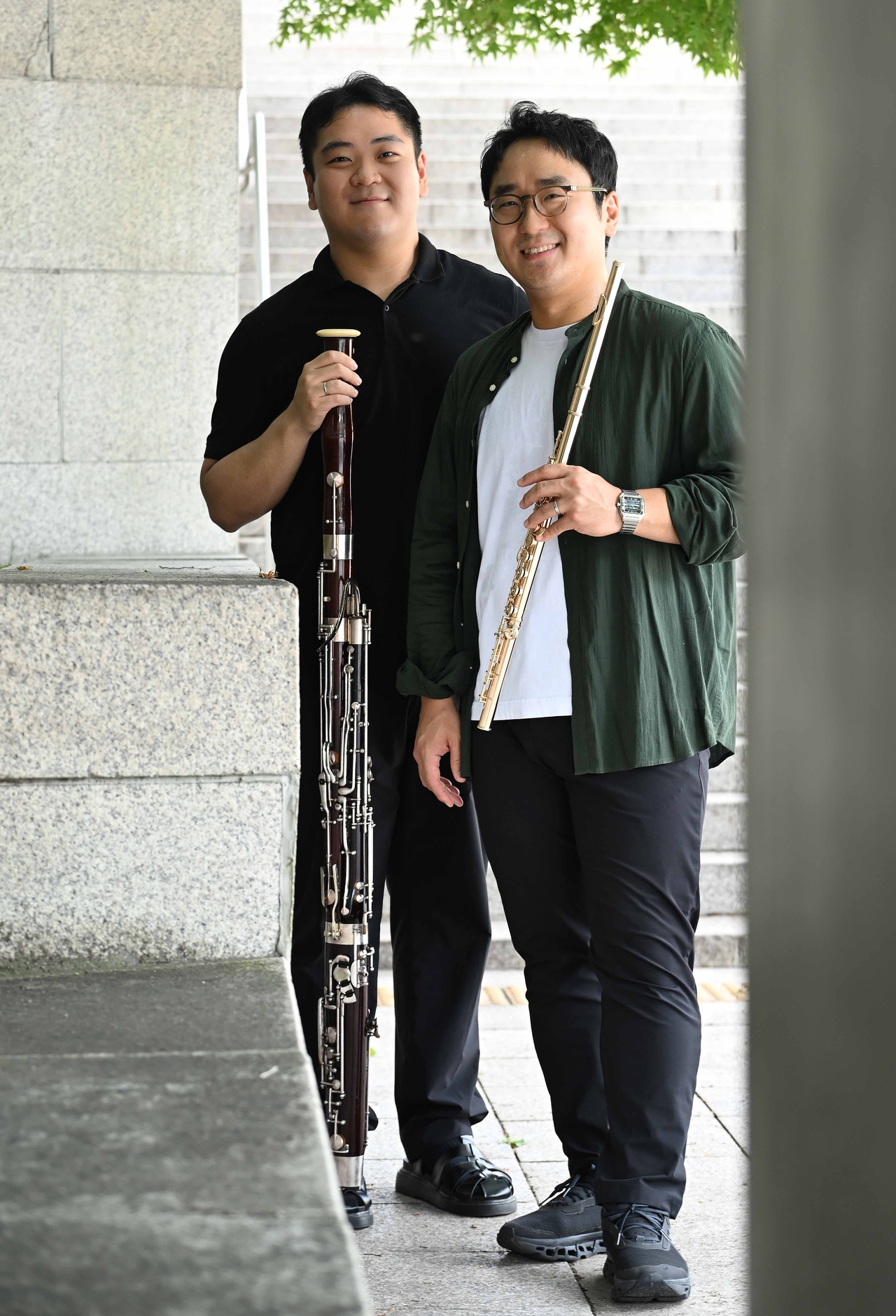
In Gwang-hyun's eyes, his brother is a romantic. "By the rules of the instrument, something should not work — but when my brother plays it, it sounds wonderful," he said. "Watching that made me think: if you're good enough, it works. It made me think about playing without being confined to a framework." Having grown up listening to Sung-hyun's music before he could even speak, Gwang-hyun feels no anxiety watching his brother take the stage. "I have never once worried about him performing. I want that same sense of stability, that unshakeable ease, for myself," he said.
The resemblance goes beyond their faces and voices. Both have type-A blood and share the same MBTI type, ISFJ — quiet, diligent and attentive to those around them. They name the same musicians when asked about their favorites, and both have an ear attuned to whether the oboe blends well with the flute and bassoon in ensemble. In orchestral or chamber settings, both place greater value on "blending and merging" than on "stepping forward to lead."
Sung-hyun, who once appointed himself his brother's unofficial guide, now devotes himself to nurturing a new generation of woodwind players. He teaches his students to become their own teachers and to arrive at a persuasive performance through their own understanding. His method is Socratic: he does not hand students the answer they are waiting for. "I tell them: convince me that your music is right," he said. "We live in an age when people think less than ever before. I want to give lessons that make students think for themselves." He is also determined not to repeat the "forceful" approach he once took with his brother.
The philosophy he imparts to his students applies to himself as well. Sung-hyun meets audiences Friday at Seoul Arts Center for a recital of Bach's flute sonatas. "Bach is music that raises new questions every time I play it," he said. "Whatever answer I find never remains the definitive one." Gwang-hyun, meanwhile, is balancing performances with German orchestras and advanced coursework, absorbing as much as he can. "As a musician with a long road still ahead, I want to absorb as much as possible, like a sponge," he said. Sung-hyun nodded along. "Rather than being consumed entirely by music, I want to maintain a healthy balance in life and keep playing for a long time," he said — though he added that practice remains his greatest pleasure, and that whenever he steps outside, he finds himself wanting to go back and play. He still describes himself as someone "who needs to keep working."
Even after all they have achieved, both brothers continue to wrestle with their instruments without rest. Their musical hunger is still very much alive. Curious and always exploring new musical possibilities, their shared next dream is a stage together — a weighty, warm journey of flute and bassoon, each supporting the other's voice. Their music has come to mesh like interlocking gears. The ensemble they shared last summer gave Sung-hyun a certainty he did not hesitate to express. "We're a good fit now," he said without pause. His brother, seven years his junior, took just a half-beat longer to answer.
"We're getting there."
shee@heraldcorp.com