Gangseo-gu opens integrated complex in Magok after 49 years, housing district office, health center and council under one roof
Gwangjin-gu completed its move to a new hall in June last year, adding a library and gardens for residents
Gangbuk-gu breaks ground this month; Jongno-gu set to follow next year
Seoul's autonomous districts are opening a new chapter in public administration, with several completing or planning moves into modern civic halls.
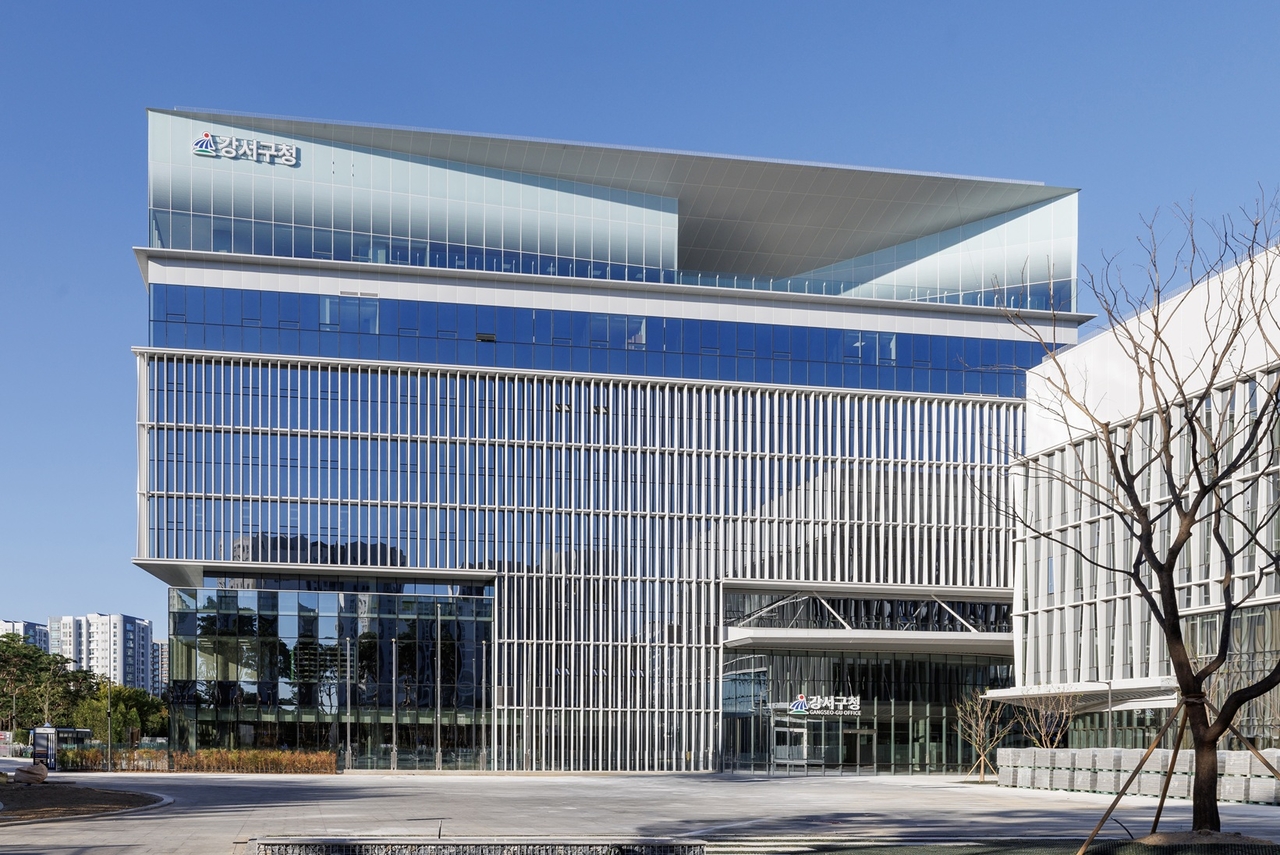
Gangseo-gu completed its move to a new integrated complex in Magok last month — 49 years after the district was established — while Gwangjin-gu opened its own new hall in June last year. Staff who had worked in cramped, aging buildings have welcomed the improved working conditions, and residents can now handle administrative matters at a single location instead of traveling between scattered offices.
The new halls go well beyond basic administrative functions. Recent district civic halls have evolved into community hubs equipped with libraries, cultural facilities and green spaces designed to draw in residents.
Gangseo-gu wrapped up its phased move to the Magok integrated civic hall last month and began full operations. It is the district's first new home since it was established in 1977.
To minimize disruption to residents, the district carried out the relocation in stages throughout October. With the district council completing its move, the main district office, public health center and council are now all housed together.
The complex sits at 135 Gonghang-daero in Magok-dong on a site of 20,244 square meters, with a total floor area of 59,147 square meters. It comprises four buildings — the main district office, a public health center, the district council and an annex — and comes to fruition six years and two months after the master plan was finalized in August 2020.
Previously, the main office, annexes in Hwagok-dong and Gayang-dong, the health center and the council were spread across separate locations, forcing residents to visit multiple buildings for different services. The consolidation creates a one-stop administrative base where related services can be handled in a single visit.
The new complex also greatly expands public space for residents. It features the Magok Open Library, a multipurpose hall on the second basement floor that can serve as a public wedding venue, and expansive gardens and green areas. A Seoul-style kids' cafe is set to open on the third floor of the annex in December.
The first-floor lobby houses "Time Lounge," a history and culture gallery tracing Gangseo-gu's past, present and future. AI kiosks have been installed to guide visitors on administrative inquiries and department locations.
Gangseo-gu District Mayor Jin Kyo-hoon said consolidating the district's scattered administrative functions in one place had significantly improved operational efficiency. "We will keep the doors of this hall wide open so that any resident can visit comfortably," Jin said.
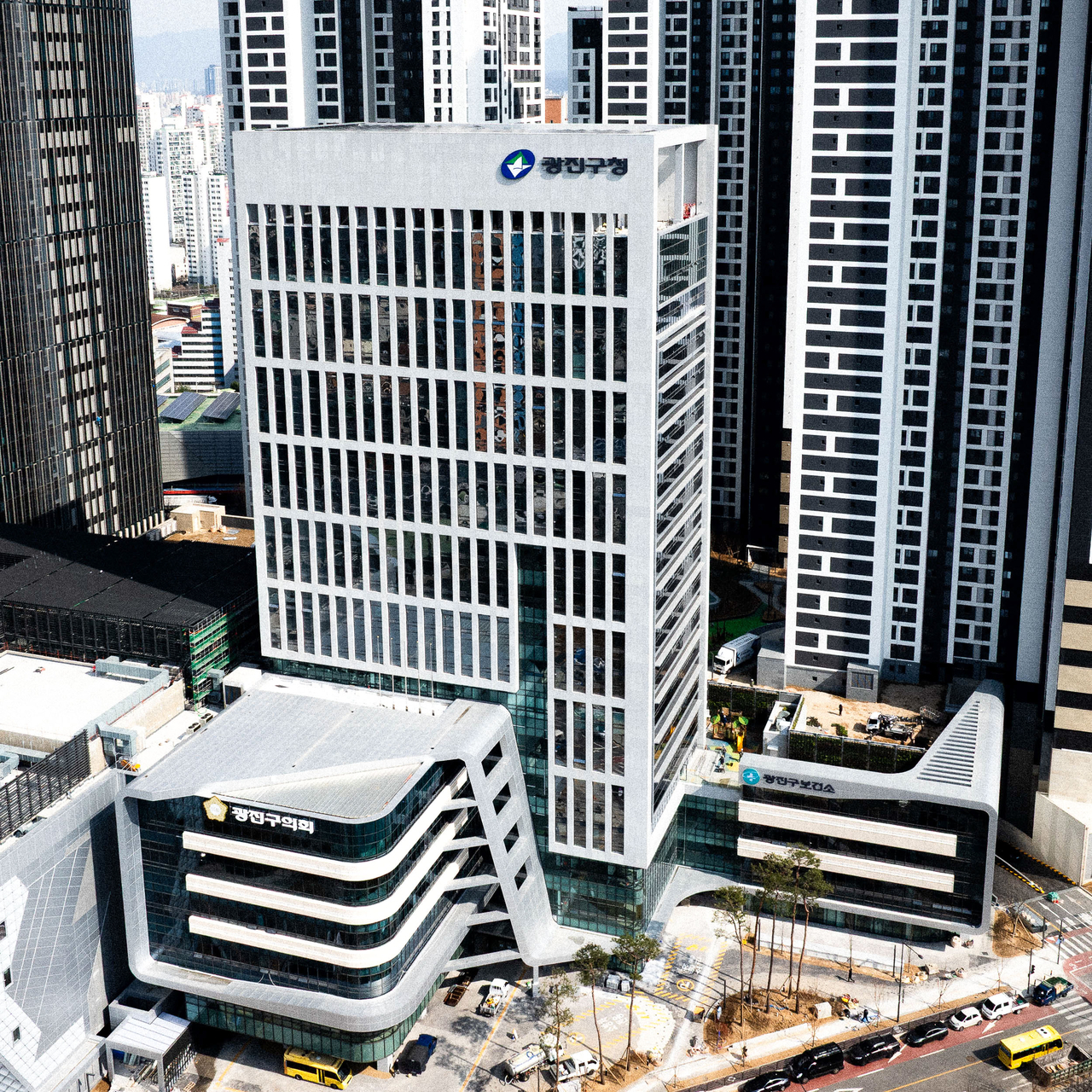
Gwangjin-gu moved into its new integrated civic hall in June last year, establishing a fresh administrative environment for the district. The 18-story building sits next to Guui subway station, allowing residents to reach the district office without exposure to rain or snow.
To mark both the opening and the district's 30th anniversary, Gwangjin-gu held an inauguration ceremony in the main auditorium and unveiled its "2040 Gwangjin Re-creation Plan" along with a vision for the district's future. Seoul Mayor Oh Se-hoon, National Assembly lawmakers and local residents — about 800 people in all — attended to celebrate the new hall's launch.
The district positioned the new hall as an open space shared with residents, not merely an administrative workplace, and said the opening would serve as an opportunity to strengthen communication with the public and raise the quality of administrative services.
The push by Seoul's autonomous districts to build new civic halls reflects a shared need to address aging infrastructure, chronic space shortages and the inconvenience caused by fragmented administrative functions. The projects are drawing attention not only as construction efforts but as opportunities to reorganize district governance and create new community anchors.
Gangbuk-gu broke ground on its new civic hall this month, while Jongno-gu has announced plans to begin construction next year.
As new halls open across Seoul's districts, the role of public administrative buildings is shifting. Once closed-off spaces centered on bureaucratic functions, they are being reimagined as community hubs where residents can read, enjoy cultural programs and relax.
Given the substantial budgets involved, however, questions remain about how districts will manage construction costs and fiscal pressures — and whether the new facilities will translate into tangible improvements in resident convenience and administrative efficiency.
Whether the new halls can take root as spaces that bring real change to residents' daily lives, rather than serving merely as district landmarks, remains to be seen.
seouldream01@heraldcorp.com