Audit covers budget planning, public institution personnel, urban development and local economy
Committee flags surplus overestimation, unspent budgets, personnel fairness at public corporation
Members call for improvements in traditional market support, reconstruction oversight and robot project outcomes
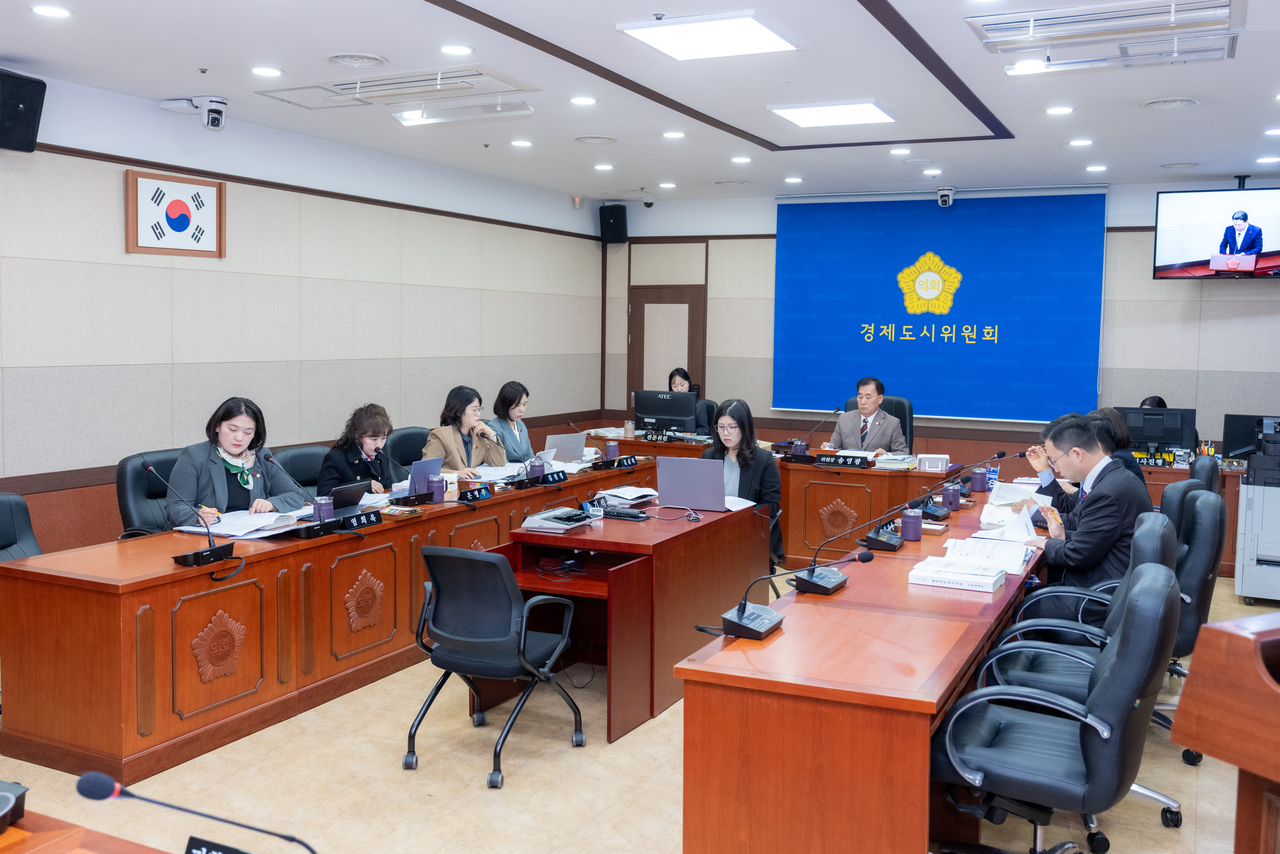
The Economy and Urban Committee of the Seoul Gangnam-gu Council, chaired by Song Yeong-gwang, concluded its 2026 administrative audit after scrutinizing the district's overall governance — from budget efficiency and personnel fairness at public institutions to urban development management and local economic revitalization.
The committee conducted the eight-day audit from Nov. 17 through Nov. 24, covering the Planning and Economy Bureau, the Urban Environment Bureau, the public health center, the Future Strategy Planning Unit and the Gangnam-gu Urban Management Corporation.
Eight members participated in the audit: Committee Chair Song Yeong-gwang, Vice Chair Kim Yun-hui, and lawmakers Lee Sang-ae, Kim Jin-gyeong, Park Dae-yong, Eun Myeong-ju, Kim Ji-ung and Yeom Hui-ok. The members reviewed advance materials and conducted in-depth questioning to examine how each department carried out its work, assess the results of major projects and evaluate the appropriateness of budget execution.
Key issues raised during the audit included the accuracy of fiscal management, the feasibility of new policy projects, the fairness of personnel and performance management at public institutions, oversight of reconstruction projects and public facilities, and strategies for local economic revitalization.
Committee Chair Song flagged the overestimation of net fiscal surplus and recurring problems with unspent and carried-over budgets, calling on the district to improve the accuracy and accountability of its fiscal management and to develop a medium- to long-term strategy for securing external funding. Song also said the budget scale and feasibility of new projects — including a robot demonstration project and an ICT living lab — must be rigorously verified to ensure they produce tangible results.
Song also pointed to weaknesses in oversight of privately commissioned projects and public facilities, questioned the appropriateness of special promotions and external senior-level hires at the Urban Management Corporation, and raised concerns about equity in promotions and performance pay. Song said the organization must restore internal trust through a fair and transparent personnel system.
Additional improvement tasks identified included ensuring the safety and public interest of large-scale development projects such as the Yeongdong Boulevard mixed-use development and the Global Business Center construction, strengthening performance evaluation of employment and business support programs, and tightening follow-up management in public health and sanitation administration.
Vice Chair Kim Yun-hui called on the district to separately track consultation amounts, contract progress, actual contracts concluded and export figures for its overseas market-development program, and to build a performance management system that feeds results into future projects. Kim also said the criteria for selecting repeat-participant companies must be made clearer.
On the Gangnam service robot demonstration project, Kim raised the issue of unspent budget from the previous year and called for the district to verify whether robots that had completed demonstration trials had actually been deployed in the field, and to incorporate those findings into future budget planning. Kim also said the mental health counseling voucher program must be managed more systematically, with separate tracking of deposited and settled amounts and of the number of eligible recipients versus those who started and completed counseling.
Lawmaker Lee Sang-ae said the Urban Management Corporation must ensure its personnel practices are fair and free from any appearance of favoritism, and must prevent discord among staff or lapses in work performance. Lee also proposed that the district's traditional market support program move beyond one-off events and instead deliver practical benefits to merchants through market-by-market analysis and commercial district consulting. Lee called for a review of the underperforming Gangnam ICT and robot living lab and asked that an inflated restoration budget be reconsidered.
Lawmaker Kim Jin-gyeong cited poor management of the shared-facility support program for apartment complexes, including budget allocations that violated ordinance standards, inflated project costs and construction work that differed from what had been applied for. Kim urged the district to strengthen oversight from initial review through on-site inspection to post-project follow-up. Kim also said the Urban Management Corporation should move away from uniform performance pay distribution and instead build a fair personnel and performance management system grounded in objective management evaluations and organizational assessments. Kim called for thorough settlement management and measures to prevent a recurrence of delayed returns of national and city government subsidies at the public health center.
Lawmaker Park Dae-yong said the district should examine whether payback events and other one-off promotions under the traditional market support program are delivering real results, given concerns that a string of relocations from reconstruction complexes near Gaepo Market is shrinking the commercial district. Park proposed that the district consider commissioning research to develop a master plan for revitalizing traditional markets and commercial districts, tailored to the characteristics and conditions of each market. Park also called for improvements to address the concentration of access to badminton courts, Daejin Gymnasium, tennis courts and other facilities operated by the Urban Management Corporation among a small group of existing users, so that all residents can enjoy fair access.
Lawmaker Eun Myeong-ju said the district office has been inadequate in monitoring and providing administrative guidance to reconstruction associations that have gone unsettled for extended periods, including the Daechi-dong Gumaeul Districts 2 and 3. Eun said the district must closely examine the operational status of these associations and strengthen oversight to protect residents' property rights. Eun also called for corrections to errors in audit materials that had misattributed complaints arising from administrative negligence or operational mistakes to the emergency committee. Eun further called for a reassessment of the smart farm project's direction based on a review of its effectiveness and user satisfaction, and urged the district to avoid repeated sole-source contracts with specific vendors and to comply with contracting regulations.
Lawmaker Kim Ji-ung called on the budget and planning division to practice proactive administration by thoroughly assessing the likelihood of winning or losing litigation in advance, so as to avoid unnecessary lawsuits. Kim also proposed strengthening the Urban Management Corporation's internal audit system and securing the independence of its audit function, improving the representativeness and operational quality of the architecture bureau's "Beautiful Buildings" exhibition selection process, and ensuring pedestrian safety and the practicality of installations along the Apgujeong K-Culture Street project. Kim noted that the Gangnam-gu Municipal Happiness Care Hospital, which receives substantial district funding, serves district residents at a rate of only about 30 percent, and called for measures to increase resident utilization.
Lawmaker Yeom Hui-ok said the conflict-of-interest prevention system must be improved to ensure transparency in the operation of the urban planning committee and in service contracts. Yeom noted that follow-up measures required by amendments to higher-level laws — such as posting minutes of the real estate price disclosure committee on the district website — remain incomplete, and called for prompt revision of the relevant ordinances. Yeom also urged the district to verify the appropriateness of staffing and payroll at privately commissioned district-run medical institutions by cross-checking actual work records against salary payment details, and to ensure compliance with rules prohibiting medical staff from holding dual positions.
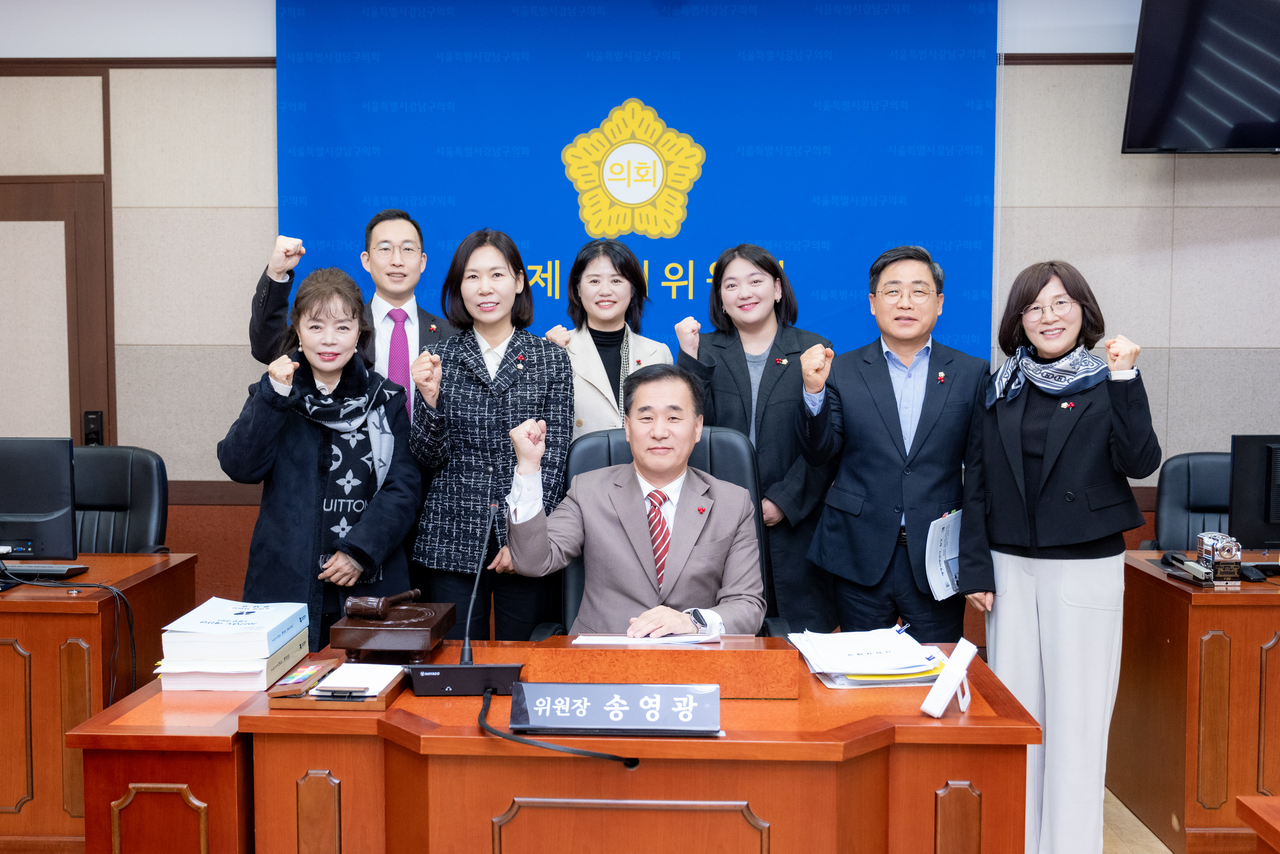
"The purpose of an administrative audit is not simply to point out wrongdoing, but to improve administrative shortcomings and provide better public services to residents," Committee Chair Song said. "I hope the audit findings will be faithfully reflected in the review of the 2027 budget and in future policy implementation."
The committee said it will continue follow-up monitoring to ensure that the issues and recommendations raised during the audit are incorporated into actual administration, so that projects become more effective and residents can see tangible results.
seouldream01@heraldcorp.com