Improvements include upgraded AED signage and step-by-step payment guidance at transit card kiosks; 1,709 suggestions received through October
Seoul Metro has been putting staff ideas from the field into practice, rolling out changes aimed at improving passenger safety and convenience across the subway network.
The operator said Saturday it had received 1,709 employee suggestions through the end of October and had applied 43 top-rated proposals from the second and third quarters to operational and facility improvements.
Under the employee suggestion system, staff freely submit ideas or problems they encounter on the job. Relevant departments and a review committee then evaluate the proposals, and viable ones are put into practice.
Of the suggestions received this year, 103 came in during the first quarter, 703 in the second, 517 in the third, and 386 in October.
By category, proposals for improving work processes were the most common, accounting for 1,173 submissions, or 68.6 percent of the total. Customer service improvements followed with 419 suggestions (24.5 percent), miscellaneous ideas at 61 (3.6 percent) and cost-saving proposals at 56 (3.3 percent).
Particularly notable is how staff ideas have translated into facility upgrades with a direct bearing on public safety.
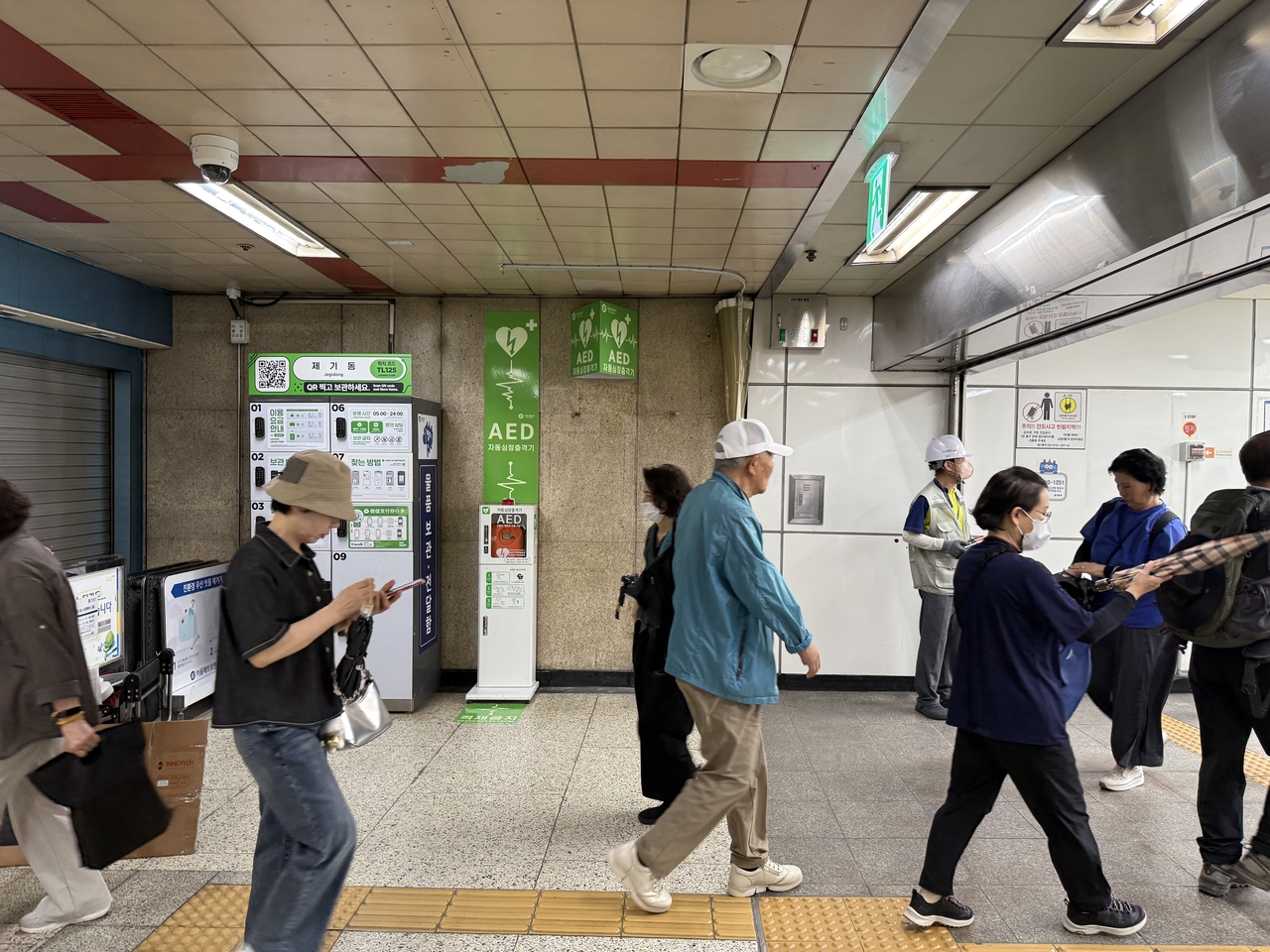
One prominent example is the redesign of automated external defibrillator (AED) location signs inside stations. Drawing on staff suggestions, Seoul Metro produced standardized AED signs and installed them at four stations — City Hall on Lines 1 and 2, Jegidong and Gwanghwamun — so that passengers can quickly locate a defibrillator in an emergency.
The operator also made it easier for foreign tourists and commuters to use transit card kiosks.
After overseas credit card payment was introduced at the kiosks in March, Seoul Metro added step-by-step pop-up guidance that walks users through each stage of the payment process. The improvement is expected to reduce confusion for passengers unfamiliar with the kiosks, as well as for foreign tourists.
Seoul Metro said it plans to keep encouraging voluntary participation in the suggestion system and to strengthen follow-through so that adopted ideas lead to measurable improvements on the ground.
Han Yeong-hui, head of Seoul Metro's planning division, said the system gives employees a sense of pride in shaping the organization's direction. "When the ideas our staff propose actually lead to improvements in our work and facilities, employees feel a genuine sense of pride in driving change at the company themselves," Han said. "We will continue to actively seek out and act on diverse employee input as we build a Seoul Metro that grows together with its people."
seouldream01@heraldcorp.com