Insect sales up 11.8% as number of registered businesses falls
Black soldier fly hits 16.8 billion won on rising fishmeal demand
Edible insect sales drop 15.1% as sector pivots to functional ingredients
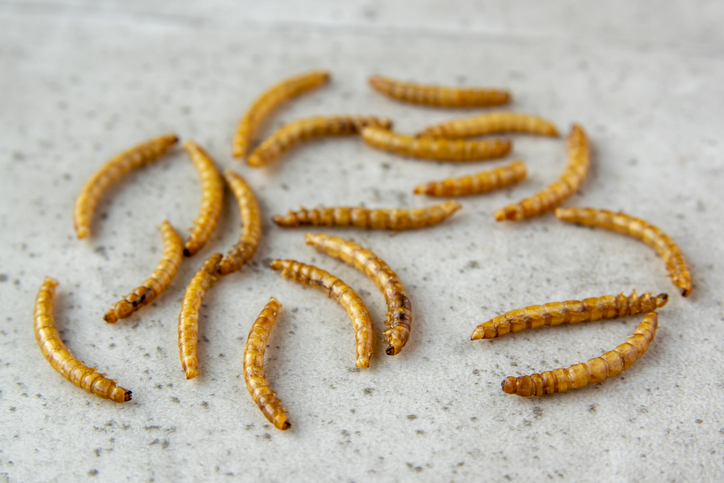
South Korea's insect industry market is approaching 59.1 billion won, driven by a sharp surge in sales of the black soldier fly — a feed ingredient that can substitute for fishmeal — even as edible insect sales declined. The number of registered businesses in the sector fell, but average sales per business rose.
The Ministry of Agriculture, Food and Rural Affairs released the results of its "2025 Insect Industry Survey" on Monday, covering 2,760 farms and corporations registered in insect production, processing and distribution.
Last year's total insect sales reached 59.1 billion won ($44 million), up 11.8 percent from 52.8 billion won the previous year. Compared with 41.4 billion won in 2020, the market has grown 42.8 percent over five years.
The total number of registered businesses fell 6.4 percent to 2,760 from 2,949 the previous year. Average sales per business, however, rose 16.7 percent — from about 18 million won to 21 million won — meaning the overall market expanded even as the number of operators shrank.
The black soldier fly, used as a feed ingredient, led the market's growth. Sales of the insect reached 16.8 billion won, up 6.6 billion won from the previous year — a jump of 65.3 percent. The number of farms raising the insect also grew 18.3 percent, from 241 to 285.
The black soldier fly contains 40 to 50 percent protein and has drawn attention as a feed ingredient capable of replacing fishmeal. The ministry said rising global fishmeal prices contributed to the surge in demand, noting that the international fishmeal price climbed 14.2 percent, from $1,598 to $1,825 per metric ton.
The edible insect market, by contrast, contracted. Sales fell 15.1 percent to 20.1 billion won last year from 23.7 billion won the year before. Edible insects still accounted for the largest share of total insect sales at 34.0 percent, but the trend ran counter to the feed segment.
By end use, edible insects led with 20.1 billion won, followed by feed-use insects at 16.8 billion won (28.4 percent), other uses at 16.6 billion won (28.1 percent), and pet and educational insects at 5.6 billion won (9.5 percent).
Among individual species, the black soldier fly topped sales at 16.8 billion won. The white-spotted flower chafer followed at 10.8 billion won, the mealworm at 5.8 billion won, the rhinoceros beetle at 3.7 billion won, the cricket at 3.5 billion won and the stag beetle at 1.9 billion won.
The government is working to revitalize the edible insect market through functional ingredient development and expanded mass-production capacity. In September, mealworm larvae — marketed under the brand name "Gosoa" — were officially recognized as a functional ingredient that "may help maintain muscle strength."
That same month, an insect industry hub complex capable of producing up to 1,000 metric tons of insects annually was completed in Chuncheon, Gangwon Province. The government plans to use the facility to support stable raw material supply and commercialization of edible insect products.
A total of about 5.92 million people visited insect-related facilities and local festivals. The survey covered insect product stores, experiential learning centers, and regional events including Bongmu Park in Daegu and the Hampyeong Butterfly Festival.
The ministry said it plans to expand support for modernizing insect-rearing facilities, commercializing green biotech products and providing policy financing.
"Insects are a high-protein functional ingredient and an eco-friendly resource for the future with very high growth potential," said Jeong Gyeong-seok, the ministry's director general for food industry policy. "We will continue to provide policy support so that the insect industry can establish itself as a high-value-added green biotech sector."
adastra@heraldcorp.com