Nongshim launches dedicated export factory with 204.3 billion won investment
180-meter production line to turn out 500 million packs a year
AI-driven automation cuts product changeover time to 30 minutes
Shin Ramyun overseas sales hit 71% of brand revenue; new flavors planned
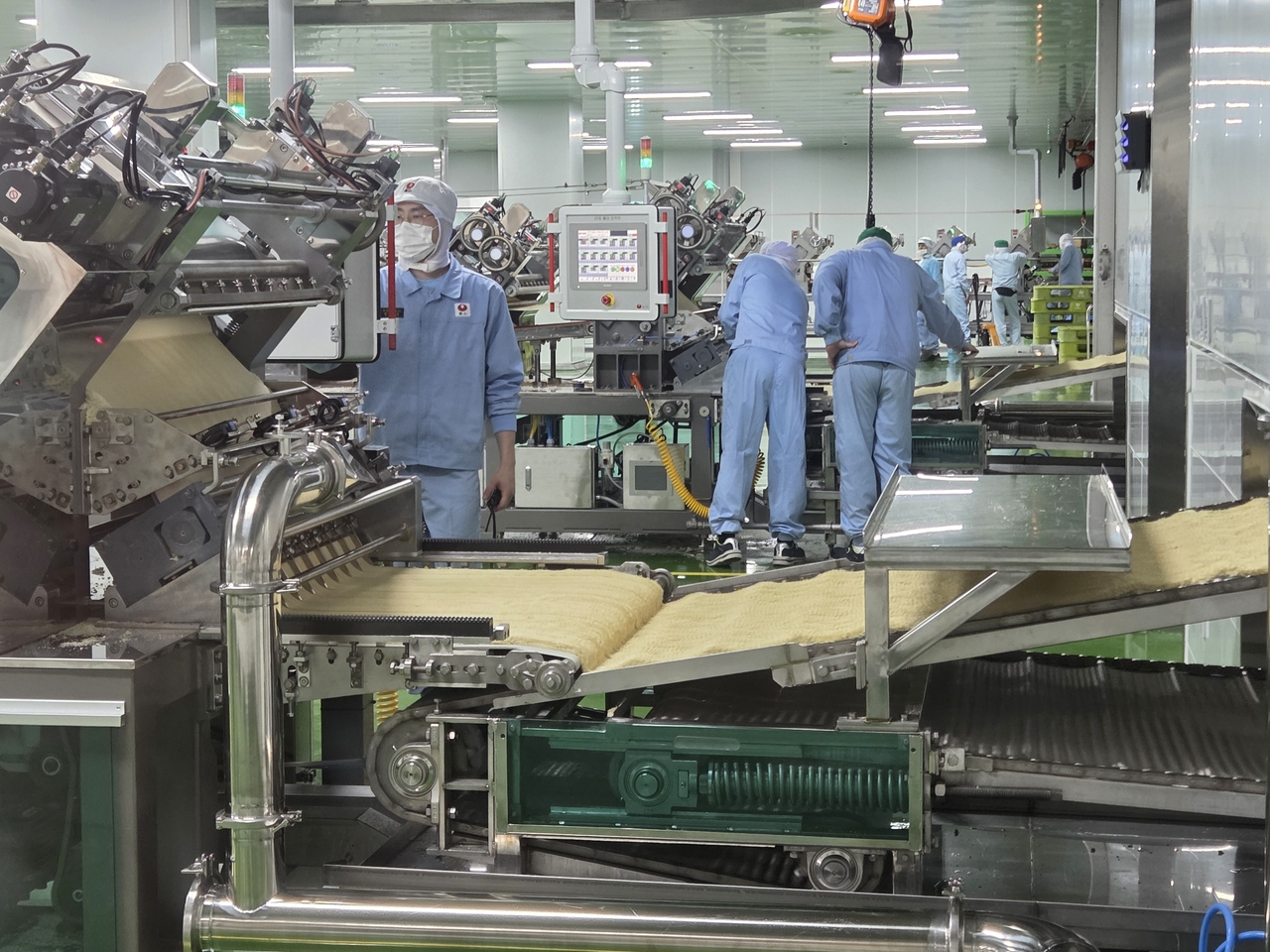
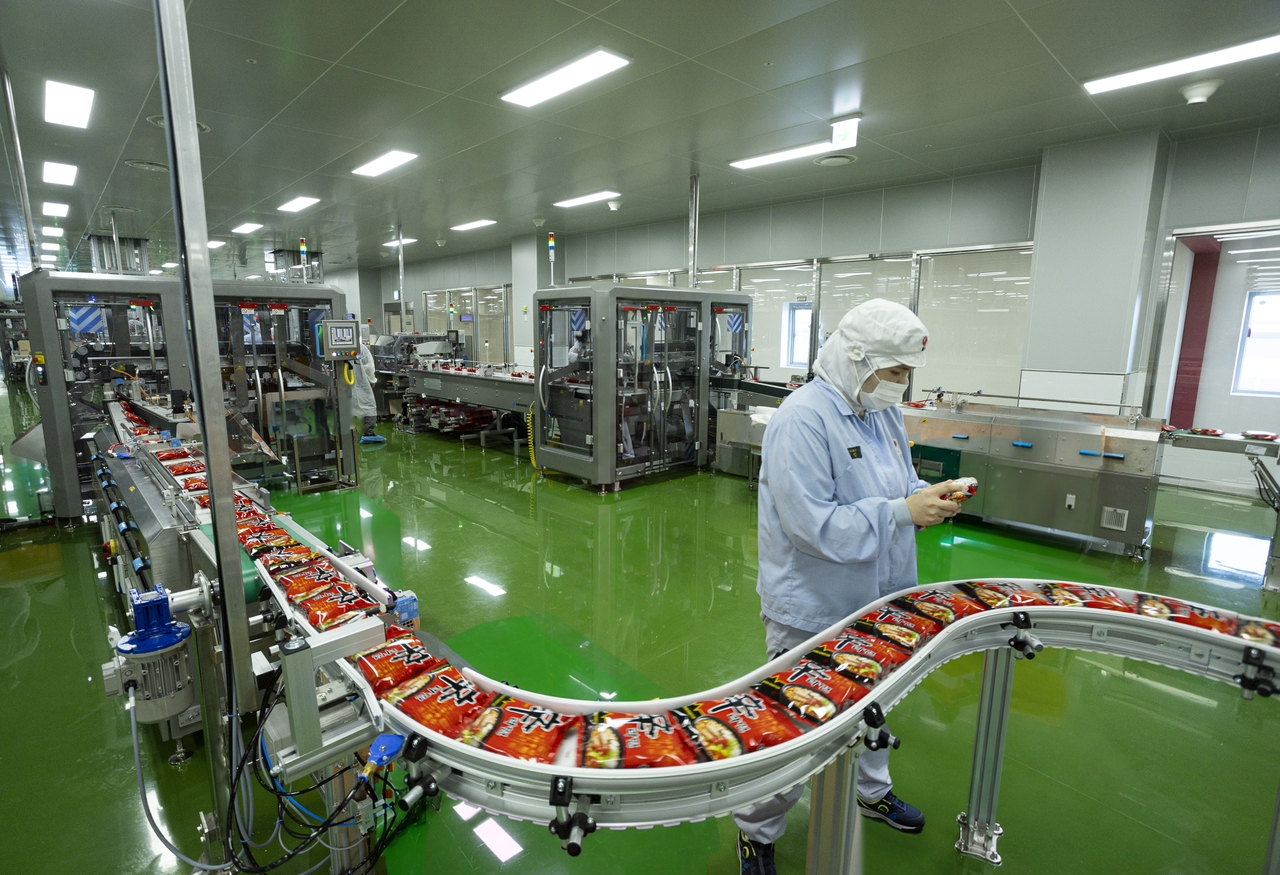
A wide sheet of pale yellow dough glides steadily along the production equipment, passing through a series of rollers that press it progressively thinner before it is cut into the familiar wavy strands. The noodles are then deep-fried, cooled and packaged — completing the journey from raw ingredients to finished ramyun in just 20 minutes along a 180-meter line.
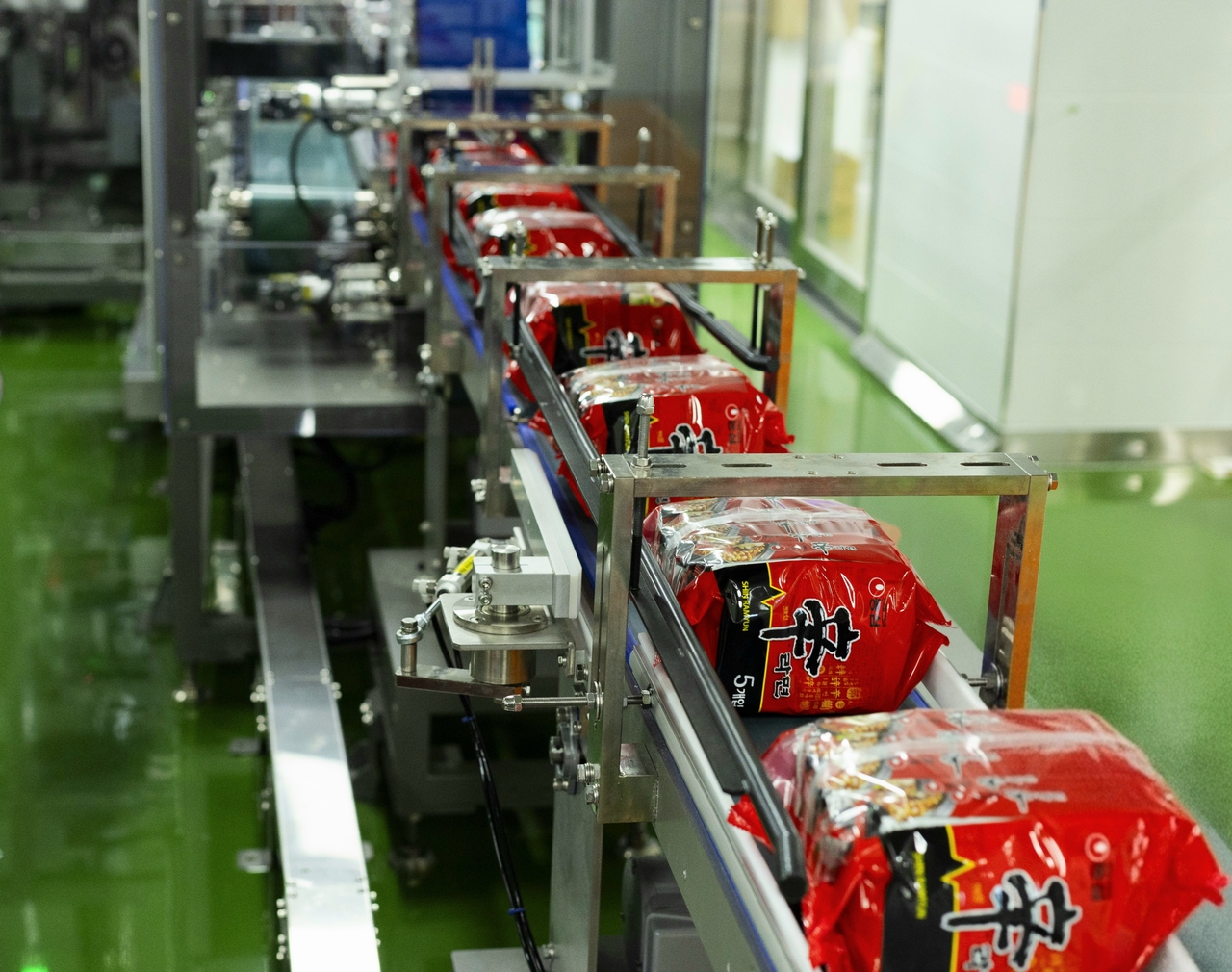
Nongshim's Noksan export factory in Gangseo-gu, Busan, visited Thursday, is the company's first facility built exclusively for export, constructed at a cost of 204.3 billion won ($152 million). The plant houses three high-speed production lines — two for bag-type noodles and one for cup noodles — capable of producing up to 600 packs per minute, more than twice the output rate of a conventional line.
Nongshim began full operations at the new factory on Oct. 29. The six-story building, roughly the height of an 11-story apartment block, has a total floor area of 48,178 square meters. The company applied AI-based automation technology across the entire production process to boost both speed and packaging efficiency. At peak capacity, the factory can produce up to 1.78 million packs a day.
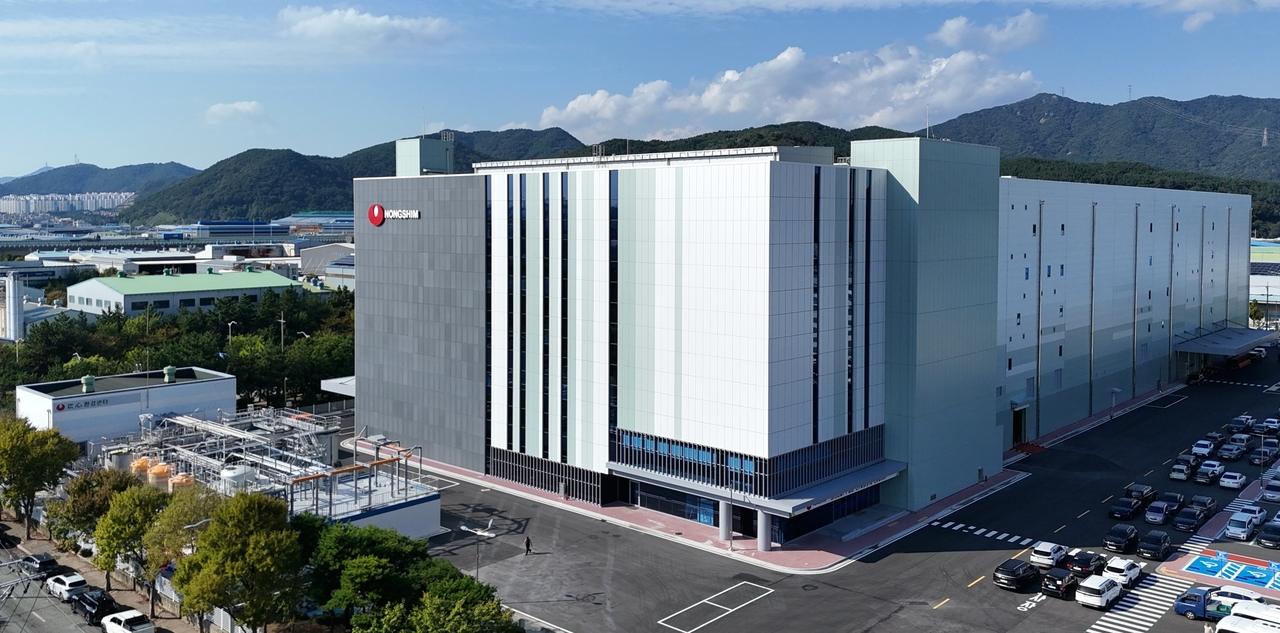
Jeon Yun-yeol, head of the Noksan factory, said at a media briefing that day that the plant is currently running three lines and producing about 500 million packs of ramyun a year, adding that the facility was built to accommodate up to eight additional production lines to meet future overseas demand. The factory produces 22 products, including Shin Ramyun, Neoguri, Chapagetti, Yukgejang Bowl and Kimchi Bowl. Key export markets include Japan, Australia, Taiwan and India.
With the new facility, Nongshim now operates 10 ramyun production bases — six in South Korea, two in the United States and two in China. The addition has lifted domestic export-oriented production capacity from about 700 million to about 1.2 billion packs a year. Combined with domestic capacity for the local market of about 3.3 billion packs and about 1.7 billion packs from factories in the US and China, total annual ramyun production capacity now reaches up to about 6.2 billion packs.
Nongshim says the Noksan factory's key strength is its ability to switch flexibly between a wide range of export products. Noodle thickness and ingredient ratios vary by product, and even the same product requires different packaging — different languages, labeling requirements and pack sizes — depending on the destination market. Quickly reconfiguring equipment to handle that variety is essential to keeping pace with rising overseas demand.
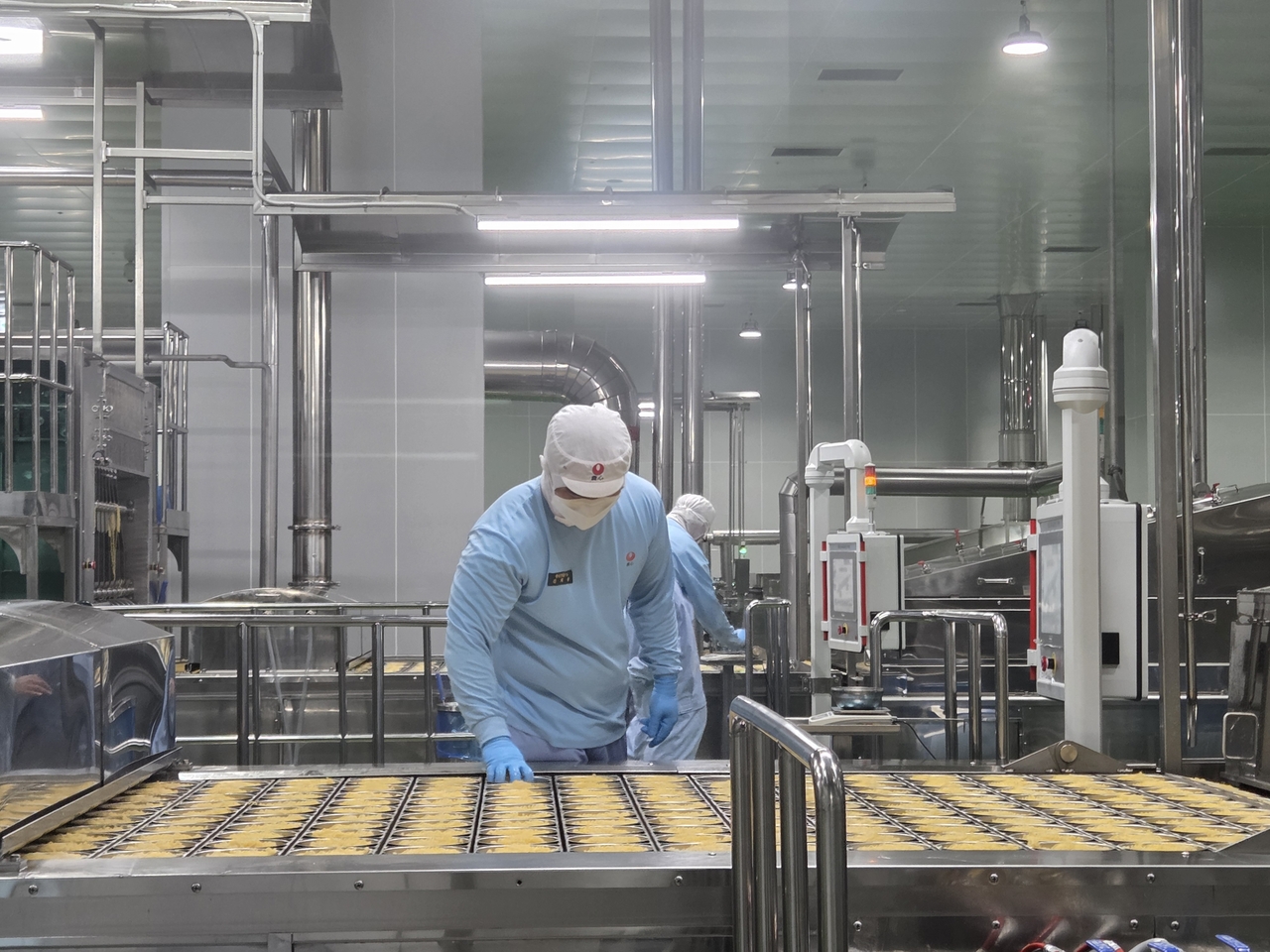
Nongshim has cut product changeover time at the new factory from roughly 120 minutes to just 30. The plant uses reserve tanks to prepare blending water in advance and has installed a clean-in-place system that automatically flushes equipment interiors, allowing preparation for the next product to begin while the current one is still running. Nongshim said the changes have improved production efficiency by about 17.6 percent.
A smart factory integrating AI and automation technology further drives efficiency gains. When a work order arrives through the enterprise resource planning system, a linked production management system automatically configures equipment settings. An AI-based predictive maintenance system also monitors machinery for early warning signs to prevent unexpected line stoppages.
Automation extends to material supply as well. Autonomous mobile robots navigate the factory floor, detecting their surroundings and avoiding obstacles as they deliver raw and packaging materials — including soup base and wrapping — to the production lines. In the packaging process, automated equipment transfers finished products to the next stage.
Quality inspection relies on an AI deep-learning system that scans packaging for microscopic punctures, foreign matter and expiration date errors to filter out defective products. Separate weight checkers, X-ray foreign-object detectors and metal detectors verify each pack's weight and check for contamination.
The launch of the new factory aligns with Nongshim's broader global expansion strategy. Overseas sales accounted for 40.2 percent of the company's total revenue in the first half of this year. For its flagship Shin Ramyun brand, that figure reaches 71 percent. According to Nongshim, Shin Ramyun's overseas sales stood at around 500 billion won in 2021 and more than doubled to 1.01 trillion won last year — crossing the 1 trillion won mark for the first time in four years.
Ji Song-ha, head of Nongshim's global marketing division, said that while the K-culture wave has undeniably drawn more international consumers to Korean food, the dynamic has shifted. "It's less about a passing trend now — more and more consumers are buying it not because it's Korean food, but simply because it's genuinely delicious ramyun," Ji said.
The Shin Ramyun brand has been expanding its lineup with export-focused products such as Shin Ramyun Toomba and Shin Ramyun Rosé. Ji said the brand plans to broaden its flavor offerings going forward. "As global consumer demand grows, we are strengthening our internal product-planning process so we can launch one or two or more new products a year," Ji said.
Nongshim is also cultivating broth-free noodles as a new growth engine for overseas markets. According to global market research firm Mintel, broth-free noodles accounted for 22 percent of new ramyun product launches worldwide in 2024, rising to 24 percent last year. Shin Ramyun Toomba, the company's flagship broth-free product, sold a cumulative 147 million packs overseas from its November 2024 launch through September this year. Sales in just the first nine months of this year reached about 87.58 million packs, already surpassing last year's full-year total.
Shin Ramyun Rosé, launched in May this year, is also being rolled out globally. The product combines tomatoes and cream with Shin Ramyun's signature spice and gochujang flavor, and was developed from the outset with overseas markets that favor tomato-based tastes in mind. Nongshim is also developing a new stir-fried noodle product that blends Korean flavors, with a global launch planned as early as the first quarter of next year.
Nongshim Chief Executive Jo Yong-cheol said the Noksan export factory "will become the core engine of Nongshim's global business, capable of rapidly supplying large volumes of products tailored to the diverse needs of consumers around the world." Jo added that the company aims to achieve an overseas sales share of more than 60 percent and total company sales of 7.3 trillion won by 2030, driven by its smart factory capabilities and global strategic products.
korean@heraldcorp.com