14 AI use cases unveiled across research and administration; monthly usage surges 157-fold in 4 months
AI has analyzed 560,000 research papers to support early pancreatic cancer diagnosis and can now automatically fill out complex business travel request forms. A South Korean government-funded research institute that built its own AI system saw usage surge 157-fold in just four months.
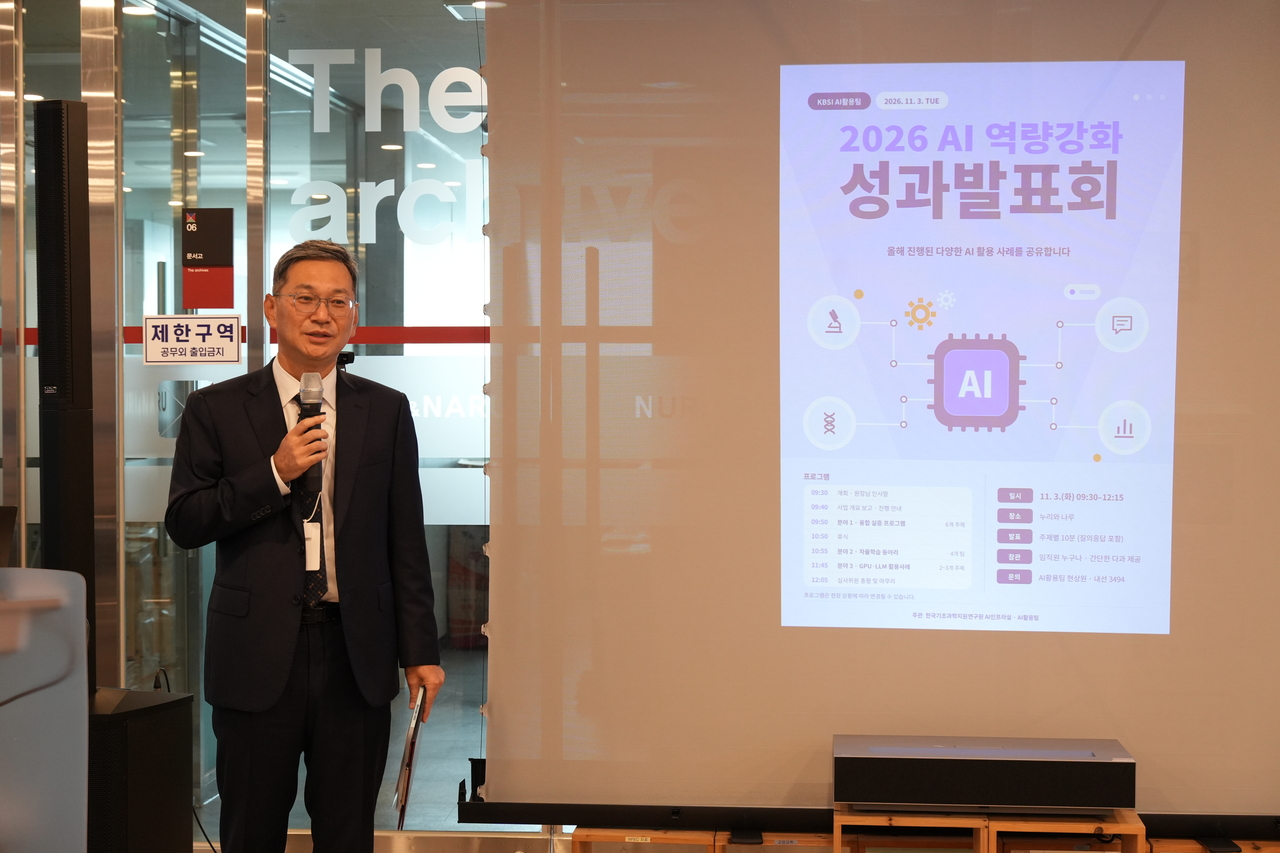
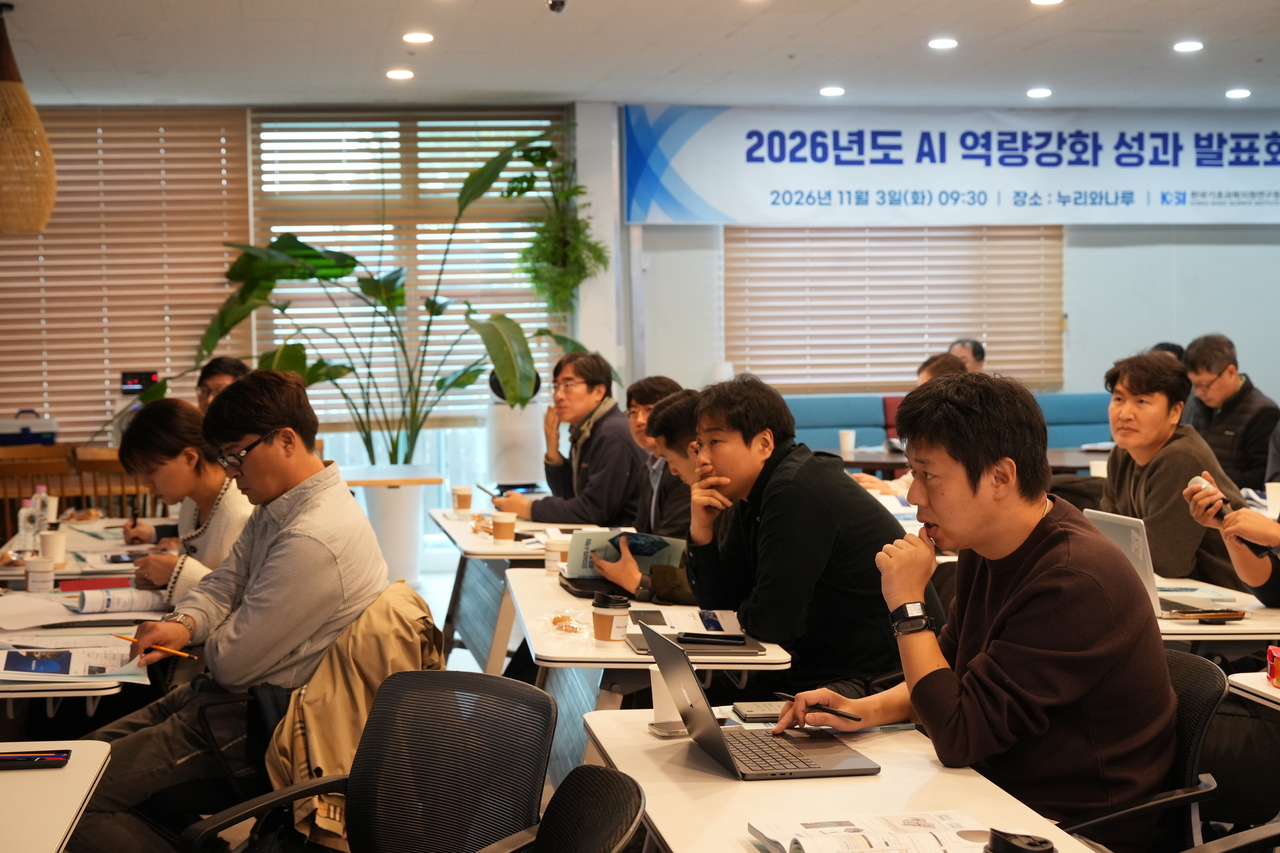
The Korea Basic Science Institute (KBSI) announced Monday that it held its 2026 AI Capability Enhancement Showcase at its Daedeok headquarters on Tuesday, unveiling 14 cases of AI application across research and administrative work.
This year, KBSI built high-performance GPU infrastructure and a dedicated institutional large language model (LLM) service as part of a broader AI transformation drive. The institute set up the infrastructure to let researchers and staff use AI on its own servers, and also provided specialized training and technology development mentoring.
The results were measurable. Monthly requests to the institute's dedicated LLM service jumped from 1,641 in June to 258,070 in September — an approximately 157-fold increase. The figures suggest AI is rapidly spreading beyond a tool for a handful of specialists to become part of day-to-day operations across the institution.
The showcase featured 14 research and workflow improvement cases developed through AI convergence pilot programs, self-directed study groups, and shared use of GPU and LLM resources.
The standout research achievement was an AI platform for early pancreatic cancer diagnosis. Senior Researcher Kim Woo-young developed a platform that uses AI to analyze relationships among roughly 560,000 papers and research datasets, generating and testing new research hypotheses. By streamlining the analysis of vast research materials, the platform opens new possibilities for disease research.
Principal Researcher Choi Chang-min automated the repetitive computational simulations required to develop electrostatic field extraction electrodes. By applying AI to the process of optimizing electrode structures in research equipment, the work improved overall research efficiency.
AI adoption was equally notable on the administrative side. Senior Technician Kim Gyu-won developed a service that extracts relevant information from travel-related documents and emails and automatically generates business travel request forms. Administrative Officer Kim Gi-yun demonstrated a case in which AI was used to produce promotional content directly.
KBSI said it plans to continue expanding AI use across research and administration by linking its shared AI infrastructure with specialized training and on-site pilot support.
"AI technology is meaningful not when you finish learning it, but when it is actually used in the research field," KBSI President Park Sung-kyun said. "We will drive innovation at the research level by connecting advanced research infrastructure with AI and data."
nbgkoo@heraldcorp.com