CENTCOM seeks intelligence on nuclear facilities, equipment and scientists
Tipsters can receive up to $20 million and assistance relocating abroad
State Dept's terrorism-focused rewards program expanded to cover nuclear intel
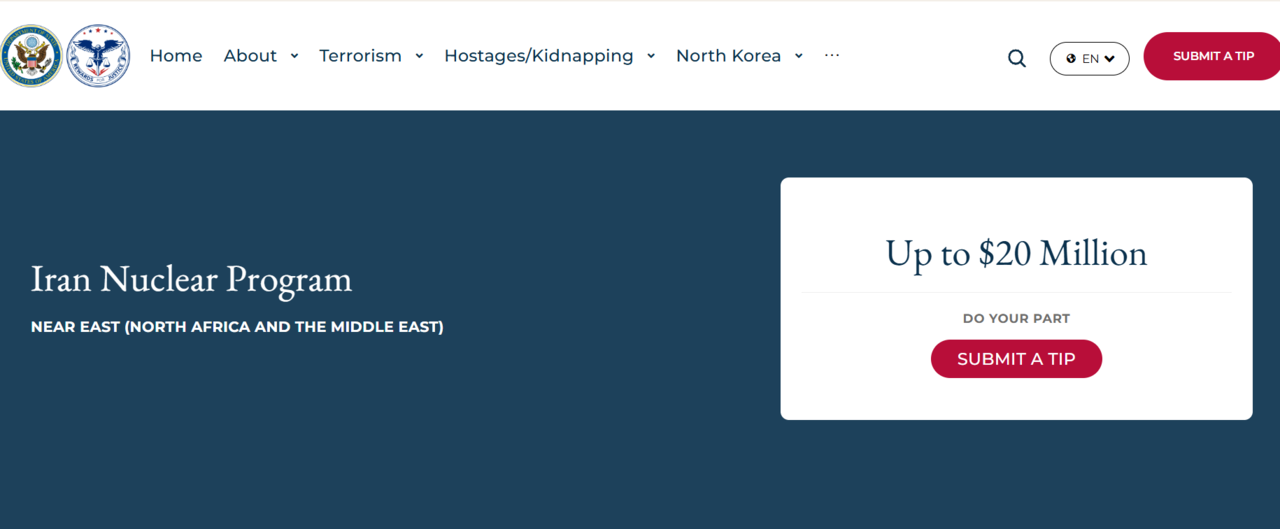
The United States has announced it will pay up to $20 million to anyone who provides information on Iran's nuclear facilities and scientists, and said it can also help tipsters relocate abroad as it moves to gather intelligence on Iran's nuclear program.
CENTCOM disclosed the reward plan Saturday on X, calling on the public to submit information related to Iran's nuclear program.
CENTCOM said it would collect tips through the Department of State's Rewards for Justice program, covering Iran's nuclear facilities, equipment, scientists and other related personnel, as well as their movements.
It said tipsters could receive not only financial rewards but also relocation assistance — a measure aimed at encouraging people inside Iran with access to nuclear program information to come forward.
US and Israeli intelligence agencies have long helped informants and their families relocate abroad to ensure their safety as part of efforts to build human intelligence networks inside Iran.
The Rewards for Justice website operated by the Department of State also posted a notice soliciting information on Iran's nuclear program.
The department said Iran's failure to comply with International Atomic Energy Agency safeguards obligations has left the IAEA unable to continuously track the output and inventory of key components, including centrifuges. It said information that could shed light on the true state of Iran's nuclear program was needed.
The announcement directed potential tipsters to encrypted messaging apps including Telegram and Signal, and also listed the Tor browser, which is used to conceal a user's online activity.
It is unusual for the United States to publicly offer a large reward for tips specifically related to Iran's nuclear program. The Rewards for Justice program has generally been used to collect information needed to track terrorism suspects or disrupt terrorist financing.
There have been past reports of US intelligence agencies paying large sums to Iranian nuclear scientists in exchange for information.
In July 2010, The Washington Post reported that the CIA had recruited Iranian nuclear scientist Shahram Amiri in Saudi Arabia and paid him $5 million for providing intelligence.
Amiri had been missing for about a year before returning to Iran from the United States, where he claimed he had been kidnapped by the CIA. He also said at the time that the US had offered him $50 million.
The reward announcement is notable as a sign that US intelligence-gathering on Iran's nuclear program has expanded to include openly soliciting public tips. By explicitly listing the movements of nuclear personnel — not just facility locations and equipment — as targets for collection, the US has signaled its intent to track the full scope of Iran's nuclear development activities.
boo@heraldcorp.com