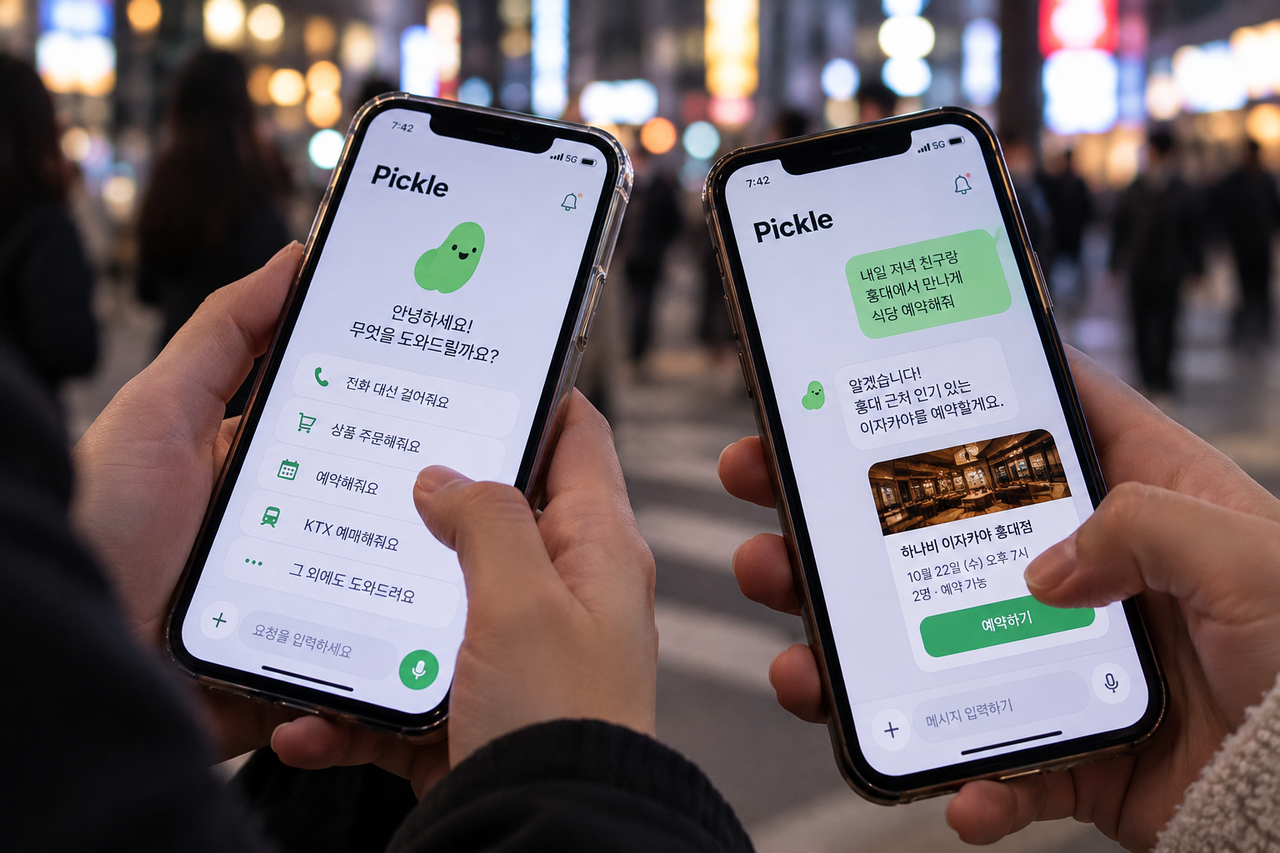
'Close your laptops': A hackathon that prizes conversation over coding
10-to-1 applicant ratio at Hashed's OBA.RUN event
APIs spanning recruitment, digital assets and travel data on offer
SK Telecom's Jo Uk-rae: 'Authentication and delegation, not payment tech, are the real challenge'
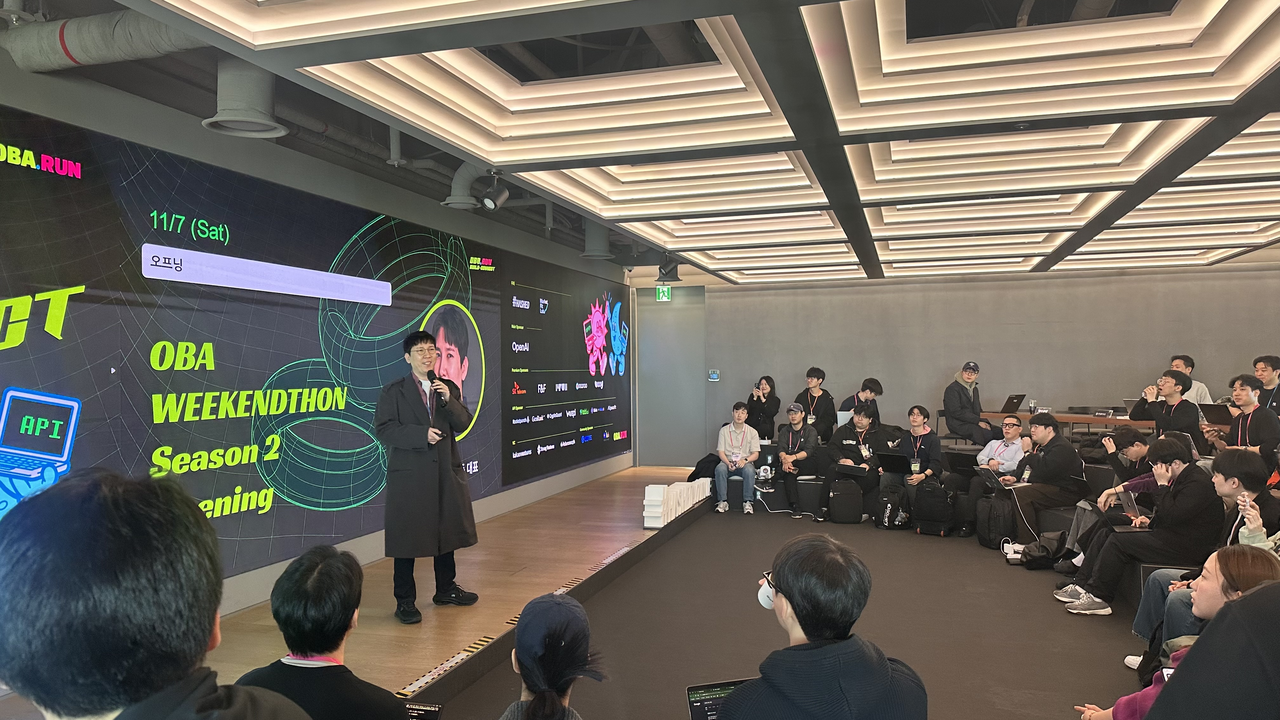
"Within one to two years, orders placed through AI agents will be just as common as people ordering directly through a delivery app. Companies that do not open their doors to AI agents risk losing customers."
Those were the words of Hashed CEO Kim Seo-jun, who delivered the keynote address at the OBA.RUN hackathon held Saturday at Hashed Lounge in Gangnam-gu, Seoul. Kim said the era of AI placing orders and making payments on behalf of customers is not far off. "In the United States, major companies like Shopify and Stripe are opening up their application programming interfaces and setting standards," he said. "Asia needs this kind of ecosystem too."
The event was the second hackathon hosted by Hashed and MarketFit Lab and organized by the Open Builder Alliance (OBA). OpenAI served as founding sponsor and SK Telecom as main sponsor. Fashion company F&F and brands GGUI, MAROO and vooy also joined as sponsors. According to the organizers, about 600 people applied and roughly 60 were selected, including industry professionals and university students.
Participants could tackle challenges proposed by sponsors such as SK Telecom and F&F, or choose their own topics freely. A range of APIs and AI tools were made available from sponsors — including job-listing data from Rocketpunch, digital asset data from CryptoQuant and travel information from My Real Trip — allowing participants to combine multiple APIs to build the services they envisioned, without being tied to any single company's platform.
The result was a wide array of ideas on the floor: a marketplace where AI agents hand off tasks to one another, a financial fraud prevention service for middle-aged and older users, and a tax-deduction assistant, among others. One team built a service that lets AI handle clothing purchases on a user's behalf within preset spending criteria and card limits. While most participants were deep in development, one could also spot a participant testing their work while wearing a head-mounted display.
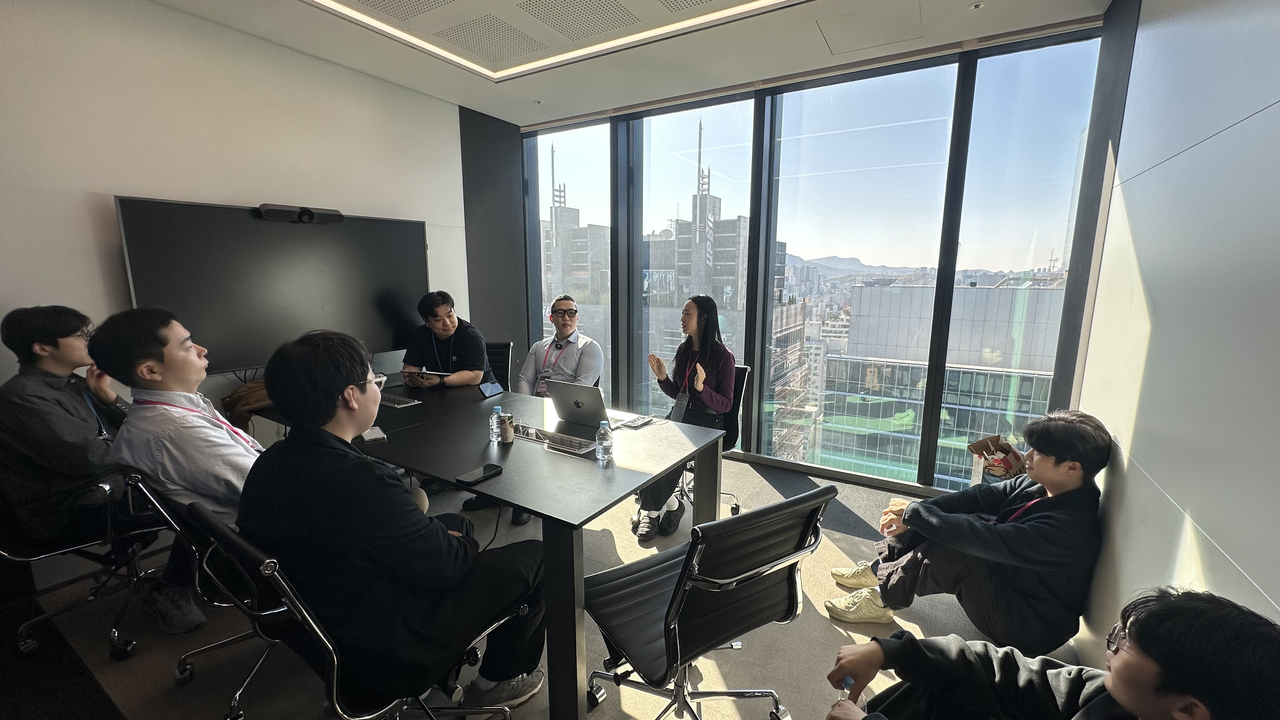
Another distinctive feature of the Hashed hackathon is the "LETS" session — a recurring break in which participants set aside their work to share experiences and ideas with one another. For about 30 minutes, attendees closed their laptops and joined discussions on topics of their choosing. Conversations ranged from the trial and error of running trading agents firsthand, to strategies for getting a service surfaced in AI search results, to automating content creation — spanning development, investment and marketing alike.
One LETS session sparked a lively debate over why the online Buddhist temple platform "Sansa" had recently gained popularity. One participant argued that growing interest among younger generations in traditional culture — through Buddhist fairs and temple-stay programs — had naturally extended to online services. The view was that connecting existing offline consumer demand to online platforms is key. Another participant noted that the platform's viral spread would have been far harder had it been hosted on a private server, pointing to the distribution power of established platforms and social media.
This emphasis on developer exchange is central to Hashed's philosophy. An OBA.RUN official said hackathons have been changing since early this year, with participants increasingly arriving as "solo AI armies." "It felt like a waste to have talented people come together and just go home after staring at their computers, so we put together the LETS sessions," the official said. Kim echoed the sentiment, saying the most important thing at a hackathon is not staring alone at a laptop but sharing a sense of purpose with other developers. "At the first OBA hackathon held at Kakao AI Campus earlier this year, there were cases where participants became friends and went on to start companies together," he said.
Kwon Ha-jin, a participant in their 20s, said the hackathon stood out for its networking time. "Other hackathons give you about six hours of development time, but this one was relatively shorter," Kwon said. "Instead, there was a lot of time for networking, which was great for exchanging a wide range of ideas."
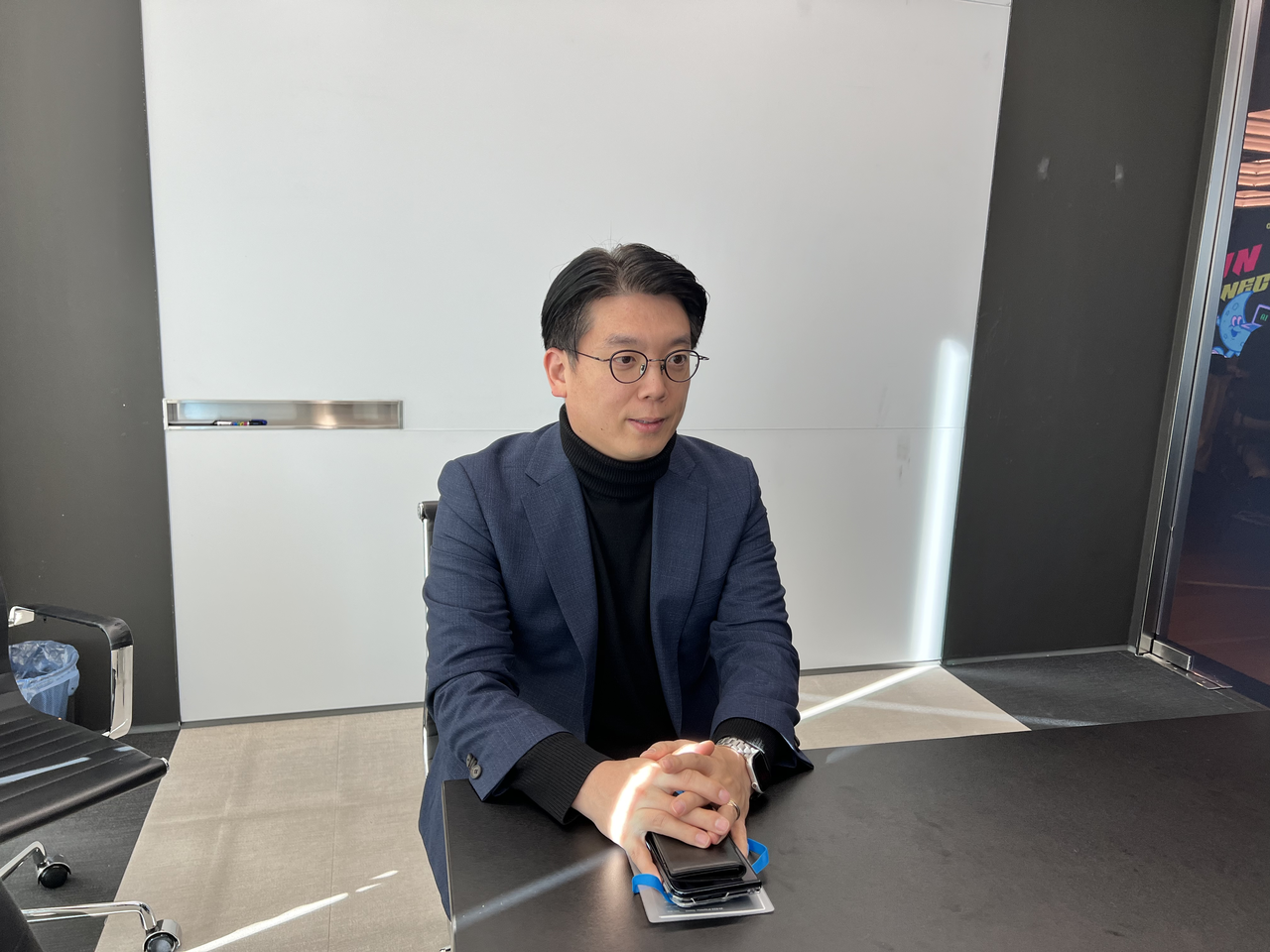
▶"Can I trust my card to AI?" … SK Telecom's challenge= By far the most attention at the hackathon went to SK Telecom's challenge: designing an AI agent payment service. Yun Hyeon-sang, head of A. planning at SK Telecom, said the last mile of an AI agent is payment. "We are discussing payment methods and standards together with card companies including Shinhan Card," Yun said. SK Telecom is currently participating in the government-led "AI for All" project through a consortium it formed with financial firms including Shinhan Card and Hana Card. The companies are also jointly working on an AI agent payment prototype.
Yun warned that disputes could arise if an agent makes payments based on its own interpretation of a user's intent. "The user experience that sets appropriate confirmation procedures and defines the scope of authority is critical," he said. He added that current payment systems are designed on the assumption that a person physically presses a payment button and authenticates the transaction. "For AI agents to handle payments, existing authentication frameworks — including one-time passwords — will also need to change," he said.
Jo Uk-rae, project leader for SK Telecom's A. service development, said in an interview Saturday that overseas AI agent services sometimes complete payments simply by storing card information in a vault, but in South Korea, even pre-registered card details often require an additional authentication step through the card issuer's app. "The current payment system operates on the premise that the user authenticates directly," Jo said. "How to transfer payment authority to an agent and obtain prior approval remains an unsolved problem."
Another challenge is the possibility that a user's intent at the time of purchase may differ from the original instruction given to the AI. Jo said a user might tell the agent to buy a flight ticket once the price drops below 1.5 million won ($1,120), then forget about it and buy a ticket elsewhere. "If the agent then purchases a 1.49 million won ticket and the other ticket is non-refundable, we have to think about what happens next," Jo said. "Because real financial losses can occur, social trust and consensus matter just as much as the technology."
Liability for AI payment errors is another open question. Jo said detecting impersonation agents — similar to how fraud detection works today — may fall to financial institutions. "On the other hand, the problem of an AI acting outside the scope of a user's approval is something the agent service provider needs to address," Jo said.
The spread of AI payments could also reshape the role of existing players in the payments industry. "Payment gateway companies sit between card issuers and merchants, so it is hard to leave them out of any discussion on payment standards," Jo said. "I think the business structure will change depending on how AI agent payment standards are set."
SK Telecom sees user data accumulated through services such as calls, calendar management and T Membership as a key competitive advantage. "We hold useful data, but no single company can capture all of a user's information," Jo said. "Expanding the ecosystem through partnerships with a wide range of companies is essential."

kyoung@heraldcorp.com