Gov't bill targeting exchange ownership limits due this month
Stake cap for major shareholders to mirror alternative trading system rules
Existing mergers may not be exempt from new restrictions
Equity fairness concerns cloud any grandfather clause
Delayed enforcement date seen as likely workaround
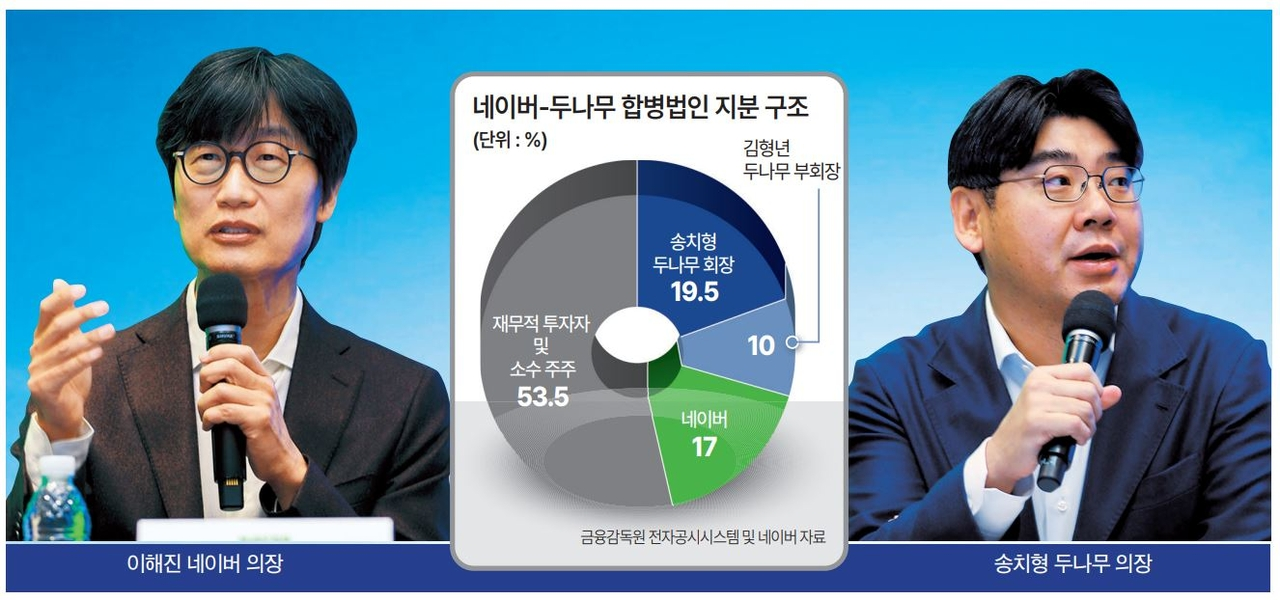
The merger between Naver Financial and Dunamu has entered final review by the Korea Fair Trade Commission, but a significant hurdle remains: a proposed cap on major shareholders' stakes in virtual asset exchanges. If the Digital Asset Basic Act introduces such a ceiling, Naver Financial's plan to make Dunamu a wholly owned subsidiary may need to be revised regardless of whether the Fair Trade Commission grants approval. The central question is whether existing deals will be subject to the cap — and if so, whether companies will be given time to restructure their holdings or granted a separate exemption.
Financial authorities are in final consultations with the goal of releasing the government's draft Digital Asset Basic Act by the end of this month, according to the National Assembly and industry sources Wednesday. The bill is expected to cap major shareholders' stakes in virtual asset exchanges at 15 to 20 percent, in line with rules governing alternative trading systems under the Capital Markets Act. Authorities say that as exchanges transition from a registration-based to a licensing-based system — with expanded roles and responsibilities — appropriate governance structures are needed. However, if consultations with related agencies and public comment periods drag on, the actual bill submission could slip to year-end.
Particularly given that authorities appear firm on the ownership cap, the question of whether existing mergers will receive a grace period or exemption has emerged as the central issue. Fair Trade Commission approval of a merger does not guarantee exemption from ownership regulations introduced afterward. If the stake limit applies to corporate shareholders without exception, parties that have already closed a deal may still be required to divest excess holdings and restructure their ownership arrangements.
Naver Financial and Dunamu are currently pursuing a comprehensive share swap to make Dunamu a wholly owned subsidiary of Naver Financial. If the cap applies to existing holdings, Mirae Asset's acquisition of Digital X — formerly Kobit — could also force a restructuring of its stake. Plans to expand into the virtual asset business through exchange acquisitions may need to be revisited in light of how governance and collaboration structures would look after any required dispersal of ownership.
Market observers widely expect the restrictions to apply even to mergers completed before the law takes effect, since granting exemptions to existing deals could trigger fairness concerns. A legal industry official said that if the policy decision is to prioritize public interest over private property rights, the rules should not be applied differently based on whether a transaction was completed before or after the law's effective date, adding that existing mergers would likely fall within the scope of regulation.
How companies will be given time to restructure their holdings is also a key question. Industry sources say authorities are likely to treat the period between the law's promulgation and its effective date as a de facto preparation window, rather than codifying a separate grace period for divestiture. Under this approach, supplementary provisions would push back the effective date to allow time for ownership restructuring, with the cap required to be met by the time the law comes into force. This would also reduce the risk of fairness criticism that could arise from a separately designated grace period for existing operators.
Market participants are watching whether companies will adjust their governance structures and press ahead with the merger rather than walk away, even if the ownership cap becomes a reality. Dunamu, which is counting on the merger to pave the way for a Naver Financial initial public offering, is strongly committed to completing the deal on the terms already agreed. Still, there are signs that both sides are keeping contingency plans in mind as they brace for uncertainty depending on the review outcome.
"Exchanges remain an attractive investment target for financial firms, given the range of collaboration opportunities — from real-name account partnerships to new digital asset businesses," an official at a financial firm said. "Given the strategic demand for investment in Dunamu, the industry's top player, divesting excess shares should not be a major obstacle in itself."
Some observers argue that constitutional concerns over restricting major shareholders' ownership rights could prevent the regulation from making it into final legislation. That is the backdrop for suggestions that a compromise — allowing shareholding but capping voting rights — could emerge as an alternative. "A stake limit cannot serve as a safeguard for the public interest and neutrality of exchanges," one industry official said. "Legislative debate will continue even after the government draft is released."

forest@heraldcorp.com
kyoung@heraldcorp.com