Behind every public figure's enviable appearance lies a dedicated personal regimen. This series examines the diets, workouts, procedures, and beauty and fashion routines of notable figures as practical lifestyle information.
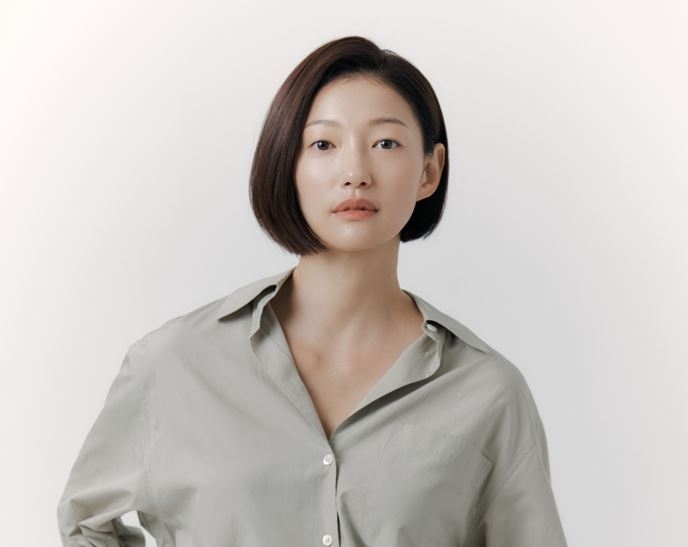
Actor Lee El, 44, has drawn attention for crediting consistent glute training as the key to maintaining her toned physique. The gluteal muscles make up a significant portion of the body's muscle mass, shaping the body's contours while playing a critical role in walking, climbing stairs and maintaining pelvic stability. Developing these muscles through strength training can bring both aesthetic changes and improvements in physical function.
In a recent video on her YouTube channel, Lee was asked about the secret to her figure. "There's nothing but exercise," she said. When a viewer then complimented her on her glute definition, she went on to describe the lower-body routine she follows.
The exercises she shared include bridges, wide squats, jumping wide squats, hip thrusts, lunges and the stepmill — a stair-climbing machine commonly nicknamed the "stairway to heaven." The routine combines movements that place resistance on the glutes and thighs with cardio-style stair climbing that engages the lower body.
Consistently training the glutes is particularly important from middle age onward, when muscle mass tends to decline naturally. Research has confirmed that strength training increases gluteal muscle size, and that hip-joint muscle strength is closely linked to balance and mobility.
Weak glutes affect walking and pelvic stability
The gluteal muscles consist of three main muscles: the gluteus maximus, gluteus medius and gluteus minimus. The gluteus maximus is the largest of the three and is involved in hip extension — it plays a key role in standing up from a seated position, climbing stairs and driving the body forward while running.
The gluteus medius, located on the outer side of the hip, and the gluteus minimus beneath it help maintain stability in the pelvis and hip joint. They are particularly important for preventing the pelvis from tilting to the opposite side when the body's weight is supported on one leg.
When walking, a person alternately lifts each foot off the ground. While one foot is in the air, the muscles of the supporting leg must hold the body upright and keep the pelvis level. The gluteus medius and surrounding hip muscles must engage sufficiently to maintain a stable gait.
A 2022 study published in Archives of Physical Medicine and Rehabilitation examined the relationship between hip-joint muscle strength and the ability to maintain balance.
Researchers synthesized 59 studies involving 2,144 adults and found that hip abductor strength was closely associated with balance and mobility regardless of age. The hip abductors — muscles that move the leg outward from the body, including the gluteus medius and minimus — were central to the finding.
The neurological activation of the muscles and the amount of fat accumulated within them were also linked to balance ability. The hip-joint muscles in particular were found to play a role in stabilizing the body during single-leg standing and directional changes.
Muscle mass and strength decline gradually with age, and these changes can affect everyday movements such as standing up from a chair or climbing stairs. Maintaining lower-body strength, including the glutes, is an important way to manage physical function in middle age and beyond.
Hip thrusts and squats for 9 weeks — glute muscles actually grew
Among the exercises Lee introduced, hip thrusts and squats are two of the most well-established strength movements for developing the gluteus maximus.
The hip thrust is performed by resting the upper back on a bench, bending the knees and driving the hips upward. A barbell or dumbbells can be added to increase resistance, and the gluteus maximus contracts strongly as the hips are raised.
The squat involves bending and extending both the knees and hips simultaneously, engaging not only the gluteus maximus but also the quadriceps at the front of the thigh and the inner thigh muscles. Both exercises are effective for training the glutes, though the way resistance is applied to the muscles differs between the two.
A 2023 clinical trial published in Frontiers in Physiology directly compared the muscle-building effects of hip thrusts and squats.
Researchers at Auburn University divided 34 college students with no prior strength-training experience into two groups — 18 assigned to hip thrusts and 16 to squats — and had them train for nine weeks. The researchers used MRI to measure the cross-sectional area of the gluteal muscles before and after the program.
Both groups showed increases in gluteus maximus size, with no significant difference in muscle growth between them. The squat group, however, showed greater growth in the front and inner thigh muscles.
Strength gains also differed between the groups. The squat group improved more in maximum squat strength, while the hip thrust group improved more in maximum hip thrust strength.
A notable finding involved muscle activation measured during exercise. Electromyographic signals in the glutes were higher during hip thrusts than squats, yet this difference did not translate into greater muscle growth over time. The result suggests that the intensity of muscle stimulation felt during a workout does not necessarily predict the degree of muscle growth achieved through long-term training.
A 2025 study reached similar conclusions. Researchers analyzed 12 papers on gluteus maximus growth and found that resistance training produced moderate effects on gluteal hypertrophy.
Both hip thrusts and squats were effective for muscle growth, and combining different movements also supported gluteus maximus development.
From jumping squats to the stepmill — what matters more than intensity
Among the exercises Lee shared, the bridge requires no equipment and can be done at home. It involves lying on the back, bending the knees and lifting the hips off the floor. Rather than arching the lower back excessively, it is better to engage the core and focus on contracting the glutes as the hips rise.
The lunge involves stepping one foot forward and bending the knee before returning to the starting position. Unlike the squat, which distributes weight across both legs, the lunge places a relatively greater load on one leg at a time, requiring not only glute and thigh strength but also balance.
The jumping wide squat adds a jump to the standard squat movement, stimulating the muscles to generate strong force in a short time while also raising the heart rate. Landing places impact on the knees and ankles, however, so those with insufficient lower-body strength or joint pain are better off mastering proper squat form before attempting the jumping variation.
The stepmill, known as the stairway to heaven, involves continuously climbing steps to engage the glutes and thigh muscles. It is primarily a cardiovascular exercise, but lifting one's own body weight with each step also places sustained load on the lower-body muscles.
While each exercise engages the muscles differently, consistently providing adequate resistance is key to building muscle regardless of the movement chosen.
An analysis of resistance training guidelines published by the American College of Sports Medicine (ACSM) in 2026 found that strength training improves not only muscle mass, strength and endurance but also a range of physical functions including walking speed, balance and the ability to rise from a chair.
The ACSM recommends that healthy adults perform resistance exercises targeting major muscle groups at least twice a week. Options extend beyond machines, barbells and dumbbells to include bodyweight exercises and resistance bands.
Progressive overload is also important for muscle growth. The approach involves first mastering proper form with bodyweight alone, then gradually increasing repetitions, sets and resistance as the body adapts.
For those just starting out with glute training, basic movements such as bridges and squats are a good place to begin. From there, the type and intensity of exercise can be adjusted — adding hip thrusts or lunges, for example — based on individual strength and joint condition.
After strength training, muscles need time to recover. Rather than training the same muscle group at high intensity on consecutive days, managing training volume while allowing adequate rest is more effective.
The gluteal muscles support not only physical appearance but also the everyday movements of daily life. Maintaining muscle mass and strength through consistent resistance training can help build a toned physique while supporting stable walking and movement well into old age.
rainbow@heraldcorp.com