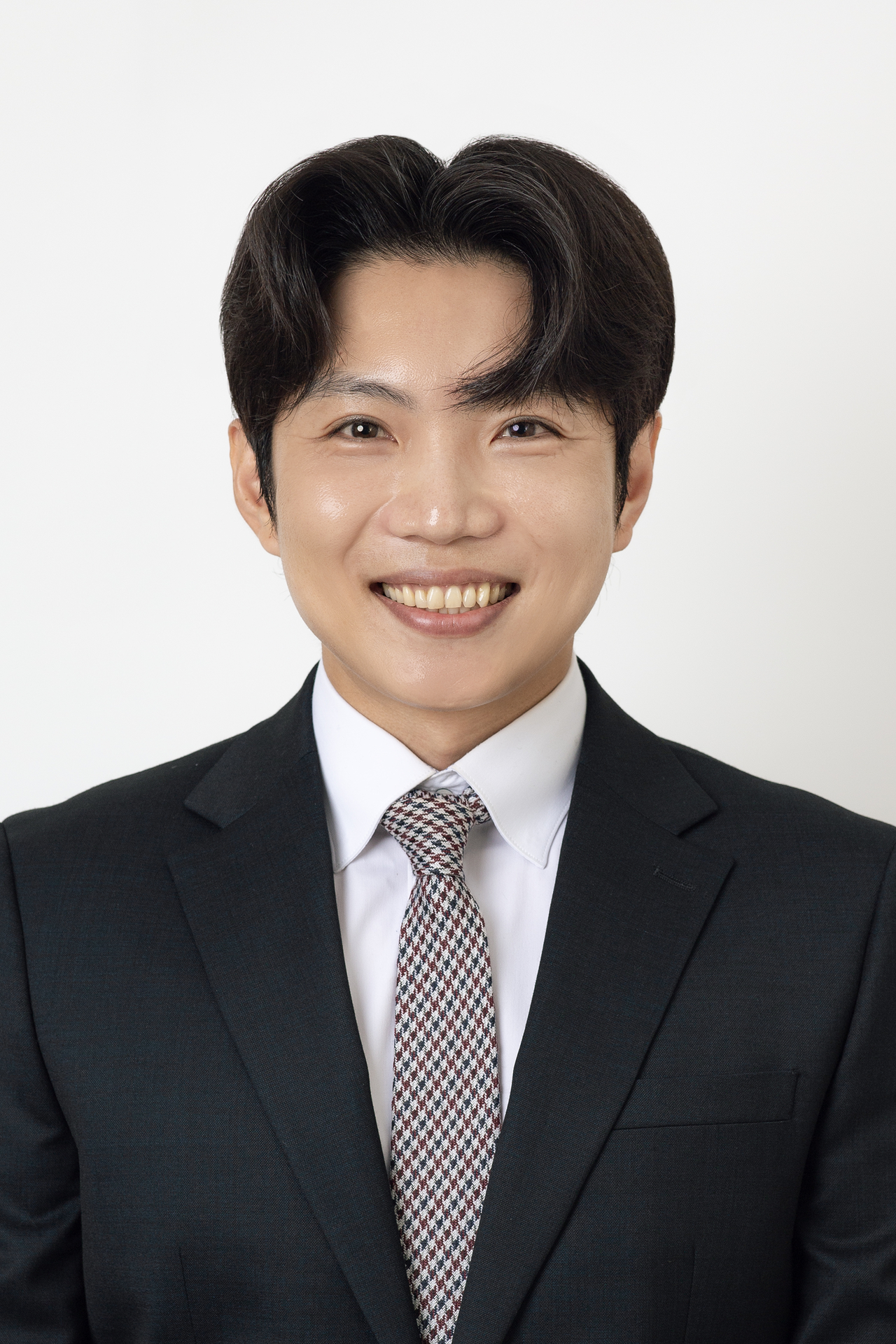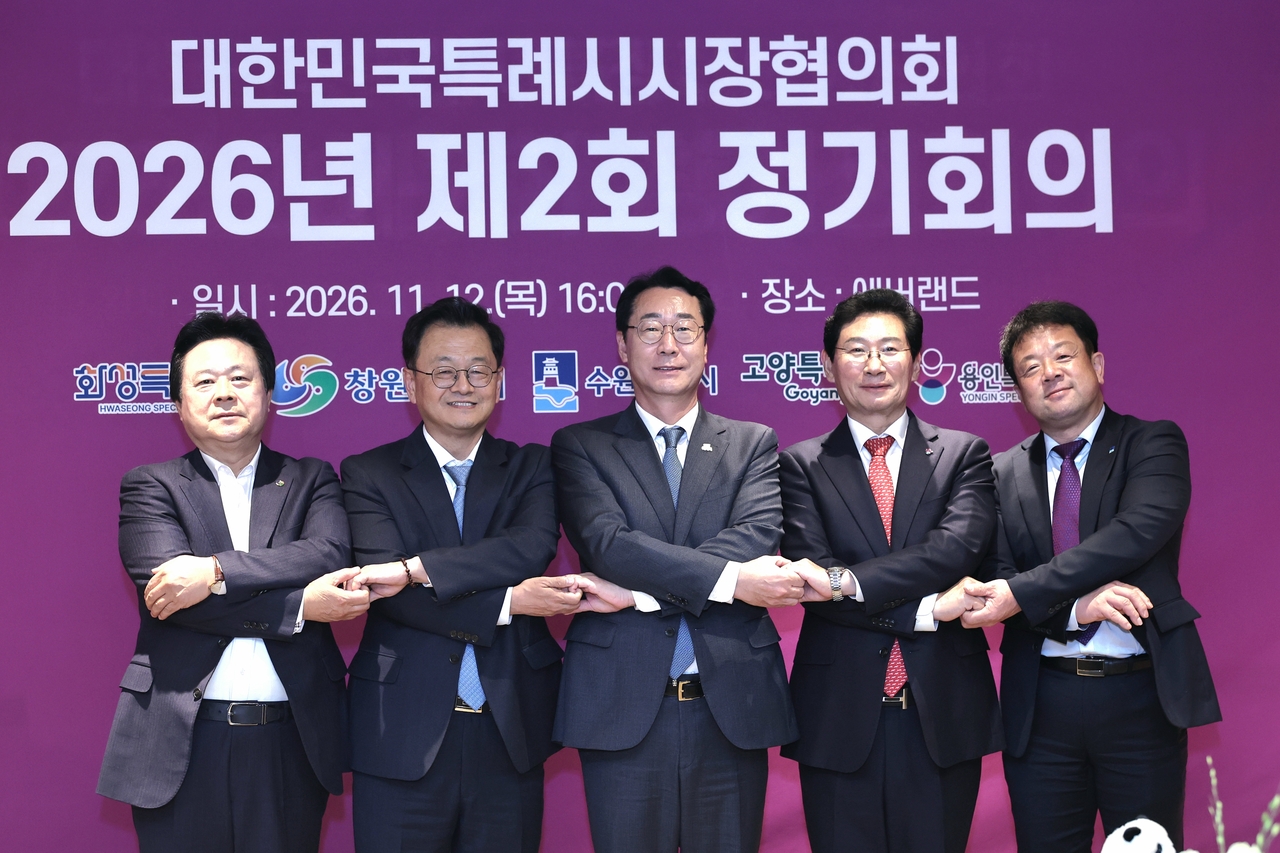
Hwaseong Special Status City Mayor Jeong Myeong-geun said Thursday that South Korea's five special-status cities must act together to secure fiscal autonomy and establish a clear legal standing, speaking at the second regular meeting of the Special Status Cities Mayors' Council of Korea, held in Yongin.
The meeting brought together Jeong alongside Changwon Special Status City Mayor Kang Gi-yun, Yongin Special Status City Mayor Lee Sang-il, Goyang Special Status City Mayor Min Gyeong-seon and Suwon Special Status City First Deputy Mayor Kim Hyeon-su to share key policy concerns and discuss future cooperation.
The gathering was convened with an eye toward the scheduled implementation of the Special Act on Support for Special Status Cities on June 3 next year, with participants discussing follow-up tasks needed to translate the law's passage into tangible expansions of autonomous authority and changes that residents can feel.
Discussions centered on four core agenda items: establishing the legal status of special-status cities, granting fiscal privileges, expanding key administrative authority and broadening organizational autonomy — with the aim of submitting a joint proposal to the central government.
Participants particularly shared the need to amend the Local Autonomy Act to clarify the legal standing of special-status cities, and to secure practical fiscal support measures — including funding and staffing for transferred administrative functions, as well as expansion of adjustment grants and collection grants.
Under Article 2 of the current Local Autonomy Act, metropolitan self-governing entities are classified as special cities, integrated special cities, metropolitan cities and special autonomous cities, while basic self-governing entities are categorized only as cities, counties and districts — leaving special-status cities without a separately defined legal standing. Participants argued that, given the special act's recognition of special-status cities as distinct from ordinary cities, follow-up legislative amendments are needed to provide the institutional framework for meaningful devolution of authority.
Based on the joint proposals, the council plans to arrange a meeting with the Interior and Safety minister in December and to actively petition the National Assembly and the central government for systemic improvements for special-status cities.
"With the special act — the product of years of effort — set to take effect next year, the time has come to turn its passage into real expansions of authority and changes that citizens can feel," Jeong said. "To secure the most urgently needed fiscal privileges, we must first establish a clear legal status for special-status cities."
Jeong added that the five special-status cities must work in close coordination and engage in sustained dialogue with the National Assembly and the Ministry of Interior and Safety to drive meaningful institutional reform.
The Special Act on Support for Special Status Cities was promulgated on June 2 and is set to take effect on June 3, 2027.
fob140@heraldcorp.com