In 1975, a US senator gave the first Golden Fleece Award to a love study, calling it a waste of taxpayer money. The researcher received threatening letters and gave up on federal grants. Half a century later, the work is considered a founding pillar of relationship science — and the award lives on.

Some psychologists who set out to study why people fall in love ended up being branded "tax thieves" by a US senator.
According to a 2021 Forbes report, then-Sen. William Proxmire (D-Wisconsin) named a National Science Foundation grant of $84,000 — worth about $524,000 in today's value — for research on love as the first recipient of the Golden Fleece Award, in 1975.
According to the June 2006 issue of the Observer, published by the Association for Psychological Science, the award went to the work of psychologists Ellen Berscheid and Elaine Walster — now Elaine Hatfield — in March 1975.
A monthly 'worst waste of taxpayer money'
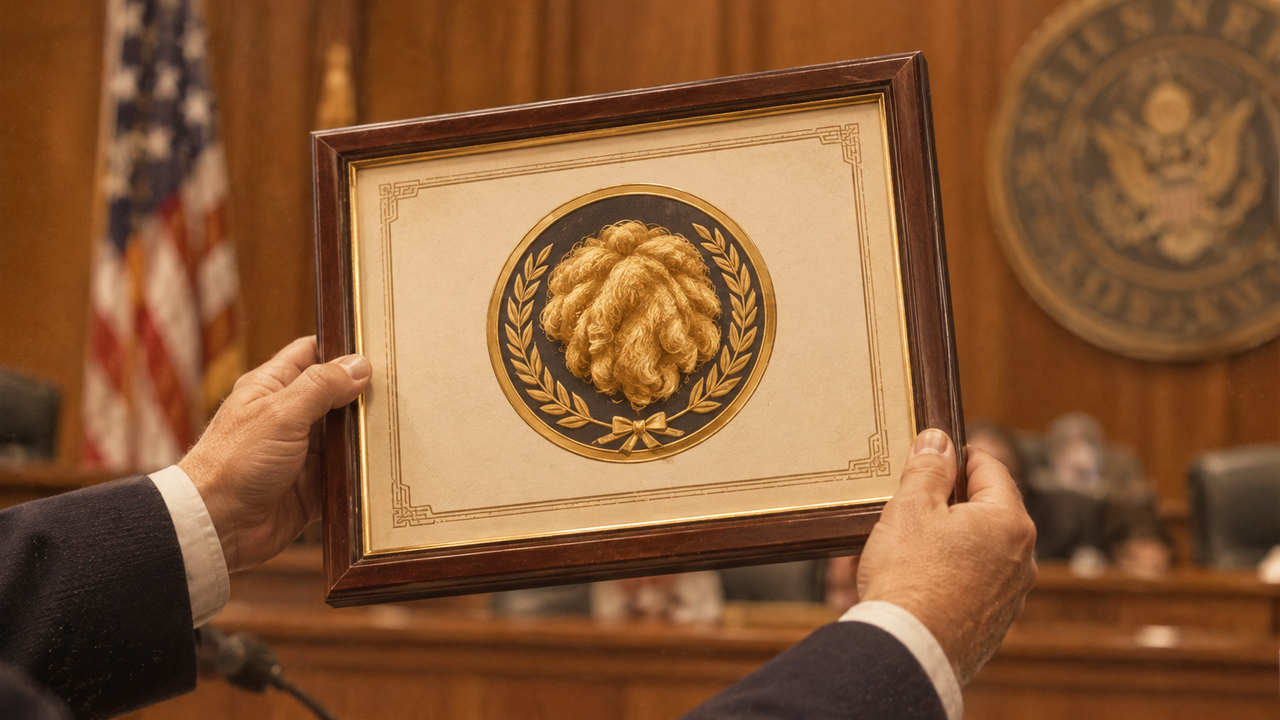
The Golden Fleece Award is a dishonorary prize given to government agencies deemed to have spent public funds on frivolous purposes. The name draws on the golden fleece of Greek mythology. The English word "fleece" also means to swindle someone out of money, giving the award a punning edge — presenting a fleece to those who fleece taxpayers.
According to Forbes, Proxmire handed out the award 168 times between 1975 and 1988.
The Federal Aviation Administration received the award for spending $57,800 on measuring the body dimensions of 432 flight attendants. The National Institute on Drug Abuse also made the list for funding $121,000 in research on the effects of marijuana on sexual arousal.
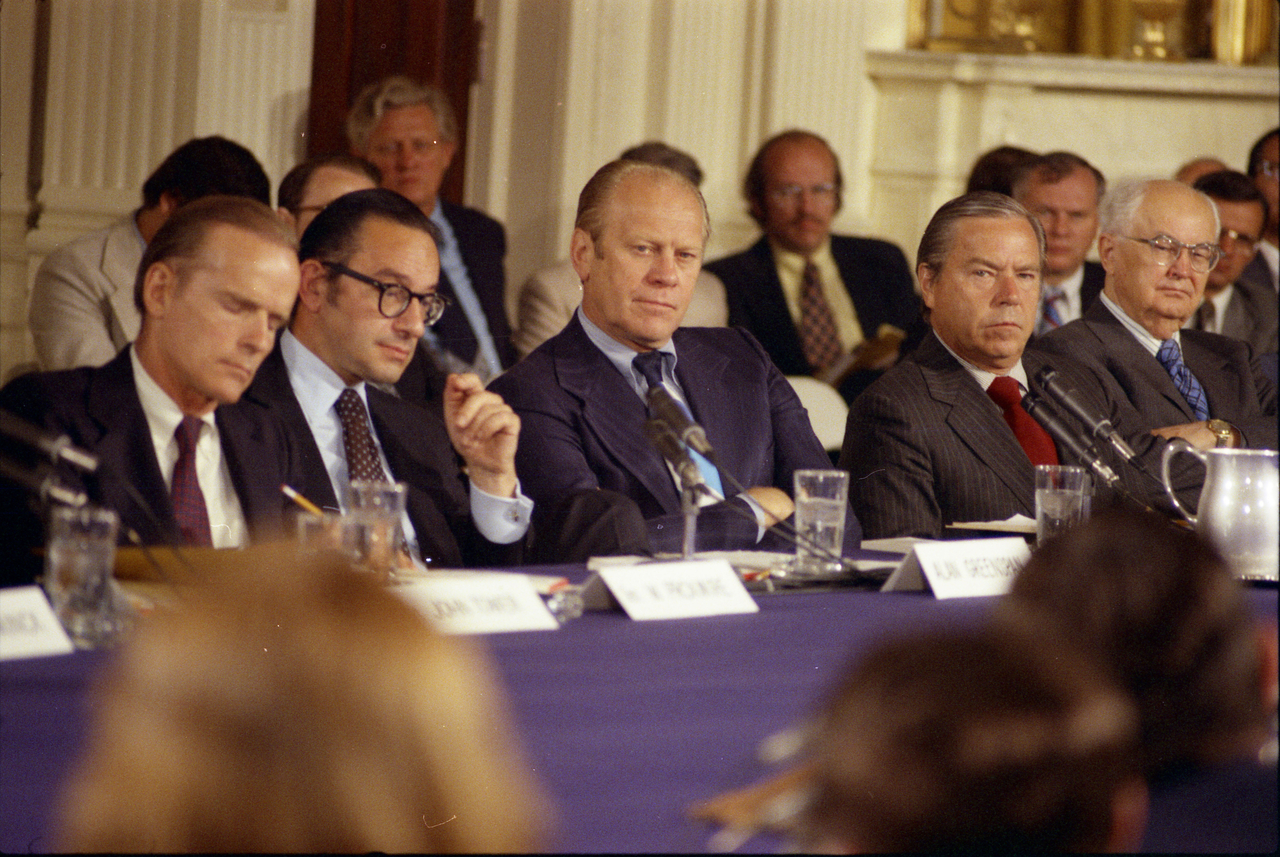
In remarks from 1975 as reported by Forbes, Proxmire said he believed "200 million other Americans want to leave some things in life a mystery," adding that topping the list of things "we don't want to know is why a man falls in love with a woman and vice versa."
According to a 2006 Observer essay by Hatfield, the Chicago Tribune ran a reader poll after the Golden Fleece announcement asking who was right — Proxmire or Hatfield. Some 87.5 percent of readers sided with Proxmire, while support for Hatfield was limited to 12.5 percent.
In the same essay, Hatfield recalled receiving "weird letters containing chilling threats."

A bishop at the church attended by Hatfield's mother sent a message to local congregations criticizing the National Science Foundation for supporting scientists who sought to probe "the most sacred mysteries of love and life."
Hatfield recalled that the head of the National Science Foundation advised her to hold off on applying for grants and "wait until things quiet down." She said all of her subsequent research was funded privately.
Describing herself as "a shy person who doesn't go looking for conflict," she added that the experience had been "genuinely painful" in the years that followed.
Co-researcher Berscheid was also hit hard. According to the June 2006 Observer, both researchers were inundated with critical and threatening letters and phone calls. The two believed the stigma had cost them federal research funding, and held both the press and Proxmire responsible.

From 'top tax waste' to pioneers of relationship science
According to Hatfield's Observer essay, Sen. Barry Goldwater — the 1964 Republican presidential candidate — wrote pieces in The New York Times and the Wisconsin regional paper the Capital Times defending the two researchers' work on love.
Three Nobel laureates from the University of Chicago also took the researchers' side through the same newspapers. At the University of Wisconsin, where Hatfield was based, the faculty senate put Proxmire's criticism on its agenda and voted 84 to 1 in support of the researchers.
New York Times columnist James Reston wrote at the time that if the research yielded even a clue as to why people fall in love, it would represent "the best investment of federal money since Jefferson bought Louisiana."
Half a century on, the academic verdict has shifted.

In a 2013 paper published in the journal Perspectives on Psychological Science, University of Rochester professor Harry Reis and three other psychologists named the two researchers as pioneers of relationship science — a field devoted to the empirical study of romantic, marital and friendship bonds.
The research team noted that during the 25 years when psychology had largely ignored interpersonal relationships, the two researchers' work had laid the foundation for the entire field.
After moving to the University of Hawaii, Hatfield published the Passionate Love Scale in 1986 alongside colleague Susan Sprecher in the Journal of Adolescence. The Association for Psychological Science noted in 2012 that the scale is used "everywhere from psychology laboratories to online dating sites."
Brain-imaging research published in the February 2013 Observer found that scores on the Passionate Love Scale correlated strongly with activity in brain regions associated with love. Hatfield went on to receive the William James Award in 2012, which the APS gives to scholars for a lifetime of contributions to basic psychological science.
Berscheid died last year at 88. The University of Minnesota's psychology department honored her in a tribute as "a pioneer of social psychology renowned for empirical research on human relationships."

The Golden Goose Award rises to counter the Golden Fleece
In her 2006 Observer essay, Hatfield said she believed the Golden Fleece Award "had a chilling effect on research." Psychologist Michael Domjan, who received the award for separate research, told the same publication that "almost any psychology experiment can be twisted into a Golden Fleece candidate."
In response, bipartisan members of Congress and the American Association for the Advancement of Science, among others, created the Golden Goose Award in 2012 — a prize honoring federally funded research that appeared trivial at first glance but led to significant breakthroughs.
According to the AAAS, Rep. Jim Cooper (D-Tennessee) said, "We will never know how many young Einsteins and Newtons gave up on a career in science because they were made to feel their work was a joke." The AAAS also recounted how Proxmire had once mocked a Department of Agriculture project on parasitic flies, only to later apologize after the research proved its value.
The Golden Fleece Award ended when Proxmire chose not to seek reelection in 1988 and left office the following year. It was revived in 2000, when the citizens' group Taxpayers for Common Sense brought Proxmire on as honorary chairman and kept the award going through 2016.
Rep. French Hill (R-Arkansas) has also presented an award under the same name since 2015. Last year's recipients included the Department of Veterans Affairs and the passenger rail service Amtrak.
This year, winners have been announced seven times between February and August. The most recent recipient, announced Aug. 28, was the US Postal Service for failing to prevent counterfeit stamps and postage fraud.
References
DOI: 10.1016/S0140-1971(86)80043-4
Hatfield E, Sprecher S. Measuring passionate love in intimate relationships. J Adolesc. 1986;9(4):383-410.
DOI: 10.1177/1745691613497966
Reis HT, Aron A, Clark MS, Finkel EJ. Ellen Berscheid, Elaine Hatfield, and the emergence of relationship science. Perspect Psychol Sci. 2013;8(5).
dbsdn1110@heraldcorp.com