Park Jae-ho, former Democratic Party lawmaker, succeeds People Power Party's Kang Seok-jin
Both ruling and opposition politicians have led the agency in succession
Three priorities: field communication, corporate growth, ethical management
Key tasks include policy financing, manufacturing innovation and SME support
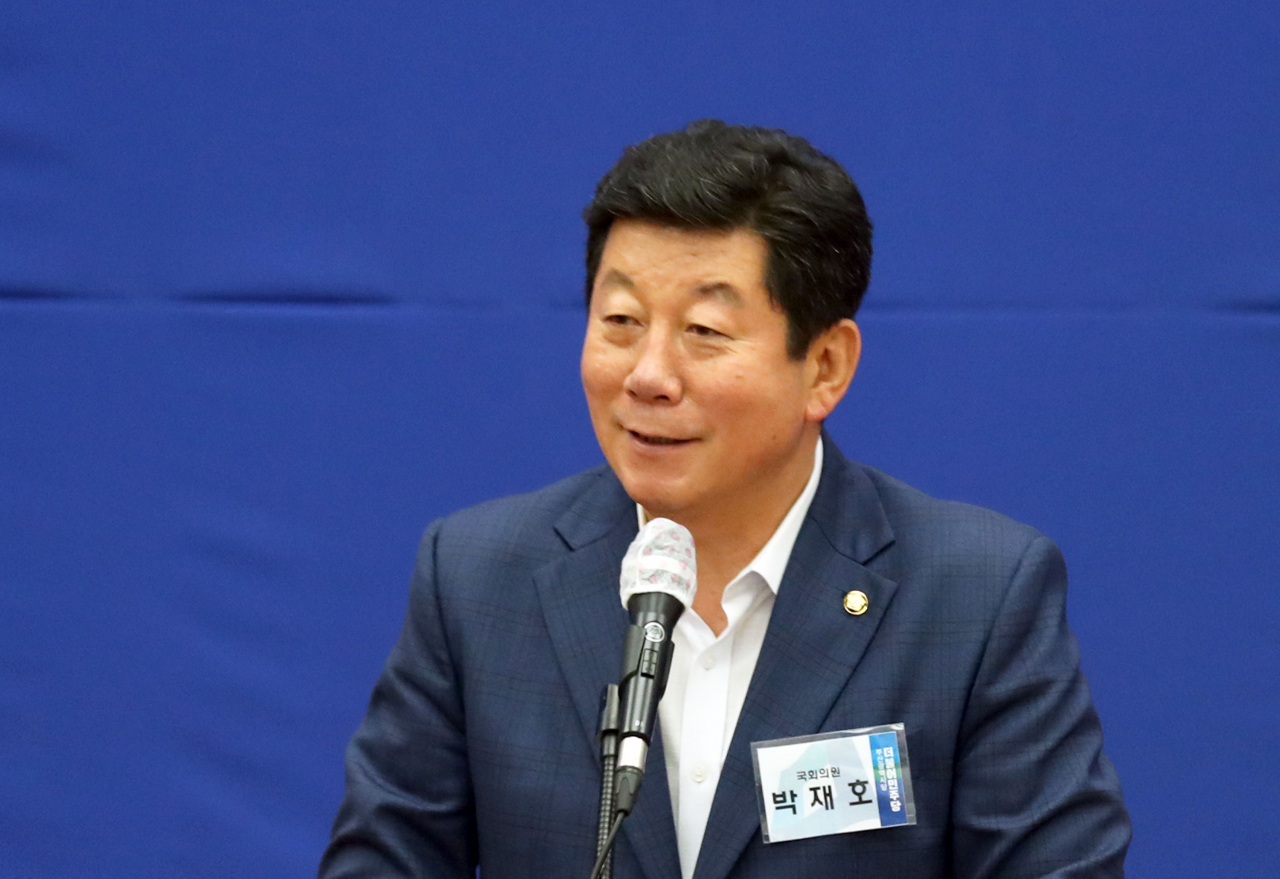
Park Jae-ho, a former Democratic Party of Korea lawmaker, has taken office as the new president of the Korea SMEs and Startups Agency. The agency has now been led by politicians from both the People Power Party and the Democratic Party in succession, following former President Kang Seok-jin, who came from the PPP.
Park took office Friday as the agency's 20th president at its headquarters in Jinju, South Gyeongsang Province, beginning a three-year term. The agency is a public institution under the Ministry of SMEs and Startups responsible for supplying policy financing to small and medium-sized enterprises, nurturing startups, supporting exports and developing the workforce.
Born in Busan in 1959, Park graduated from Busan University of Foreign Studies with a degree in French and earned a master's degree in public administration from Chung-Ang University. Park served as a second political affairs secretary in the presidential secretariat before heading the Korea Sports Promotion Foundation from 2005 to 2008. Park subsequently won election to the 20th and 21st National Assemblies from the Nam-gu constituency in Busan.
Views on appointing politicians to lead public institutions are divided. Some argue that experience in politics can be an asset in coordinating policy with the government and the National Assembly and in managing organizations, while others raise concerns about expertise in policy financing and fairness in personnel decisions. The parachute-appointment controversy arose when Kang took office as well. Park similarly faces the challenge of channeling experience in politics and the public sector into concrete results for SME support.
Park takes the helm at a particularly difficult time for small businesses. With sluggish domestic demand, rising costs and tight access to financing persisting, the agency must shore up the operational stability of small and medium-sized enterprises while also strengthening the foundations for growth through startup development and export support.
Ensuring both the effectiveness and soundness of policy financing is another key challenge. Funding support must be managed so that it goes beyond temporary liquidity injections and translates into tangible outcomes such as sales growth and job creation. At the same time, the agency must continuously monitor the repayment capacity and financial health of supported companies to manage the risk of non-performing policy loans.
Developing regional small businesses is also a priority. The Ministry of SMEs and Startups set a target last year in its policy financing plan for this year to direct more than 60 percent of loans to companies outside the Greater Seoul area. Narrowing the gap in business conditions between the capital region and the rest of the country, and strengthening regional industrial foundations, are also responsibilities the agency carries.
In his inaugural address, Park said he had met many business owners and heard their concerns firsthand during his time as a National Assembly member. "Some companies struggled with financing, sales channels and staffing, and there were cases where support systems existed but businesses in need could not actually access them," he said.
"Drawing on those experiences and reflections, I will ensure that the agency's support translates into real results on the ground for businesses," he added.
Park outlined his management philosophy as building "an agency that finds answers in the field and proves its worth through the transformation of small and venture businesses." He set out three guiding principles: strengthening communication with businesses on the ground, generating tangible growth outcomes for supported companies, and running the organization with fairness and integrity. "Going forward, the real change and growth of the companies we support will be an important benchmark by which we measure our own performance," he added.
Park visited the field on his first day in office. For his first official engagement, he toured Dongyang, a manufacturer of powertrain components for electric and hybrid vehicles located in Jeongchon-myeon, Jinju, South Gyeongsang Province. He inspected the company's robot-automated smart factory and heard from Dongyang CEO Moon Dae-geun about the challenges encountered during its manufacturing innovation drive. Park also indicated that the agency would link policy financing and workforce development support for small businesses pursuing manufacturing innovation.
boo@heraldcorp.com