Ticket sales reached only 14% of projected 22.4 billion won revenue
Dismissed director files suit, but court upholds termination
Court: 'Flawed decision-making was the primary cause of the concert's failure'
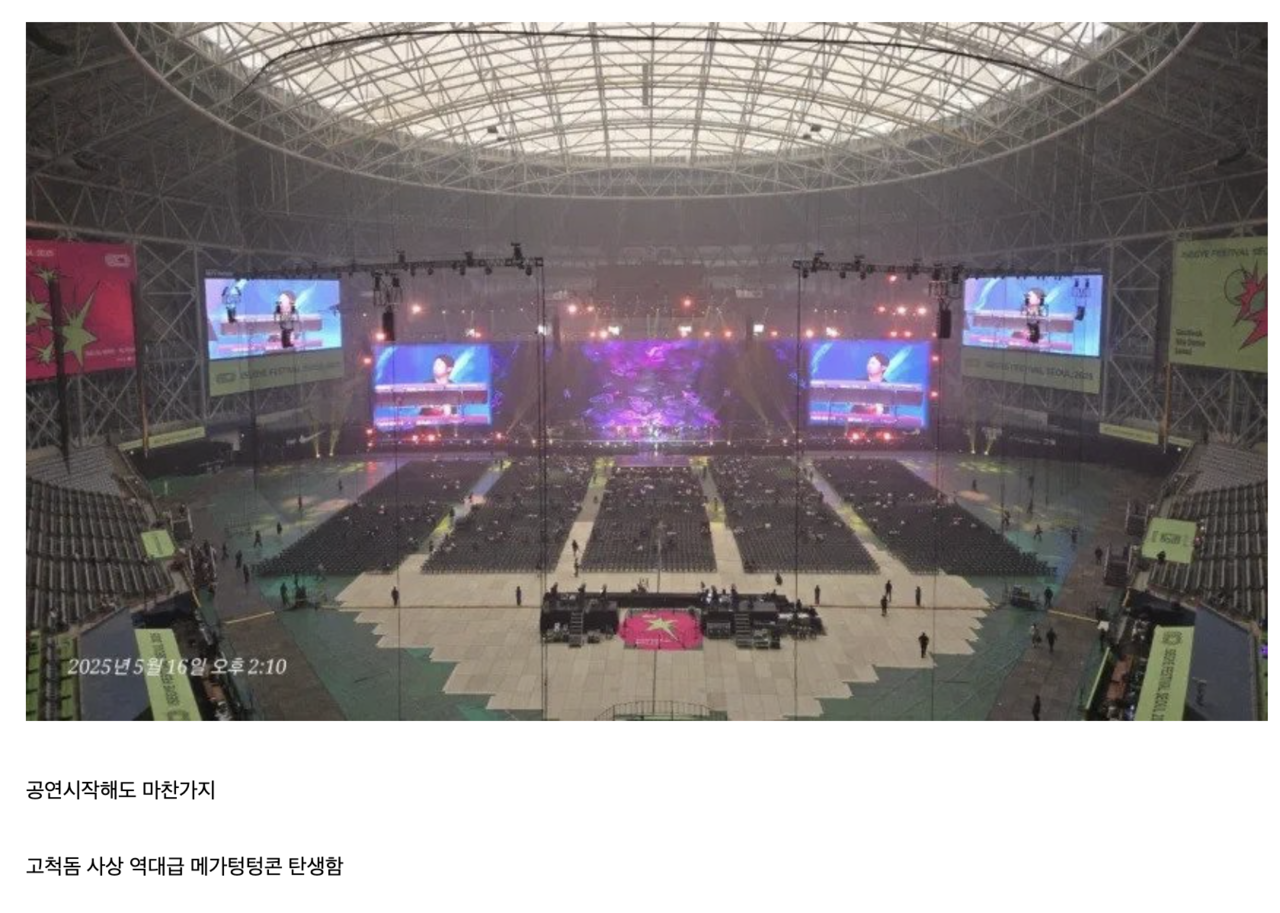
"The most epically empty concert in Gocheok Dome history"
— Online community post
In May last year, posts and photos spread across online communities describing a concert at Gocheok Dome as the worst-attended in the venue's history. Users alleged the organizer had pushed ahead with the event despite dismal ticket presales.
The person held responsible for the debacle was dismissed — and then the lawsuit began. A court has now ruled that the termination of the entertainment director who oversaw the concert was justified.
Dismissed director challenges firing in court
The civil division of the Uijeongbu District Court's Goyang Branch ruled against the former director, identified only as A, who had filed a 540 million won ($405,000) damages claim against Parable Entertainment over the dismissal. A had overseen the planning of "Isekai Festival 2025." The court also ordered A to bear the litigation costs.
A argued the dismissal was unjust and demanded 20 million won per month in salary for the remaining 27 months of the contract term, but the court rejected the claim. "It is reasonable to conclude that A's flawed decision-making was the primary cause of the concert's failure," the court said, adding that "the company's fundamental trust in A's management capabilities had been irreparably lost."
Concert failure leaves company with 9 billion won operating loss
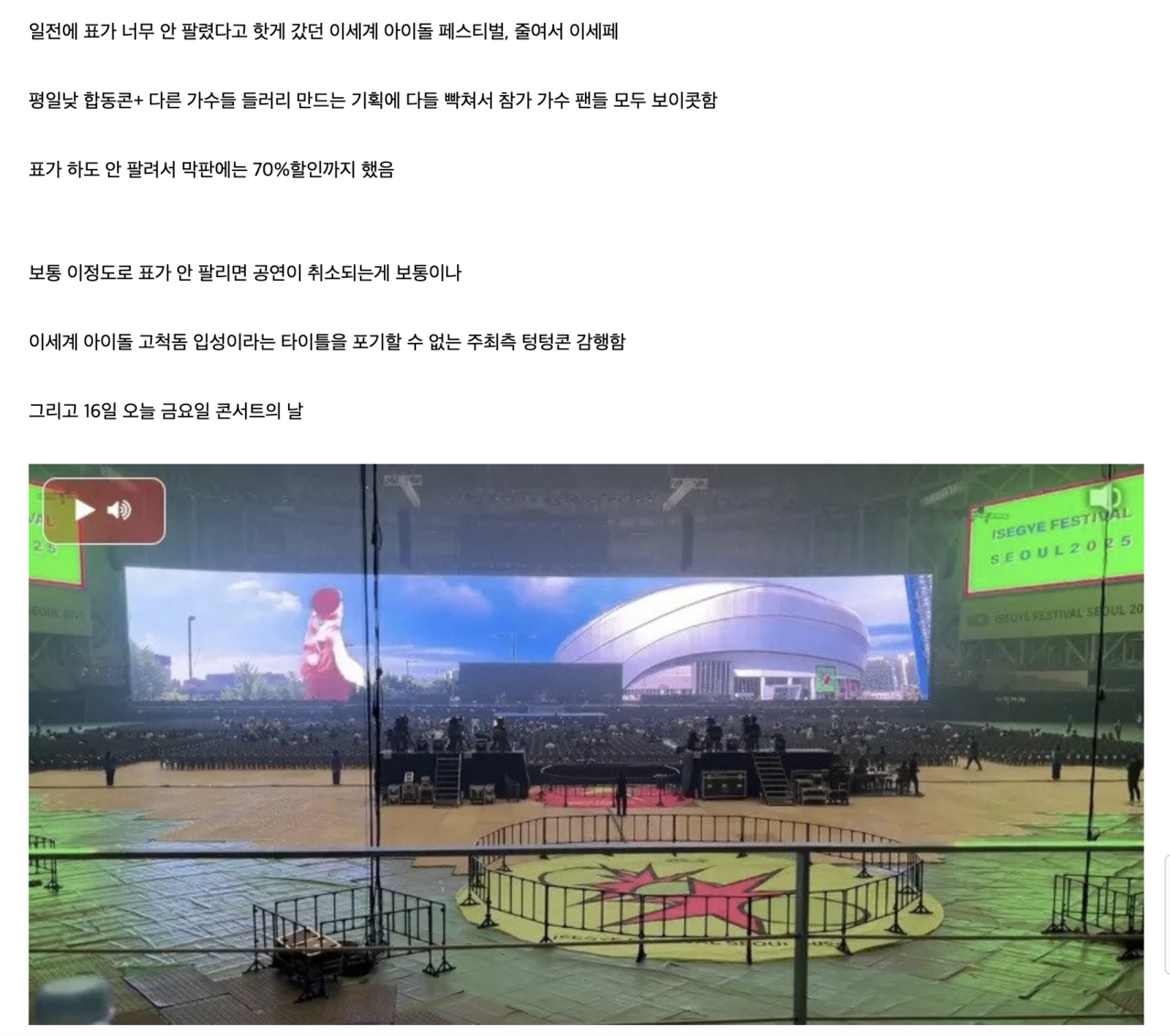
According to the facts established by the court, "Isekai Festival 2025" was originally planned as a three-day event. The headline act, virtual idol group Isekai Idol, was contractually available for only one performance, yet A planned the festival across three days without securing a meaningful program for the remaining two.
During preparations, A spent excessively on booking other performers, yet the full lineup had still not been confirmed by the time ticket sales opened, forcing a blind sale. The first and second days were also scheduled for 1 p.m. on weekdays, limiting the potential audience. Presale numbers fell so sharply that the first day's concert was ultimately canceled.
Ticket prices were also far higher than at comparable concerts — VIP seats were priced at 250,000 won per day, drawing criticism in media coverage. The court found it "highly likely" that A's excessive and unreasonable spending on performer fees was a contributing factor.
The second day, held on a Saturday, drew a stronger crowd, but total ticket revenue still fell far short of expectations, reaching only about 3.3 billion won — roughly 14 percent of the projected 22.4 billion won. Provisional losses from the concert reached approximately 3.6 billion won. The company recorded an operating loss of 9 billion won for 2025, the year of the concert, a sharp increase from the 1.2 billion won operating loss the previous year.
Court: 'Serious deficiencies' in organizational leadership
Throughout the trial, A mounted a range of arguments against the dismissal.
A's side contended that the concert's failure was due to uncontrollable external factors, that merchandise sales — not ticket sales — were the concert's core revenue stream, and that judging a front-loaded investment loss as evidence of serious management failure ignored the nature of intellectual property business.
The court rejected all of these arguments.
Taking into account the facts it had established, the court dismissed every claim, ruling that "overall responsibility for the concert, including the booking of performers, must be attributed to A, who oversaw the entire operation."
The court also found that A showed "serious deficiencies in organizational management and leadership."
As head of the content production division, A had exercised real authority over personnel, organizational operations and work directives, the court said, but "failed to set consistent standards and direction for work instructions and did not clearly communicate decisions to staff, frequently causing operational confusion and disputes over accountability."
The court further noted that multiple employees who clashed with A left through recommended resignations, and that "even mid-level staff A had personally recruited ended up resigning voluntarily."
During a period of suspension, A failed to respond to company communications regarding follow-up matters and gave outside lectures without the CEO's approval. The court said this behavior "amounted to A demonstrating an unwillingness to fulfill the obligations of an executive contract" and "reasonably contributed to the company's loss of trust."
The ruling was finalized Oct. 3, with neither side appealing the first-instance decision.
notstrong@heraldcorp.com