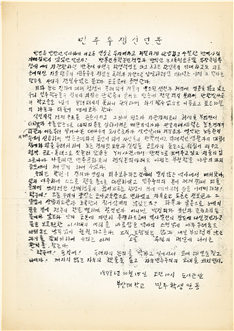
Declaration distributed by Pusan National University student Shin Jae-sik during the uprising
Late Busan Ilbo reporter Kim Taek-yong's field dispatches from Masan also selected
Cultural Heritage Administration photo exhibition planned Nov. 23–Dec. 6
The city of Busan announced Friday that two documents related to the 1979 Busan-Masan Democracy Uprising — a democracy declaration and a set of field dispatches by a late journalist — have been designated as preliminary cultural heritage by the Cultural Heritage Administration. Preliminary cultural heritage refers to modern and contemporary cultural assets less than 50 years old that the administration's director has identified as likely candidates for formal registered cultural heritage status, warranting early discovery, preservation and management.
The Busan-Masan Democracy Uprising was a landmark pro-democracy movement in October 1979, in which citizens and students in the Busan and Masan areas rose up against the Yushin dictatorship. The newly designated records, held by the Busan-Masan Democracy Uprising Memorial Foundation, are primary documents attesting to the outbreak and development of the uprising and carry significant historical weight in the history of South Korea's democratization movement.
The democracy declaration is one of three manifestos distributed during the uprising. Shin Jae-sik, then a student at Pusan National University, mimeographed and distributed it on Oct. 15, 1979. It captures the convictions of Pusan National University students resisting the Yushin dictatorship, with calls to abolish the Yushin system and bring down the dictatorship. It is the only known surviving original among those distributed at the time. The document was selected as preliminary cultural heritage in recognition of its on-the-ground democratic significance and historical rarity — having survived an era when even distributing leaflets was grounds for arrest.
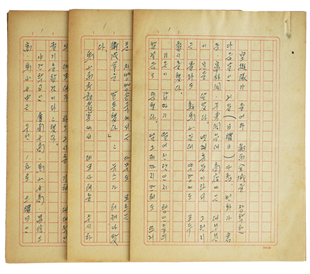
The field dispatches were written by the late Kim Taek-yong, a Masan-based reporter for the Busan Ilbo, to file reports to his newsroom on the protest situation in the Masan area from Oct. 18 to Oct. 21, 1979. The documents offer a vivid window not only into how the demonstrations unfolded in Masan but also into the perspective of a reporter who witnessed events firsthand, making them highly valuable as on-the-scene historical records. They also carry historical significance and rarity as the work of a working journalist who risked personal danger to document events at a time when emergency martial law and a garrison decree had imposed severe restrictions on press freedom.
"The Busan-Masan Democracy Uprising records selected as preliminary cultural heritage are vivid evidence of a historical event that played a decisive role in South Korea's democracy movement," said Jo Yu-jang, the city's director of culture. "In line with the government's policy of shining a light on the democratization movement, we will actively work to uncover related records, including those from the June Democracy Uprising in Busan."
kaf2002@heraldcorp.com