AMD, Broadcom surge more than 5% on Thursday
BofA raises AMD target price to $700
Rivals seen benefiting from big tech's chip diversification push
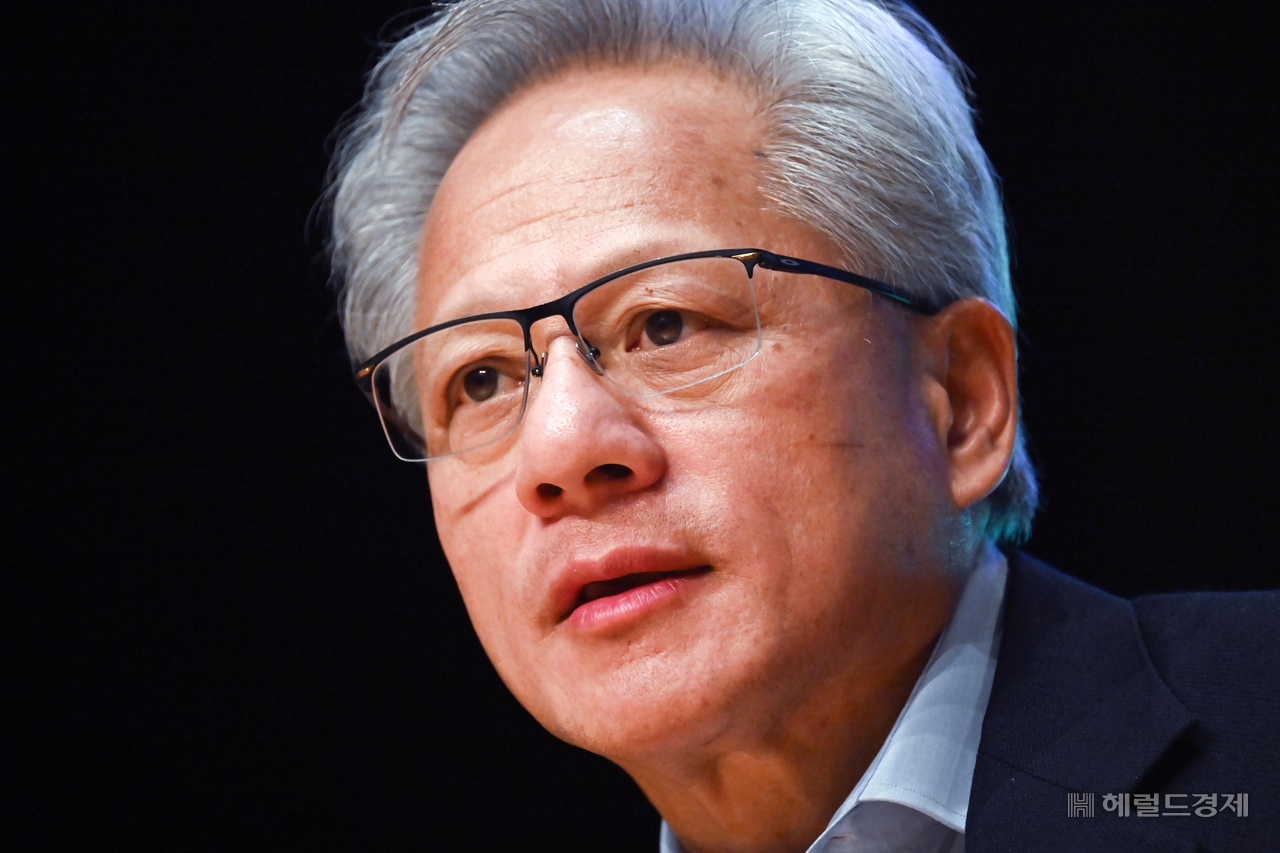
Shares of AMD and Broadcom each surged more than 5% after Nvidia CEO Jensen Huang stepped down, with analysts saying his departure could accelerate big tech's push to diversify chip suppliers and develop in-house processors — turning rivals into beneficiaries.
Nvidia's board announced Thursday (local time) that Huang had immediately stepped down as president, CEO and board member. Chief Financial Officer Colette Kress took over as interim CEO, and the board said it had begun searching for a permanent successor from both inside and outside the company.
Nvidia's share price fell 4.34% from the previous session to close at $166.19 following the announcement.
AMD rose 5.86% and Broadcom gained 5.54%. Expectations that customers would diversify their chip supply amid growing uncertainty over Nvidia's leadership drove both stocks higher.
AMD's Instinct MI300 series is widely regarded as an alternative to Nvidia's GPUs for large-scale AI training and inference. Broadcom, meanwhile, provides custom application-specific integrated circuit (ASIC) designs and semiconductor intellectual property as Google, Meta, Microsoft and other big tech companies develop their own AI chips to reduce dependence on Nvidia GPUs and cut costs.
Analysts at home and abroad say the leadership vacuum at Nvidia could give rivals an opening to expand their market share, as prolonged management uncertainty would give customers stronger incentive to diversify their chip sources.
Nam Dae-jong, a researcher at Daol Investment & Securities, said the expansion of competitors "was already under way before the resignation, but uncertainty around Nvidia's management could, over the medium to long term, accelerate the redistribution of CUDA workloads and new orders."
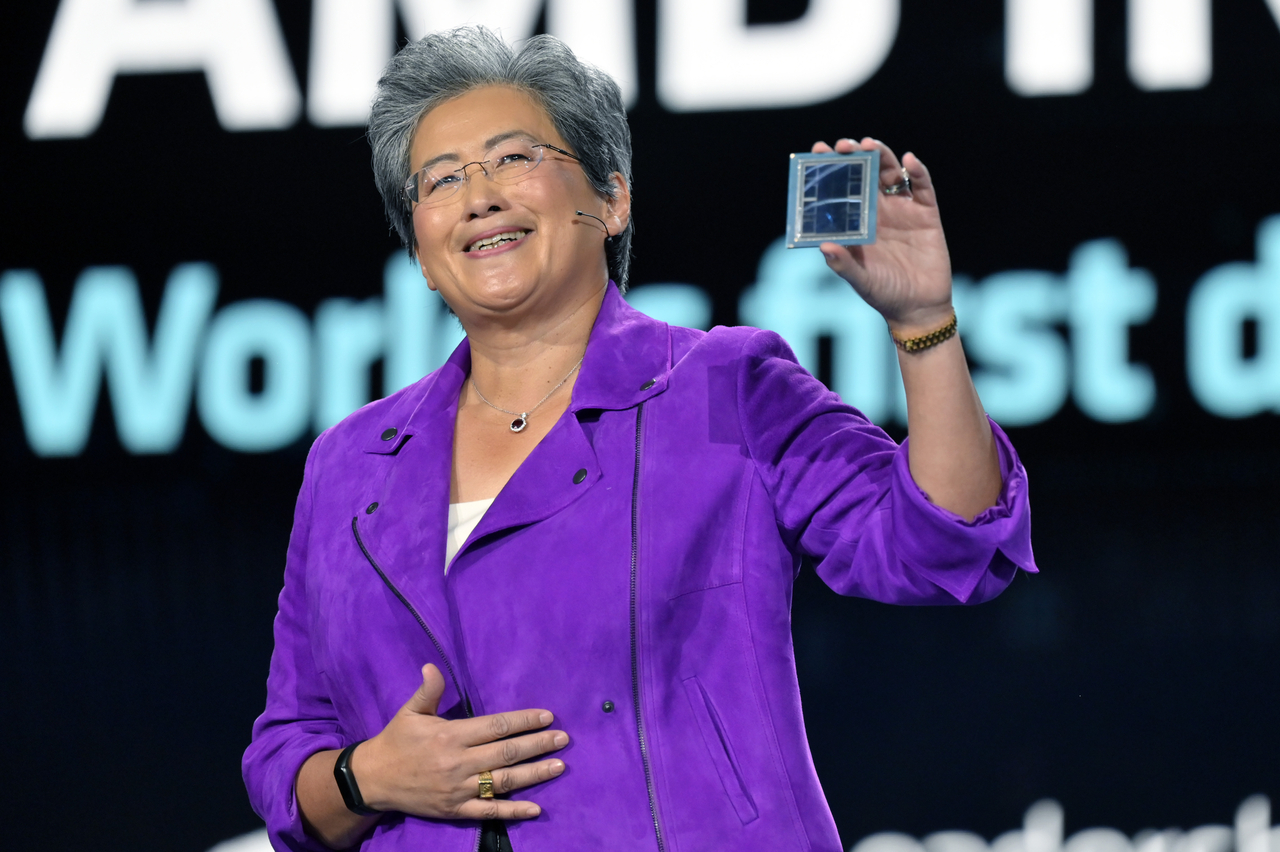
US investment bank William Blair upgraded its rating on AMD to Outperform, citing Nvidia's management uncertainty and Intel's server CPU supply disruptions as growth opportunities for AMD. Bank of America also raised its AMD target price from $650 to $700.
Moon Jun-ho, a researcher at Samsung Securities, said AMD, Broadcom and Google had emerged as clear beneficiaries, adding that "if any negative developments at Nvidia do not trigger a broader pullback in AI demand, the leading alternatives would ultimately be AMD GPUs and Google TPUs."
Google has been expanding its foothold in the AI accelerator market — dominated by Nvidia — by supplying its in-house AI chip, the Tensor Processing Unit (TPU), to Apple, Meta, Oracle and others.
Some analysts caution, however, that Nvidia's technological edge and software ecosystem make it unlikely that rivals can capture significant market share in the short term. Hwang Su-wook, a researcher at Meritz Securities, said that while greater uncertainty around Nvidia's strategy execution and customer relationships could give large clients more reason to expand their use of AMD GPUs and custom ASICs, "there is no basis to assume that demand for existing Nvidia products and software will disappear in the near term."

moon@heraldcorp.com