Global AI glasses shipments surged 263% in the first half of this year, with more products entering the market
Physical safeguards such as LED indicators remain, but privacy concerns persist
Regulatory responses have limited reach; better detection and broader social consensus are needed
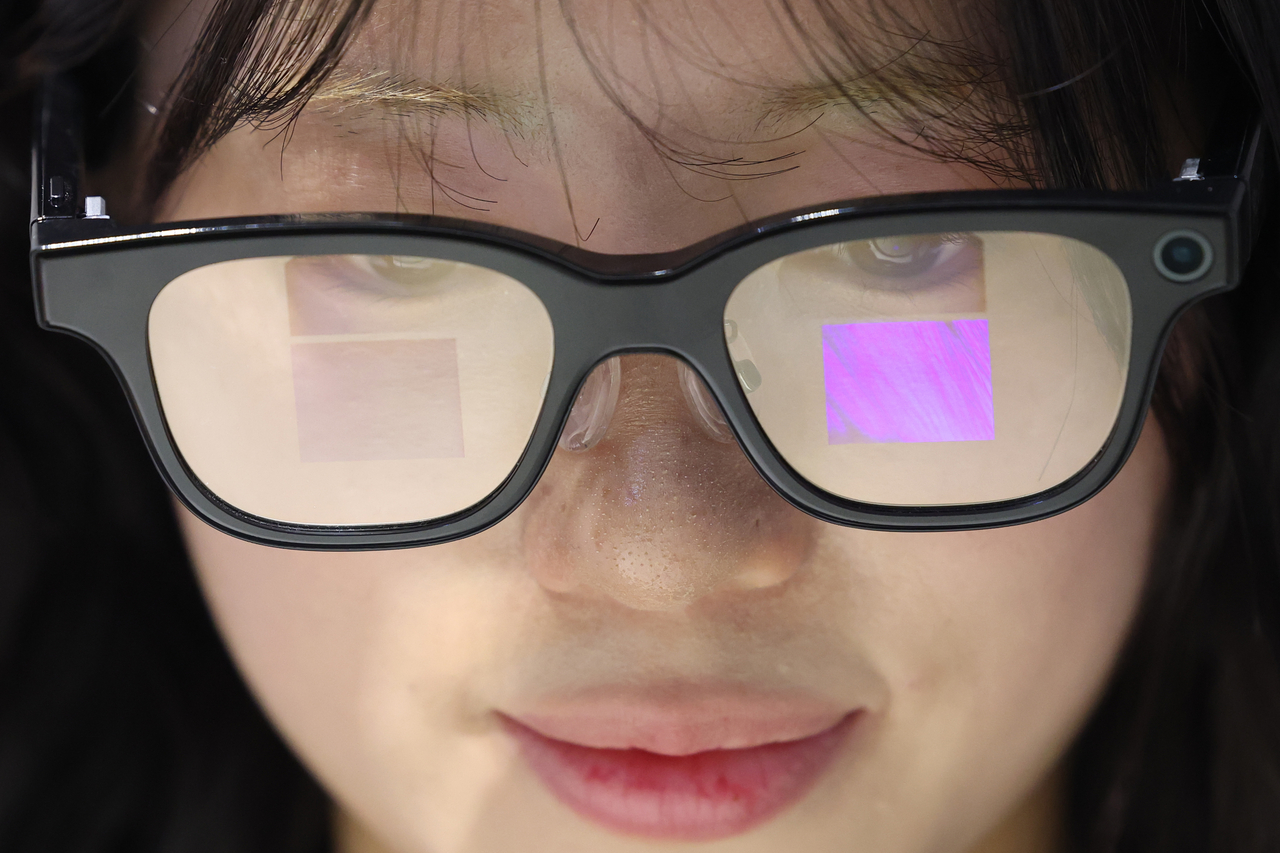
Smart glasses are showing up in exam halls and on city streets alike. Depending on who you ask, they are either an AI assistant that puts information right before your eyes or a tool for cheating and covert recording. The promise and the peril of the devices are arriving together.
The market is growing fast. According to Counterpoint Research, global AI glasses shipments in the first half of this year rose 263 percent from the same period last year. Voice-only models without a display accounted for 96 percent of the total, with Meta holding a 94 percent share in that segment. AR and AI glasses equipped with displays made up a smaller slice, but their shipments surged 449 percent.
Products and use cases have multiplied. Meta's Ray-Ban Meta supports photo and video capture, calls and music playback, on top of AI conversation and real-time Korean translation. Samsung Electronics will launch its Intelligent Eyewear — developed in collaboration with Google, Gentle Monster and Warby Parker — on Dec. 10. Powered by Google Gemini, the glasses can translate foreign-language menus and provide turn-by-turn navigation. Even Realities' Even G2, which went on sale in South Korea in August, takes a different approach: it carries a display but no camera, showing conversations as subtitles or translations and supporting teleprompter-style script display and meeting summaries.
Concerns have been steady. Exam cheating tops the list of urgent worries, since a single device can handle both querying an AI and receiving its answer. Display-equipped models are particularly hard for proctors to catch — answers appear silently in the wearer's field of vision.
Camera-equipped models currently carry an LED indicator that lights up when recording. Some devices also require the wearer to touch the frame or issue a voice command to activate the camera. Display models can also be spotted if light leaks from inside the lens, though visibility varies by product and screen brightness.
Outside exam halls, privacy is the central issue. The glasses allow users to photograph people or documents without raising a phone. Bystanders are unlikely to notice a small indicator light, and even when the light is on, it does not guarantee that the person being filmed has consented to being recorded or having the footage transmitted.
Manufacturers are tightening safeguards. Starting with its second-generation AI glasses, Meta disables the camera if the recording LED is covered. Rokid has paired its indicator light with a policy prohibiting the unauthorized upload of personal photos and videos and their use in AI training.
Samsung Electronics has highlighted indicator-blocking detection, automatic de-identification of faces in the vicinity, and restrictions on using visual data for AI training or advertising. The company also plans to limit use to people 18 and older. However, even Meta has acknowledged attempts to modify or damage its LED, making clear that safeguards alone cannot fully prevent misuse.
Whether regulatory measures can eliminate abuse remains an open question. Smart glasses are already strictly banned from most exam venues, and authorities are moving to introduce radio-frequency detectors and dedicated proctoring staff at national certification exams. Current law places certain restrictions on filming people with mobile imaging devices in public spaces for business purposes, but how existing rules apply to everyday private use still requires further review.
Experts say exam-specific device identification and inspection procedures need to be strengthened, and that clearer standards are needed for indicator-light visibility, tamper prevention, and the transmission, storage and deletion of collected data. How to guarantee bystanders' right to refuse being filmed — and how to define permissible use across different settings such as schools, hospitals and workplaces — remains a matter requiring broader social consensus.

andy@heraldcorp.com