Survey of 2,985 participants finds 79% say jobs help reduce medical expenses; 93% report moving more each day
44.2% still feel burdened by medical costs, prompting calls to link employment and healthcare support

About eight in 10 participants in South Korea's senior employment program say their jobs help prevent physical and mental decline and ease the burden of medical costs, a new survey shows. Many also reported improvements in physical activity, diet and sleep. However, 44.2% said they still felt weighed down by healthcare expenses, prompting calls to link the employment program with medical cost support.
According to the Korea Employment Agency for Seniors and the Aged, an analysis of its "2025 Survey on Senior Employment and Social Activity Support Projects," conducted among 2,985 program participants, found that 79.0% agreed that joining the program had helped reduce their medical expenses.
Some 83.7% said participation helped prevent a decline in physical function, while 83.0% said the same for mental function. The findings suggest that many participants feel the income-supplementing jobs also help maintain a healthy daily routine in old age.
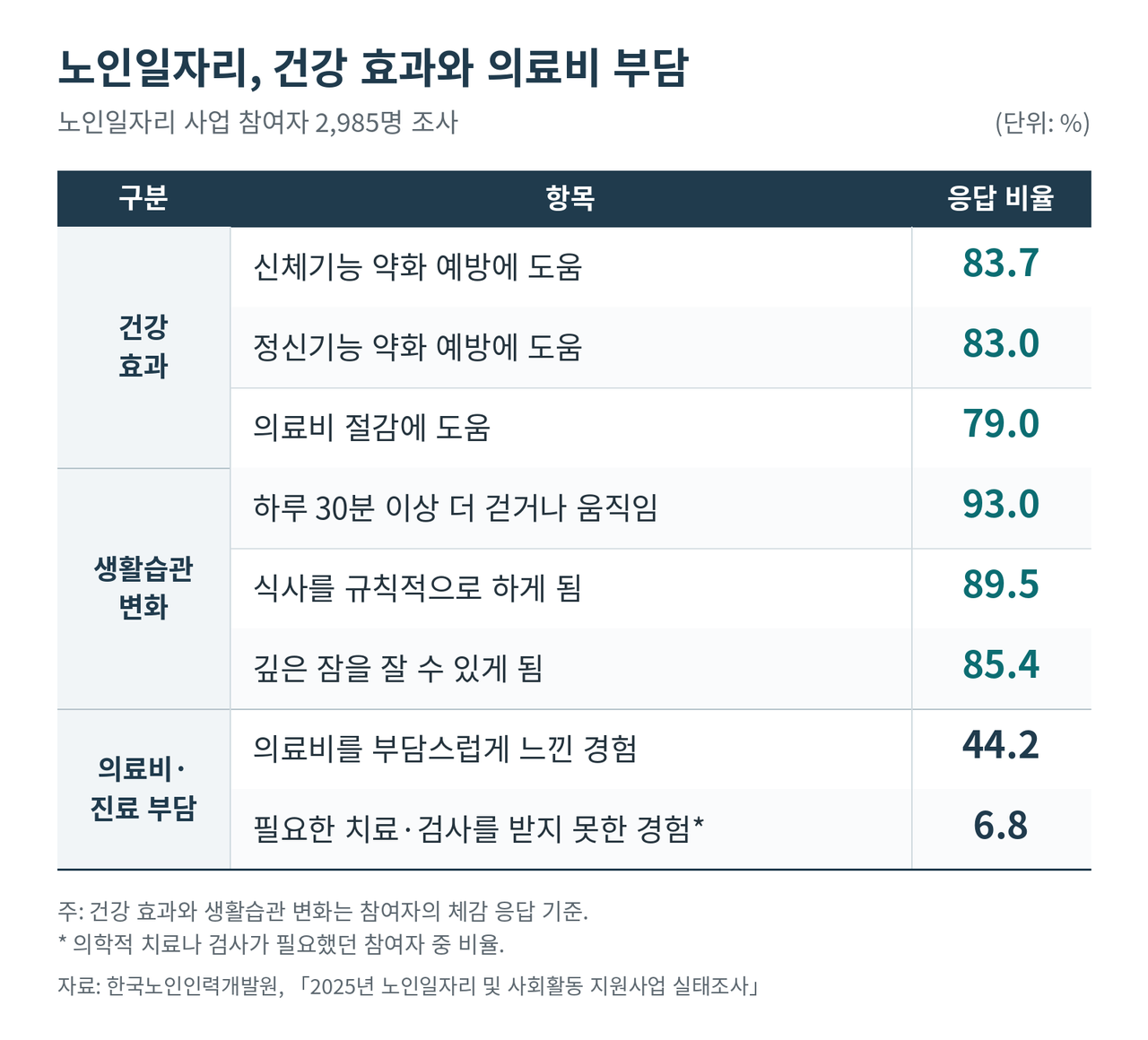
Participants also reported positive changes in their daily habits. Some 93.0% said they walk or move for at least 30 more minutes a day since joining the program. Another 89.5% said they now eat more regularly, and 85.4% reported sleeping more soundly.
By program type, participants in skills-utilization projects reported the highest rates of positive responses. Among that group, 87.0% said the program helped prevent physical decline, 87.8% cited mental decline prevention, and 82.1% said it reduced medical costs — all higher than the rates among participants in public-service or private-sector programs.
Despite the broadly positive health assessments, medical cost burdens persisted. Overall, 44.2% of participants said they had at some point felt burdened by healthcare expenses.
Among those who said they needed medical treatment or diagnostic tests, 6.8% said they had been unable to access the care they needed. The most commonly cited reason was financial hardship, at 44.2%, followed by mild symptoms at 34.0%.
The agency said the senior employment program functions not merely as an income supplement but as a social participation policy that supports healthy aging, and that expanding its benefits will require pairing it with healthcare cost support.
Specifically, the agency recommended that program operators establish procedures to screen participants during consultations for medical cost burdens or unmet care needs, and to connect them with available support systems such as the out-of-pocket expense ceiling program, catastrophic medical cost assistance, and local government healthcare subsidies.
fact0514@heraldcorp.com