Petroleum price cap and frozen electricity and gas tariffs raise fears of a massive bill coming due
Frozen energy tariffs pile up costs: Korea Electric Power Corporation carries 210 trillion won in debt, Korea Gas Corporation 14 trillion won in uncollected receivables
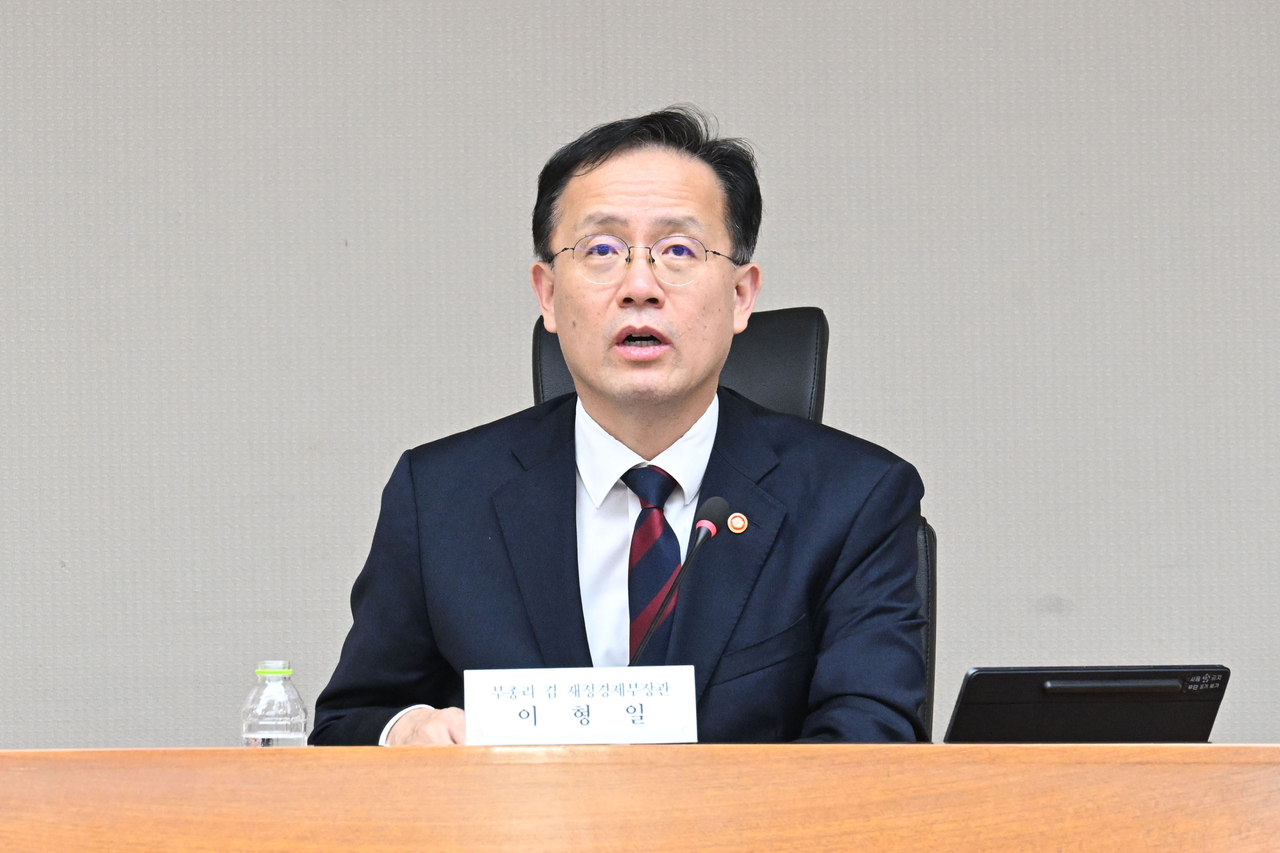
The Ministry of Economy and Finance said Deputy Prime Minister and Minister of Economy and Finance Lee Hyung-il convened an economic affairs consultative meeting Sunday to discuss price management measures.
Attendees included Cheong Wa Dae Policy Chief Ha Jun-kyung, Ministry of Planning and Budget Minister Park Hong-keun, Ministry of Trade, Industry and Resources Minister Kim Jung-kwan, Senior Economic Growth Secretary Moon Shin-hak and Fiscal Planning Adviser Ryu Deok-hyun.
Consumer prices rose 2.8 percent year-on-year in October, according to data the Ministry of Statistics released Nov. 3, marking roughly six consecutive months of increases hovering around 3 percent.
Concerns are growing, however, that the government's petroleum price cap and frozen electricity and gas tariffs — measures introduced to stabilize prices after the outbreak of the Middle East war — are generating a massive deferred bill.
According to the Ministry of Trade, Industry and Resources, the government plans to notify each refiner of its first-round loss compensation settlement — covering the period from March 13, when the petroleum price cap first took effect, through June 30 — as early as the end of this month.
The petroleum price cap, the first such measure since oil price liberalization in 1997, sets a ceiling on the prices refiners charge gas stations and other buyers. Under the arrangement, the government covers losses incurred by the refining industry through fiscal outlays.
The government originally expected the measure to run for six months and set aside a reserve fund of 4.2 trillion won ($3.15 billion) for loss compensation, but the program has now entered its eighth month. To cover fourth-quarter losses, the government has earmarked an additional 1.45 trillion won in next year's budget proposal.
The refining industry maintains that the losses requiring compensation far exceed the reserve fund the government has secured, and significant friction is expected during the settlement process.
The government has emphasized the price-stabilizing effect of the cap, citing a Korea Development Institute analysis showing it lowered the monthly average consumer price inflation rate by 0.6 percentage points between March and October this year.
Despite that effect, concerns persist that artificial price controls are distorting the market and straining fiscal health.
Unlike petroleum, where the government absorbs losses through direct fiscal spending, the costs of controlling electricity and gas tariffs are piling up on the books of state-owned energy companies.
Korea Electric Power Corporation posted consolidated operating profit of 1.64 trillion won in the third quarter of this year, a 70.9 percent drop from the same period last year. On a standalone basis — excluding subsidiaries — Korea Electric Power Corporation recorded an operating loss of 99.8 billion won, swinging back into the red for the first time in two years.
Some forecasts now point to a consolidated operating loss in the fourth quarter as well. Korea Electric Power Corporation's total debt stood at 209.6 trillion won at the end of the third quarter, already about 4 trillion won more than at the end of last year, with borrowings reaching 132.8 trillion won.
Korea Gas Corporation faces a similar situation. Its uncollected receivables for residential city gas supply stood at 13.83 trillion won as of the third quarter, up 288.6 billion won from 13.54 trillion won at the end of the first half of this year, while receivables for power generation use rose by 142.8 billion won to 533.7 billion won.
The uncollected receivables represent amounts the corporation has not recovered from customers after supplying gas below cost — a form of deferred debt that compounds borrowing and interest burdens as it accumulates. With winter heating demand set to surge, the figure is likely to grow further. LNG import costs have soared because of the Middle East war, yet residential gas tariffs have been frozen since August 2024.
The Ministry of Economy and Finance said the government would finalize its policy direction "after additional inter-agency consultations and gathering opinions from various sectors, based on today's discussions."
oskymoon@heraldcorp.com