A top scorer on South Korea's tax accountant licensing exam has come forward to confess to cheating using a miniature camera and AI, sending shockwaves through the country's testing community. The disclosure has also raised urgent concerns about cheating prevention ahead of the College Scholastic Ability Test, now just four days away. The question now is how China — a nation of about 1.4 billion people where AI has become ubiquitous — is tackling AI-assisted cheating on its own high-stakes exams.
To protect the integrity of the gaokao, China's national college entrance examination, authorities have banned advanced electronic devices including AI-powered glasses from exam venues, while also deploying AI surveillance systems and intelligent security screening equipment.
Under the Ministry of Education's guidelines for the 2026 gaokao, smartphones and smartwatches are prohibited from exam halls — and so are smart glasses. Bringing any device capable of transmitting or receiving information into an exam venue can be treated as cheating, regardless of whether the device was actually used.
Penalties are severe. Anyone caught cheating faces nullification of all subject scores for that sitting. Organized cheating, transmitting exam questions outside the venue, or using equipment to receive answers from outside can result in a ban of one to three years from all national education examinations, depending on the severity of the offense. When exam question leaks or organized cheating rise to the level of a criminal act, perpetrators can face criminal prosecution.
AI-powered CCTV watches in real time; wireless signals hunted outside venues
This year's gaokao was held over two days in June, drawing more than 13.42 million candidates — a record high in the exam's history. As concerns grew over cheating using generative AI tools and smart glasses, surveillance inside exam halls and security screening at entrances were significantly tightened.
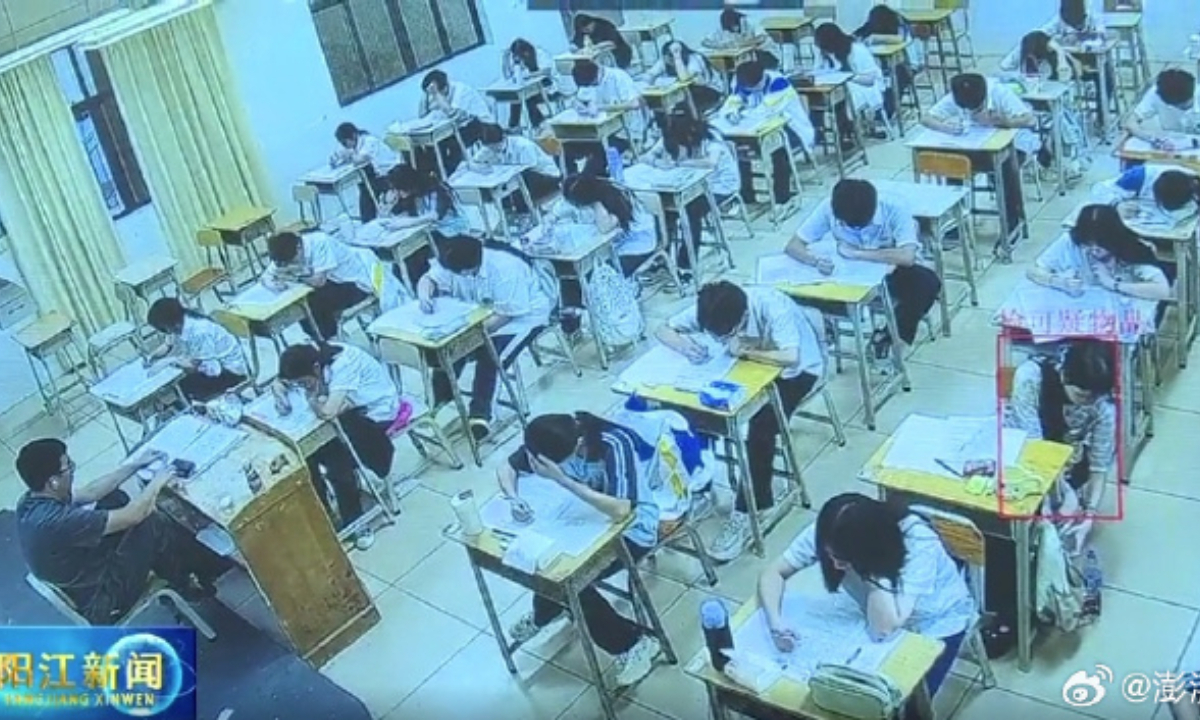
According to the Guangdong Daily, Guangdong Province this year deployed an AI-based intelligent patrol system across 386 exam venues to deter cheating. The system applies AI behavior-recognition technology to CCTV footage, flagging candidates who repeatedly glance around, frequently bow their heads, keep both hands under their desks for extended periods, or repeatedly touch their glasses. When suspicious behavior is detected, the relevant footage — along with clips from just before and after — is automatically extracted and sent to invigilators.
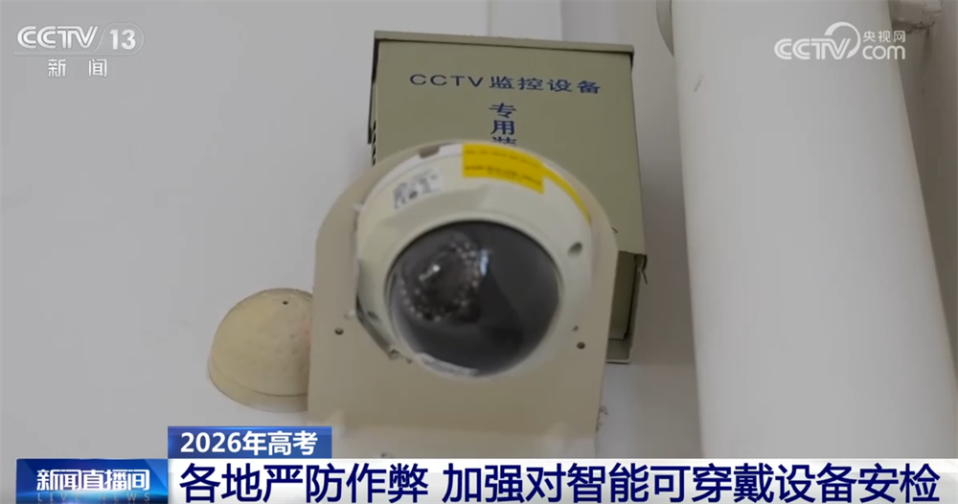
Security screening at venue entrances was also stepped up. Nanjing, in Jiangsu Province, deployed 65 state-of-the-art smart security gates across 31 exam venues in the city. Candidates must pass through both a smart security gate and a metal detector before entering. If an anomalous signal is detected during screening, a staff member conducts a secondary check with a handheld metal detector in a separate area; only after passing that check can the candidate enter.
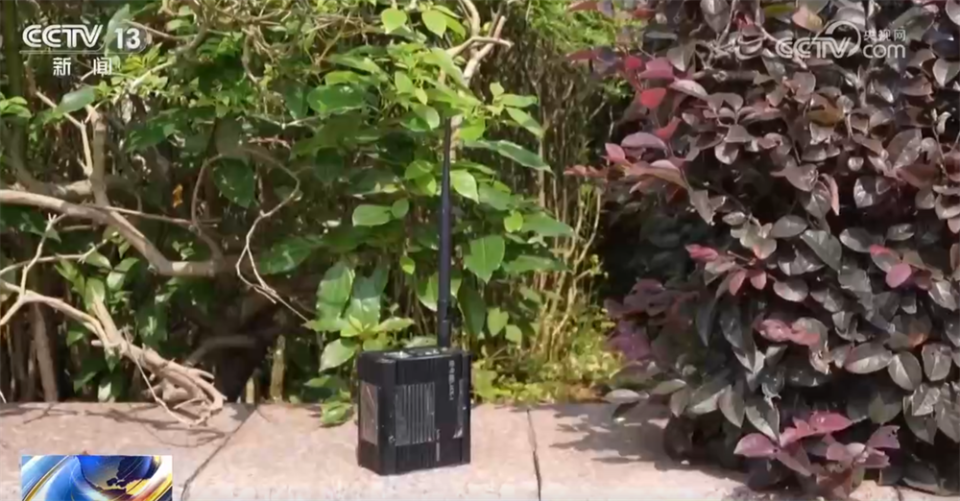
Monitoring extended beyond the exam halls themselves. In Nanjing, Jiangsu Province, and Xinyu, Jiangxi Province, authorities conducted wireless signal detection tests and security sweeps around exam venues. The measures were aimed at preventing cheating schemes in which exam questions photographed with a miniature camera are transmitted to outside accomplices, who then relay answers back via wireless earpieces.
AI firms join the effort: 'Certain features unavailable during exam period'
Major AI companies also joined efforts to prevent cheating. According to The Washington Post, during last year's gaokao, Tencent's AI service Yuanbao displayed a notice when users tried to upload a photo of an exam paper, informing them that its image-recognition function was temporarily unavailable.
Yuanbao told users at the time: "To protect the fairness of the gaokao, this feature is unavailable during exam hours," and listed the specific restricted periods: June 9, 8 a.m. to 12:30 p.m. and 2:30 p.m. to 6:15 p.m., and June 10, 8 a.m. to 12:30 p.m. and 3 p.m. to 5 p.m.
Chinese AI model DeepSeek also temporarily suspended its ability to recognize photos of exam questions and generate answers. When asked about the restriction, the DeepSeek chatbot explained that "it is common for China's Ministry of Education and relevant authorities to require that photo-recognition functions used to look up answers be restricted during major examination periods."
bbo@heraldcorp.com