Thermal cameras under review; measures to be discussed by pan-government TF
Dedicated staff to cover smart glasses only — no additional personnel planned
Full body and belongings checks face legal and logistical hurdles
Signal jamming at exam venues raises communications and safety concerns
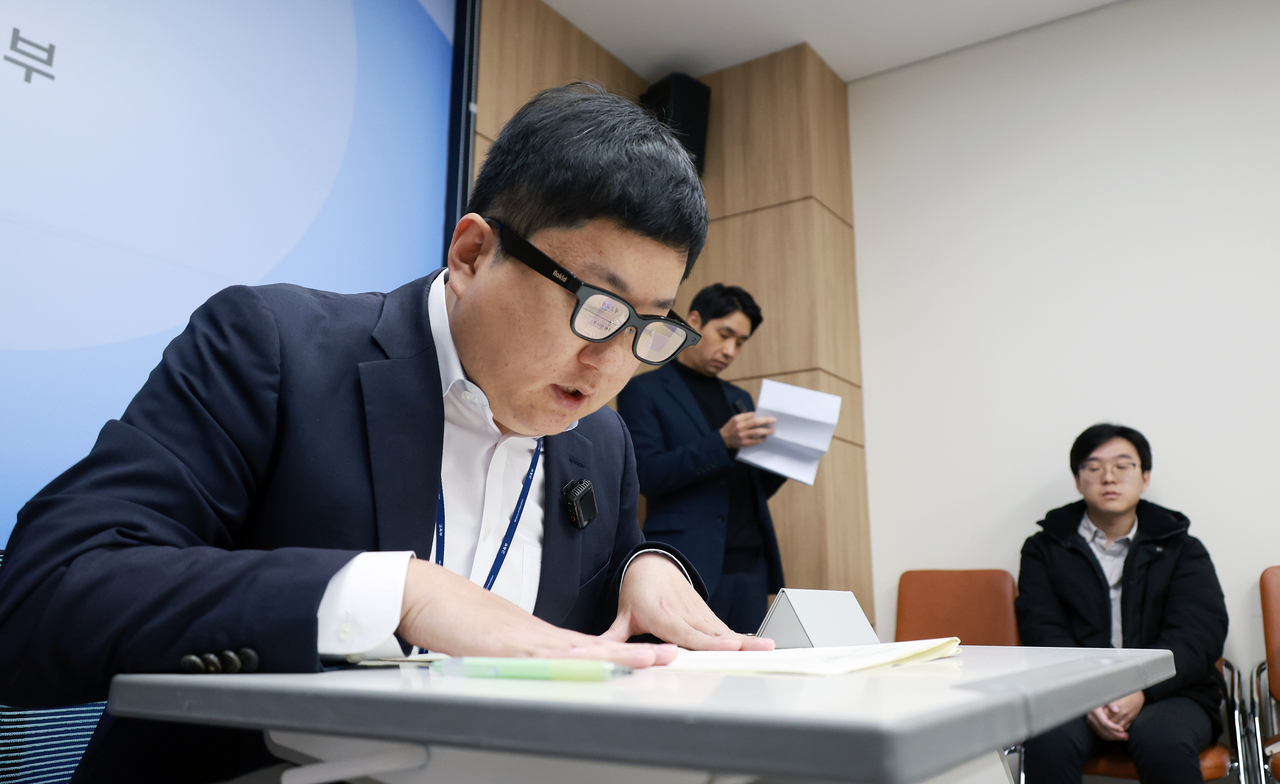
The Ministry of Education has yet to finalize additional measures to detect hidden devices such as miniature cameras ahead of the College Scholastic Ability Test, scheduled for Thursday — just three days away. The deployment of thermal cameras remains under review, and the ministry expressed caution about conducting universal checks using metal detectors, citing the lack of a legal basis and the burden such checks would place on test-takers. On the question of postponing the exam to allow more time for countermeasures, the ministry drew a clear line: "There will be no delay."
The ministry made its position known Monday at a regular briefing, following a demonstration of how smart glasses can be used to answer exam questions and how they can be identified. Questions poured in about how the ministry planned to respond to a range of hidden devices — prompted by a cheating scandal at a tax accountant licensing exam — but officials offered no concrete additional detection measures.

Miniature camera response left to TF; dedicated staff focused on smart glasses
A ministry official said the government would "supplement and consolidate alternatives for detecting miniature cameras through the pan-government task force." When asked whether any measures had been finalized, the official confirmed none had.
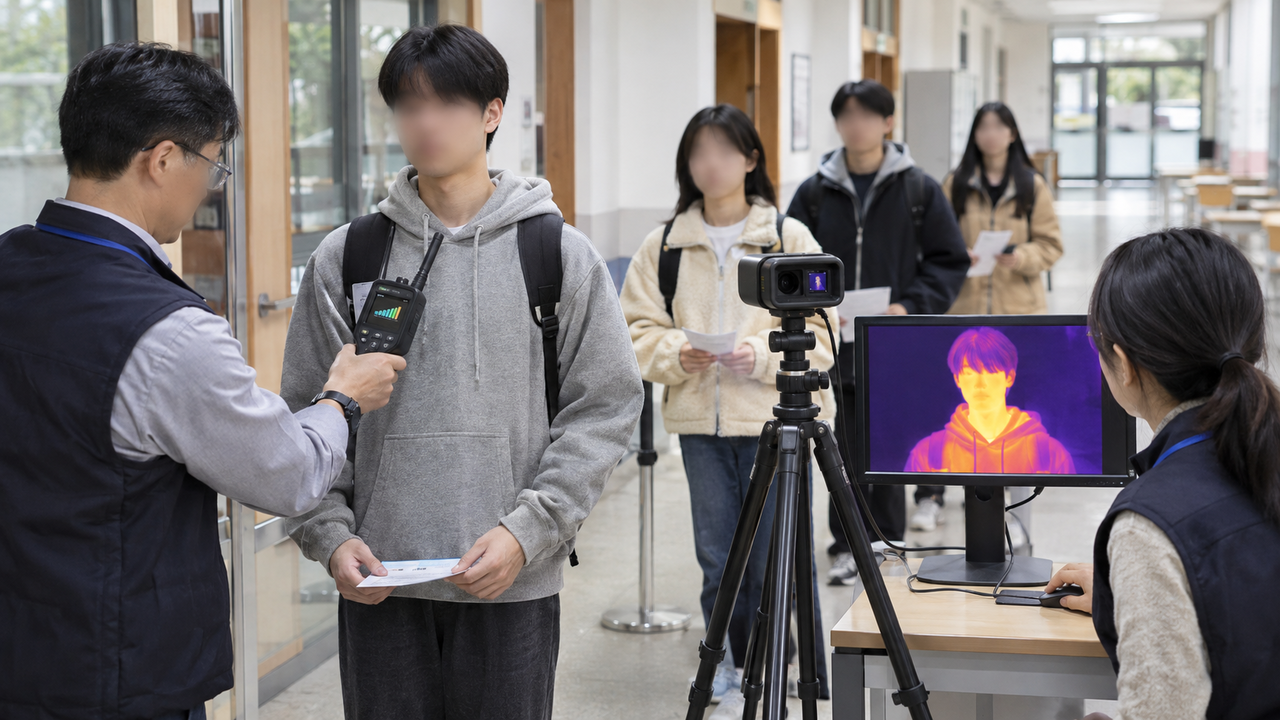
Asked whether any new equipment or detection tools had been introduced since the tax accountant exam cheating came to light, the official said the ministry was "reviewing options." Officials also declined to confirm whether thermal cameras would be deployed at all exam venues. They noted that, given the nature of heat-detecting equipment, attention would need to focus not on the miniature cameras themselves but on connected transmitters and power units.
The ministry said it was compiling a list of cheating methods involving miniature cameras and additional items for proctors to watch for, adding that it would work with regional education offices to update proctor guidelines if needed. Asked whether visual identification of such devices was feasible, officials acknowledged that miniature cameras do have distinguishing physical features but said identification would not be straightforward, and that they would seek further expert input to improve detection.
On whether enough time remained to prepare countermeasures and train proctors, officials said they would review what steps could be taken given the time constraints. Proctor training was set to continue through Sunday, and the ministry said any additional measures developed in the meantime would be communicated to regional education offices.
Dedicated personnel deployed at exam venues will focus specifically on identifying smart glasses. The ministry said at least one such staff member would be assigned to each venue, with venues housing more than 20 exam rooms receiving two, or operating a dedicated team alongside the venue's chief and deputy chief supervisors, depending on local conditions. Asked whether staffing would be increased further, officials said it would not.
Caution on universal checks and signal jamming; existing oversight system emphasized
The ministry expressed caution about conducting universal checks with metal detectors, saying that body and belongings searches must account not only for legal grounds and the time required but also for the burden placed on test-takers. Officials said consideration must also be given to students who use disability-related assistive devices or health-monitoring equipment, as well as the potential distress caused by physical searches.
However, officials said metal detectors would not be abandoned entirely. Corridor proctors currently carry them and use them to check for cheating by students who leave to use the restroom, and they can be deployed whenever suspicious behavior warrants further inspection.
On signal jamming inside exam venues, officials cited restrictions under telecommunications law and concerns about emergency response. Because many schools are located near residential areas, jamming could affect not only communications inside the venue but also those of nearby residents. Asked whether the ministry was considering revising the relevant law, officials said potential side effects would need to be examined first, signaling a cautious stance.
The ministry said the CSAT's supervision and oversight system was more rigorous than that of other licensing exams. Mobile phones and other electronic devices must be powered off and submitted before the exam begins, stored away from the exam room, with no unauthorized items permitted on desks. The ministry also reaffirmed that anyone caught cheating using AI-enabled smart devices would be reported to prosecutors on charges of obstructing the execution of official duties through deception.
On the risk of complaints and lawsuits against proctors, officials said the ministry and regional education offices would support teachers who carried out their duties in good faith to ensure they did not suffer any adverse consequences.
brunch@heraldcorp.com