All exams administered by Korea's Human Resources Development Service this year to be reviewed; past exams subject to probe if tips received
Subject-matter experts to cross-check written answers; suspected cheaters to be referred to police
Answer similarity alone may not be enough to prove AI use; catching near-passing cheaters poses additional challenge
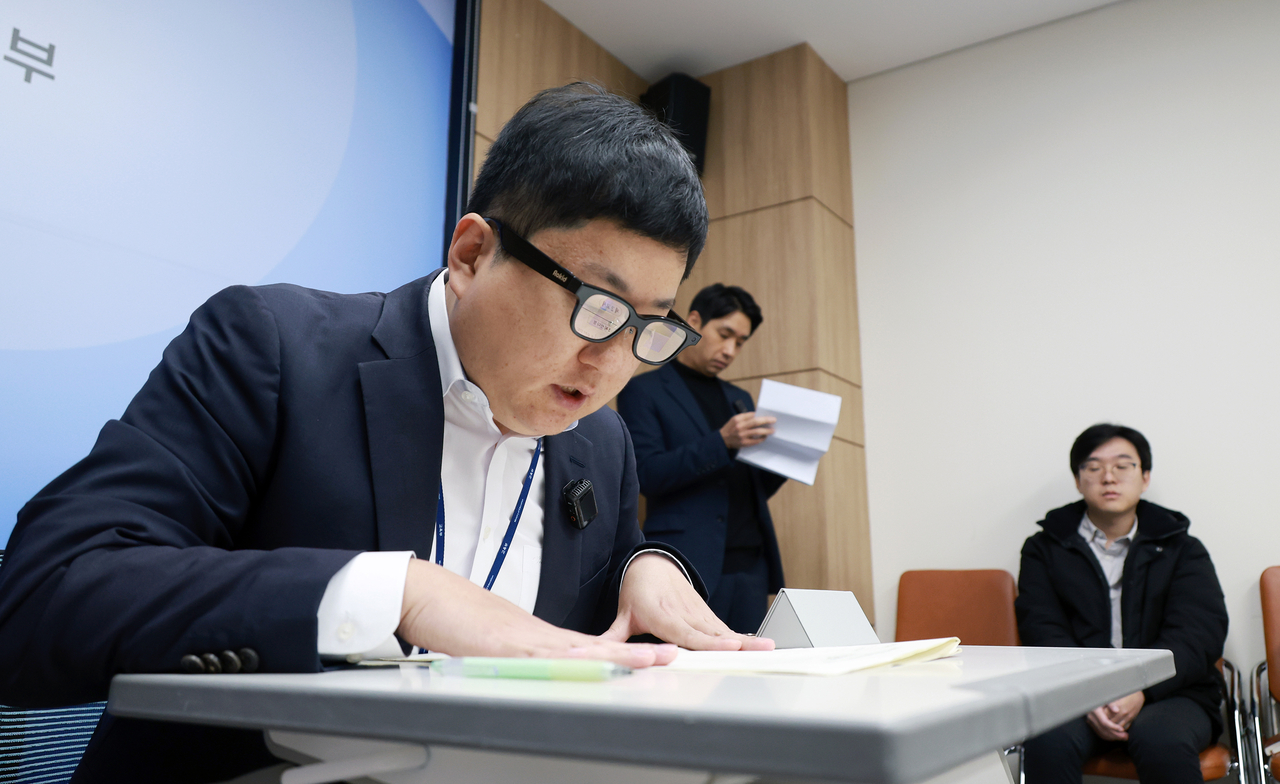
The government will conduct a full review of all 528 national licensing examinations administered by the Human Resources Development Service of Korea this year, after the top scorer on the 63rd certified tax accountant exam confessed to cheating using generative AI.
Authorities will look for cases where the score gap between the top and second-place finishers is unusually wide, as well as instances where first-time test-takers passed both the first and second rounds of a licensing exam in the same year — known as "saengdongcha" — on exams with low passing rates. Past exams will also be investigated if tips about cheating are received.
South Korea's Ministry of Employment and Labor and the Human Resources Development Service of Korea announced Monday that they would launch the comprehensive review based on the outcome of an emergency meeting chaired by the labor ministry's vice minister on Sunday. The review covers all exams across 491 national technical qualification categories and 37 national professional qualification categories administered by the agency this year. The ministry said more than 4 million people sat for the exams.
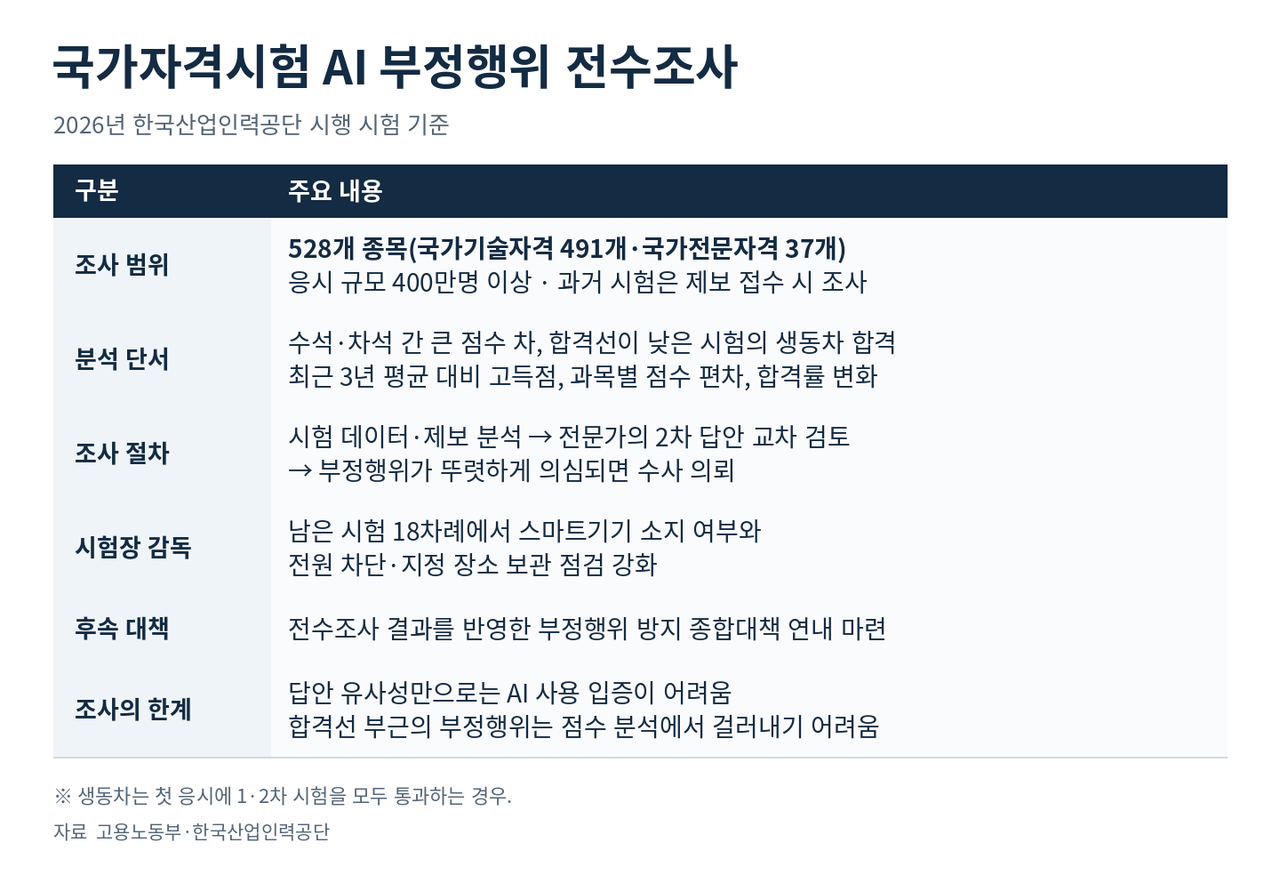
The ministry and the agency will flag suspicious cases by looking at a combination of factors: scores unusually high compared with the three-year average, large gaps between ranked finishers, passing rates that differ from previous years, and wide variation in a single test-taker's scores across subjects. The gap between the top and second-place scores, and whether a candidate is a "saengdongcha" — someone who passes both rounds of a licensing exam on their very first attempt — will also be weighed alongside other performance data and any tips received.
In test-preparation circles, word has spread that the number of saengdongcha passers on this year's 43rd customs broker exam rose from the usual one or two to around 10.
Past exams will be investigated if cheating tips are received. Allegations raised on online communities, as well as cases submitted to a cheating tip center the agency plans to set up, will also feed into the investigation. Answer sheets for the written second-round exams are kept on file for one year.
Answer sheets flagged as suspicious will be reviewed by multiple grading experts. Written second-round answers in particular will be cross-checked by subject-matter specialists, who will look for standardized patterns in how answers are structured and expressed. AI experts will also take part in analyzing exam data. After an expert review panel, the agency plans to refer cases where cheating is strongly suspected to investigative authorities.
Until radio-frequency detectors are introduced, supervision at exam venues will be tightened. The ministry plans to more rigorously check whether test-takers are carrying electronic devices such as smartphones or smart glasses at the 18 remaining exams this year, and whether any devices brought in have been powered off and stored in designated areas. The agency said it had already detected 12 cases of smart-glasses-related cheating at licensing exams this year — including those for fire protection engineer and information processing engineer — and referred them to police.
The ministry and the agency will carry out the full review of this year's exams and follow-up measures on the tax accountant exam through a joint task force. They are also pushing to bring forward planned amendments to related enforcement rules to before the end of the year, and plan to finalize a comprehensive anti-cheating package — incorporating the findings of the full review — within the same timeframe.
However, there are limits to how far score and answer analysis alone can go in proving actual cheating. Critics note that written second-round answers can naturally resemble one another because hagwon model answers and writing styles are widely taught. Even if a standardized pattern is found in an answer sheet, proving AI use based on answer similarity alone — without separate evidence such as exam-room footage or device usage records — would be difficult if the test-taker denies it.
Cases where a test-taker used a smart device but only barely cleared the passing mark are also hard to catch through analysis focused on high scores or large gaps between ranked finishers. The ministry acknowledged that near-passing scores are difficult to flag, but said that if data analysis proves feasible, it could expand the scope of the investigation by examining score changes and other additional indicators.
fact0514@heraldcorp.com