Conflict of interest, revival of prosecutorial investigative powers and uncertain outcomes raise legal questions; critics warn new probe could hinder criminal justice reform
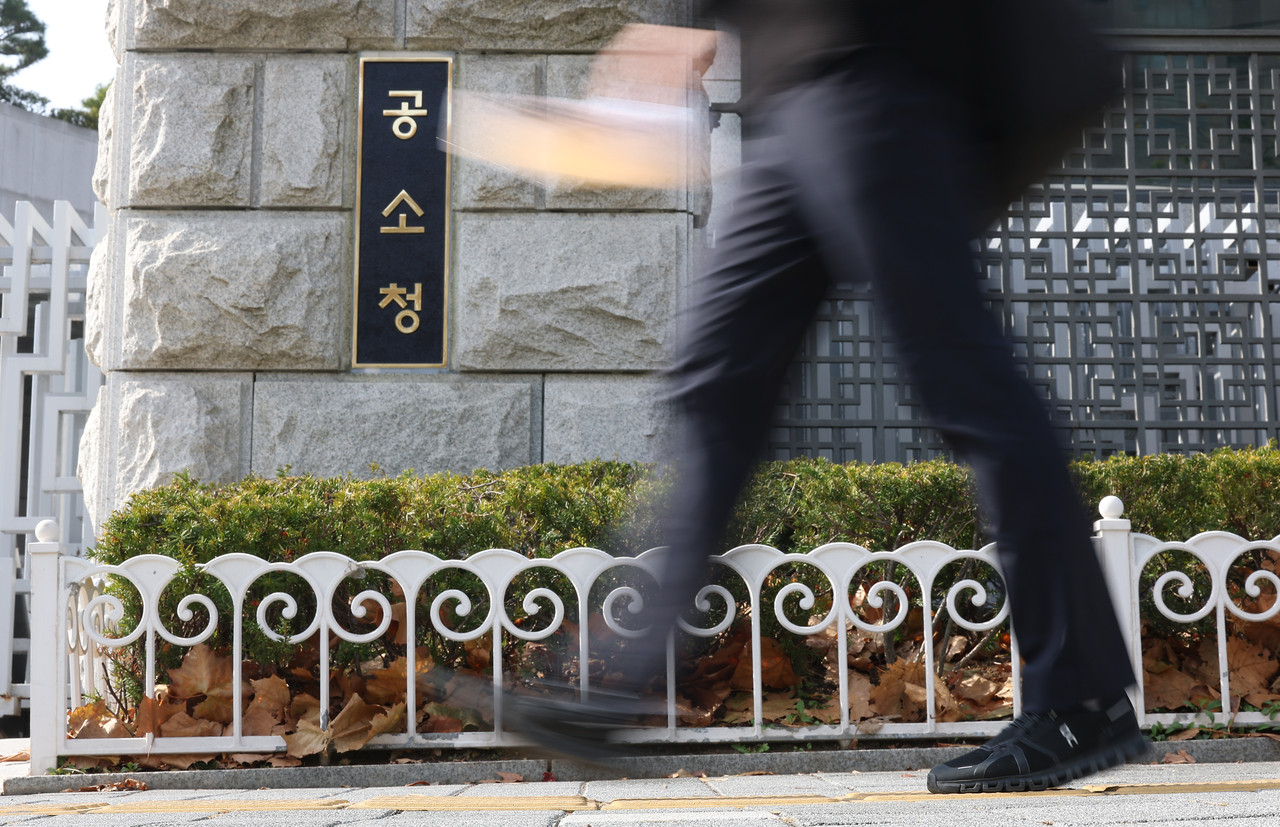
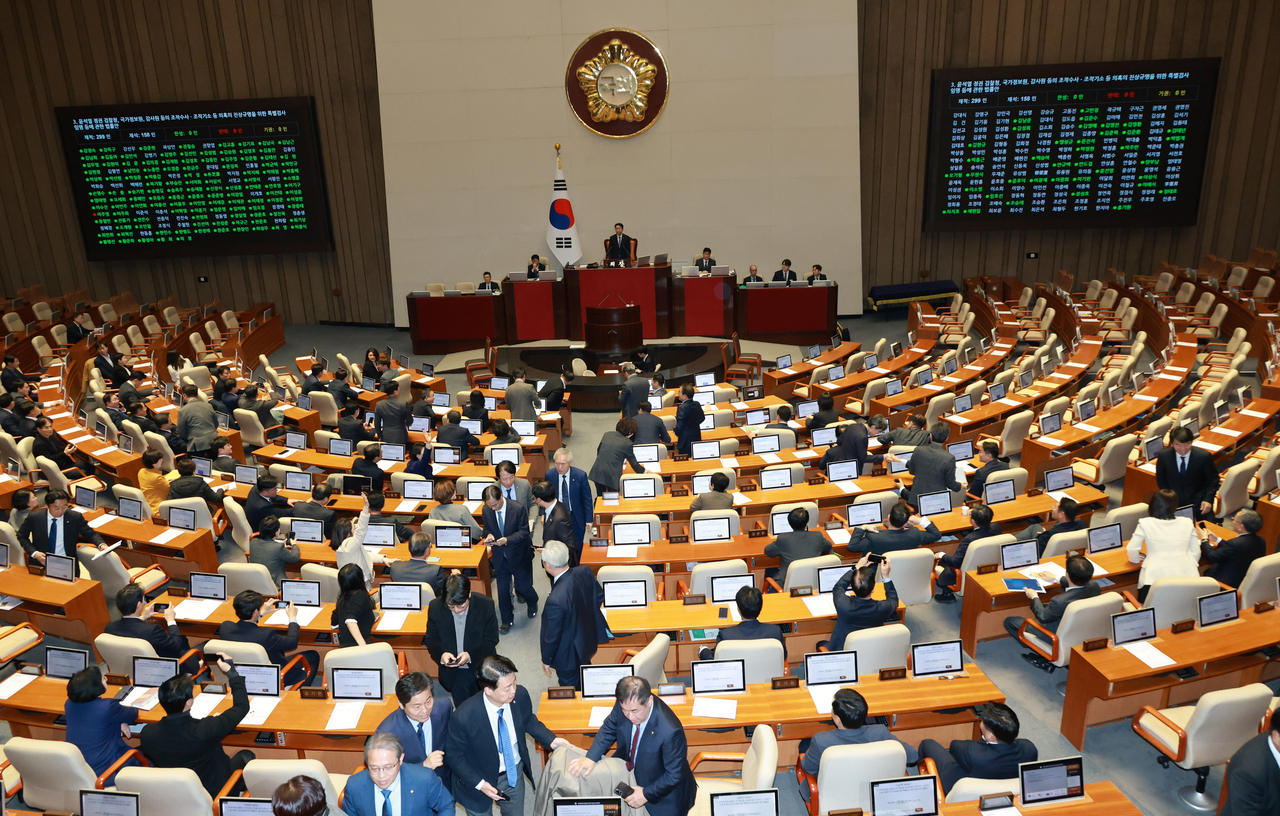
A bill to appoint a special prosecutor to investigate alleged abuses of prosecutorial power during the Yoon Suk Yeol administration — widely referred to as the "fabricated indictment special prosecutor bill" — is on the verge of taking effect. The Cabinet was set to deliberate and approve the measure Tuesday, after which it would go to the president for signature and promulgation. The bill has drawn a steady stream of criticism from legal circles and the political opposition, with detractors arguing that its launch procedures, investigative powers, scope and stated purpose are all unconstitutional or otherwise unlawful.
According to legal and political sources, the bill — passed by the full National Assembly under the leadership of the Democratic Party of Korea and transmitted to the government on Nov. 6 — was placed on the agenda of Tuesday's Cabinet meeting, presided over by Prime Minister Han Seong-sook. President Lee Jae Myung is abroad attending the Asia-Pacific Economic Cooperation summit. Once the Cabinet clears the bill, only Lee's formal approval and promulgation remain. Under the bill's supplementary provisions, it takes effect on the day of promulgation, meaning the launch of yet another special prosecutor's office is imminent.
The bill targets alleged abuses of prosecutorial power in the investigation of 12 cases: the Daejang-dong development allegations, the Wirye new-town development allegations, allegations that former Democratic Research Institute Vice Chairman Kim Yong accepted bribes, the Baekhyeon-dong apartment development allegations, Public Official Election Act violations related to the Daejang-dong and Baekhyeon-dong development cases, allegations of third-party bribery involving Seongnam FC, allegations that Kim Jin-seong suborned perjury, SBW's alleged remittances to North Korea, the Gyeonggi Province corporate card allegations, the shooting death of a South Korean civil servant in the West Sea, alleged statistical manipulation by the Moon Jae-in administration, and an alleged defamation case involving former President Yoon Suk Yeol.
Of those 12 cases, six — excluding the West Sea shooting, the statistical manipulation allegations and the Yoon defamation case — are directly linked to President Lee, fueling a conflict-of-interest controversy. Under the bill, the special prosecutor would be appointed by the president from candidates recommended by the Democratic Party, the People Power Party and the Rebuilding Korea Party. Critics question whether it is appropriate for a special prosecutor appointed by Lee to examine alleged problems in the prosecution of cases involving Lee himself.
Another point of contention is that, while the revised Code of Criminal Procedure that took effect Oct. 2 abolished prosecutors' investigative powers, those powers would be revived for prosecutors seconded to the special prosecutor's office under transitional provisions. Article 14 of the supplementary provisions of the revised code sets out transitional measures for special prosecutors and deputy special prosecutors under special prosecutor acts. Transitional provisions are rules designed to ensure a smooth shift from old law to new when legislation is enacted, amended or repealed.
Democratic Party lawmaker Seo Yeong-gyo, chair of the National Assembly's Legislation and Judiciary Committee, argued on social media that Article 14 of the supplementary provisions means special prosecutors and their deputies are authorized to conduct investigations under every special prosecutor act, including newly created ones. Legal experts, however, say the transitional provisions do not extend to special prosecutor offices launched after the revised code took effect. The National Election Commission special prosecutor, which launched in September before the revised code came into force, was covered by the transitional provisions — but applying them to a special prosecutor office launching more than a month after the revised code took effect is untenable, critics say, and would require an amendment to the code itself.
An Mi-hyeon, a senior prosecutor at the Cheonan branch of the Daejeon District Public Prosecution Service, wrote on social media Nov. 10 that "transitional provisions govern how to handle existing legal relationships or ongoing matters that straddle the period before and after a legal amendment — they are transitional measures for a special prosecutor that was operating when prosecutors still had investigative powers," referring to the NEC special prosecutor. "They are not a provision that contemplates every special prosecutor office launched afterward," An said. "This should have been written into the main body of the Code of Criminal Procedure."
Even if the special prosecutor's office is launched, observers say the investigation will be far from straightforward. Probing past prosecutorial investigations is inherently complex, and legal experts predict that even securing basic warrants will prove difficult. The second omnibus special prosecutor's office — which launched after the three major special prosecutor probes into the insurrection, Kim Keon Hee and the Marine corporal's death — examined allegations that an investigation into former first lady Kim Keon Hee's acceptance of a Dior bag was improperly shelved, but ultimately reached no conclusion and referred the matter to police.
Kong Bong-suk, a prosecutor at the Seoul Metropolitan Public Prosecution Service, wrote on social media Wednesday that the new special prosecutor would apply psychological pressure "just as the previous omnibus special prosecutor did with its 'massive state power abuse' framing. But that is as far as it goes." Kong predicted that search-and-seizure requests and arrest warrants "will be rejected one after another," and that as the 200-day mandate nears its end, the office will invoke a "heavy-tail strategy" — claiming time ran short and demanding an extension.
Although the bill omits provisions on whether to maintain prosecutions or drop charges, critics across the political spectrum and in legal circles — including the opposition — contend that the fabricated indictment special prosecutor is ultimately designed to secure the withdrawal of criminal charges against President Lee. The argument is that once the special prosecutor concludes its investigation and finds that prosecutorial powers were abused, the Ministry of Justice and the Public Prosecution Service will move to drop the charges. The issue has resurfaced with the nomination of Lee Yong-cheol, a longtime acquaintance of Lee, as minister of justice. Lee Yong-cheol left open the possibility of dropping charges, saying it was "time to focus on the special prosecutor's fact-finding."
President Lee currently faces three trials at the first-instance level — the Daejang-dong and related cases, the SBW North Korea remittance case, and the corporate card case. All three proceedings have been suspended since he took office. Under the Code of Criminal Procedure, charges may be withdrawn before a first-instance verdict is handed down.
Some say the expansion of grounds for dismissal of indictments under the revised Code of Criminal Procedure is also aimed at influencing Lee's trials. The revised code added two new grounds for dismissal: when charges are brought on the basis of a seriously unlawful investigation, and when charges are brought in a manner that grossly exceeds prosecutorial discretion.
On a practical level, concerns are growing that the launch of another special prosecutor with an unclear mandate could push everyday criminal cases to the sidelines at a time when the criminal justice system urgently needs to stabilize. Those concerns follow the sweeping changes that took effect Oct. 2 — including the abolition of the Prosecution Service and the launch of the Serious Crimes Investigation Agency and the Public Prosecution Service. The Public Prosecution Service is already grappling with a staffing shortage stemming from reduced headcount, while the Serious Crimes Investigation Agency remains occupied with the special investigation unit on the insurrection case.
bell@heraldcorp.com