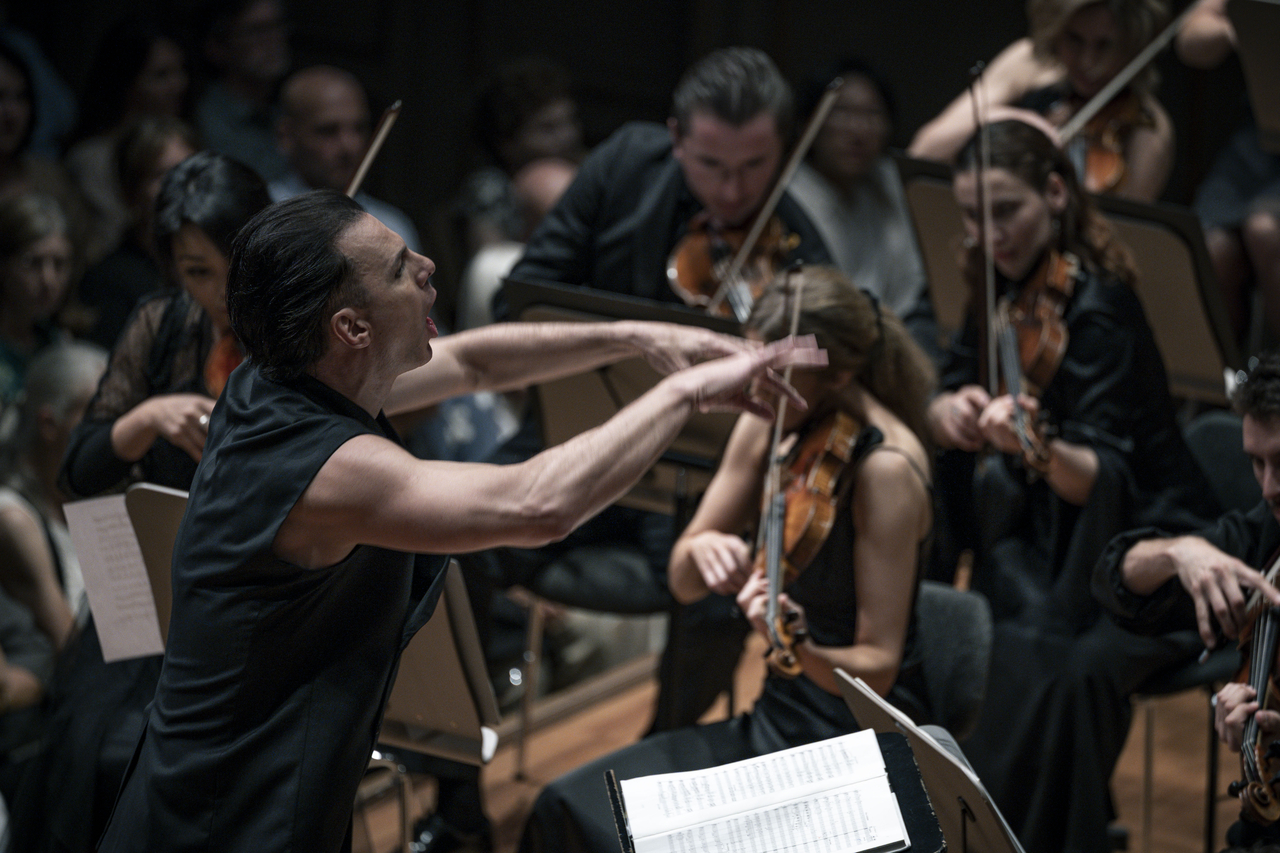
Vocabulary, spatial reasoning and working memory all favored young musicians — but arithmetic computation showed no gap between groups
Neural differences fell short of statistical threshold after correction; single time-point design leaves causation open
Research team calls for broader school-based instrument access

It is not uncommon for a child who wants to keep taking piano lessons to be told: "Use that time to work through one more practice sheet instead."
The underlying assumption is that learning an instrument has little to do with college entrance exams and will be dropped once middle school begins anyway. Arts and music hagwon enrollment typically peaks in the early elementary years and thins out as students move up the grades.
Researchers have long been interested in whether practicing a musical instrument can sharpen abilities that have nothing to do with music.
A 2004 Canadian study found that children who received 36 weeks of music lessons scored higher on cognitive tests and academic achievement measures than those who took drama lessons or no lessons at all.
Other research reported that as little as 20 days of music training was enough to raise vocabulary scores, and a separate study found that only children who had learned an instrument showed gains in language ability.

It is no surprise that practicing an instrument improves a child's sense of rhythm or ability to distinguish pitch. What researchers have focused on is whether gains also appear in seemingly unrelated areas such as reading and mathematics. When skills acquired in one domain transfer to an entirely different one, researchers call it far transfer.
What actually happens in the brain, however, remains unsettled. Multiple studies have reported structural differences in the brains of children who play instruments, but the regions identified have varied from study to study. It has also been difficult to rule out the possibility that children who were cognitively stronger to begin with were simply the ones who stuck with their instruments.
A research team led by Kelsey Lopez at Northeastern University recently published findings in volume 81 of the international journal Developmental Cognitive Neuroscience showing that children aged 7 to 9 who were learning a musical instrument scored higher on both cognitive and academic achievement tests.
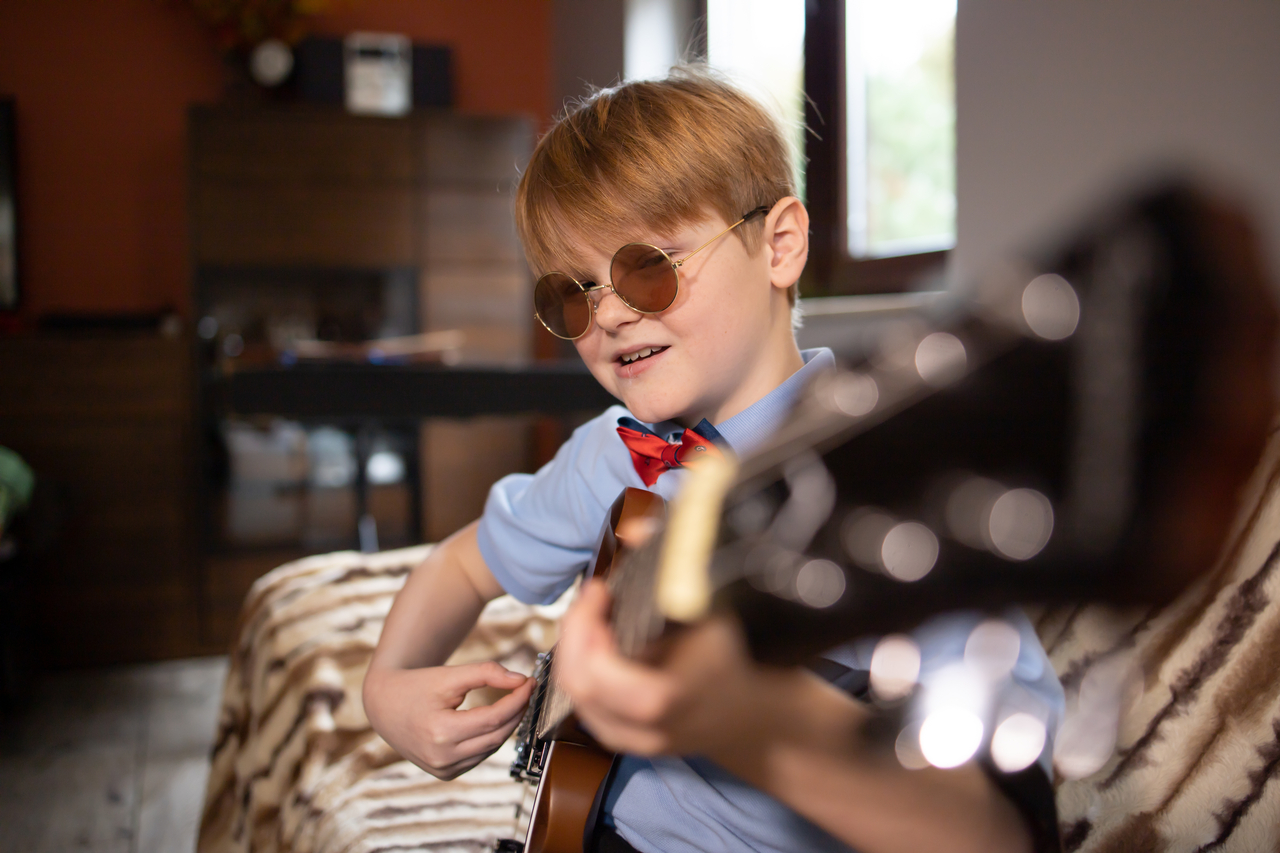
Young musicians lead in vocabulary and spatial reasoning
The research team drew on data from a child exercise study conducted by the University of Illinois, dividing participants into a group that played an instrument and practiced more than 30 minutes a week and a group that had no music instruction.
Thirty-eight children learning an instrument were matched with 38 non-music children on age, gender and household income. Among the instruments played, piano was the most common at 29 children, followed by string instruments such as violin and cello at 8, and guitar or ukulele at 4.
Cognitive test results were broadly higher for the instrument-learning group. The gaps were most pronounced in spatial reasoning — the ability to mentally rotate and match shapes — vocabulary comprehension, and the ability to pair and memorize images with sounds.
The instrument-learning group also outperformed on working memory tests. The working memory task required children to memorize words appearing on a screen while simultaneously judging whether arithmetic problems were solved correctly.

The gaps were even wider on academic achievement tests.
Children learning instruments scored higher across the board, including in composite scores covering reading and mathematics. In the subcategories, differences were confirmed in reading comprehension, word recognition and fluency, and spelling.
In mathematics, the instrument-learning group led on conceptual questions, but the two groups showed no difference on computation — solving given equations. Listening comprehension and writing also fell short of the statistical threshold for significance.
However, the research team acknowledged a key limitation: because the study compared the two groups at a single point in time rather than tracking children before and after they began instrument lessons, it cannot rule out the possibility that children with higher baseline cognitive ability were simply the ones who continued learning an instrument.
The team also noted that access to instrument instruction is often tied to family finances. Given that the cost of purchasing an instrument and paying for lessons can be a barrier, the researchers recommended that schools prioritize expanding opportunities for children to learn instruments and reducing the financial burden on families.
Reference
DOI: 10.1016/j.dcn.2026.101813
K.L. Lopez, Y. Chen, R. Burtonpatel, L. Raine, A.F. Kramer, C.H. Hillman & P. Loui, Musical training is associated with cognitive outcomes and white matter microstructure in middle childhood, Dev. Cogn. Neurosci. 81 (2026) 101813.
dbsdn1110@heraldcorp.com