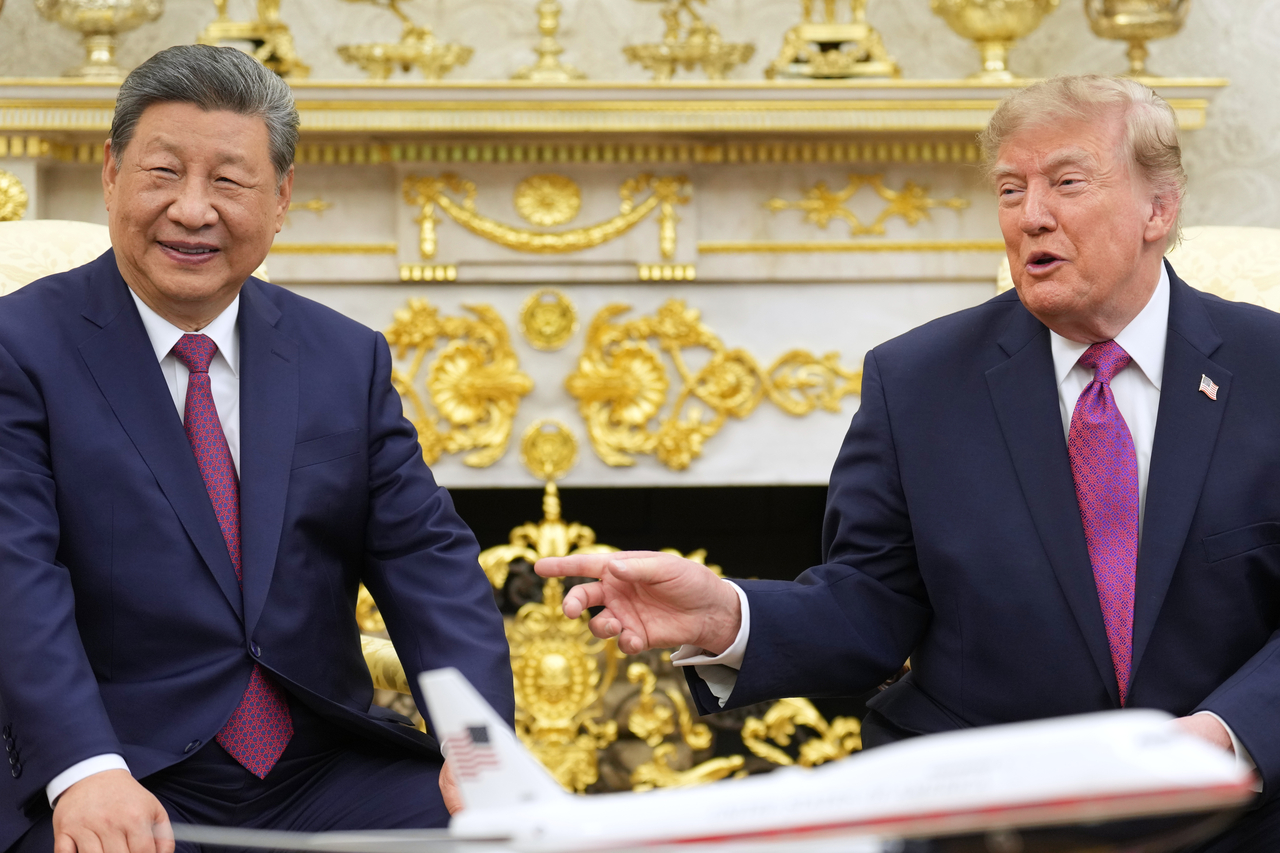
'If US-China-Russia diplomatic channel forms, South Korea's role could shrink'
North Korea steps up high-level contacts with China, Russia ahead of trilateral talks
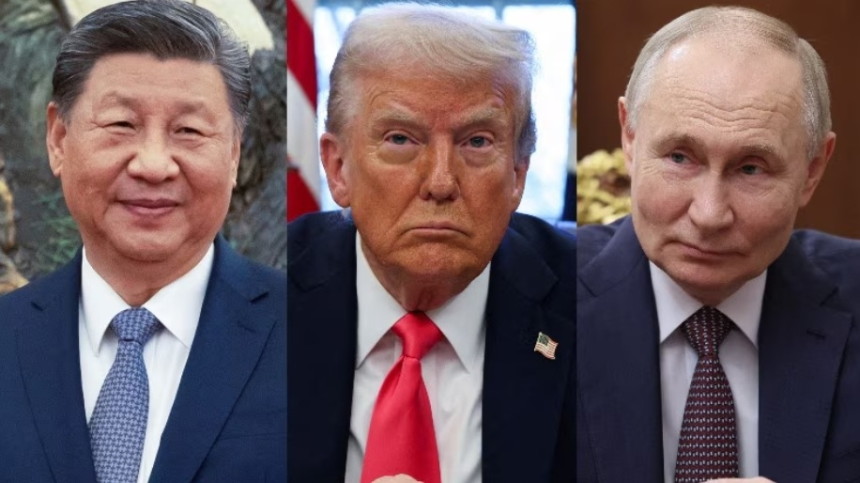
As US President Donald Trump, Chinese President Xi Jinping and Russian President Vladimir Putin prepare to hold the first-ever trilateral summit on the sidelines of the Asia-Pacific Economic Cooperation forum in Shenzhen, China, attention is sharply focused on what the meeting could mean for the Korean Peninsula. Experts expect the talks to center largely on coordinating interests among the major powers, but say developments related to North Korea — including the prospect of US-North Korea talks and the denuclearization issue — warrant close attention.
Yu Ji-hun, a research fellow at the Korea Institute for Defense Analyses (KIDA), said in a phone interview Tuesday that the trilateral summit on the sidelines of APEC "suggests that the major powers recognize the need for dialogue to prevent military conflict and the escalation of crises, even as they continue to compete and clash." He said it would be more appropriate to view the meeting "as an early consultative process to coordinate mutual interests, rather than as an occasion for the three countries to reshape the international order anew — as the Yalta Conference once did."
Yu added, however, that South Korea must also consider the possibility that its role could be diminished if US-China-Russia consultations develop into a new diplomatic channel for addressing international security issues. "South Korea should view great-power dialogue positively insofar as it can contribute to easing tensions, but it must remain alert to any situation in which Korean Peninsula security matters are decided without South Korea's participation," Yu said.
There are also concerns that if the trilateral summit focuses on restarting US-North Korea dialogue, the push for denuclearization could be pushed to the back burner. US Secretary of State Marco Rubio has previously indicated that, unlike Iran, North Korea does not pursue expansionism — a signal that he views denuclearization talks with Iran as more pressing. That raises the possibility that the nuclear issue on the Korean Peninsula could be overshadowed by Middle East concerns.
"The United States has stated its intention to discuss nuclear arms reduction and nonproliferation, but nuclear disarmament has not been confirmed as a formal joint agenda item among the three countries," Yu said. "China has maintained a cautious stance toward participating in equal disarmament negotiations, citing the fact that its nuclear arsenal is smaller than those of the United States and Russia."
Amid these developments, North Korea has been stepping up high-level contacts with both China and Russia ahead of the trilateral summit. Kim Song-nam, secretary of the Korean Workers' Party for international affairs, visited China from Nov. 3 to 7 and met in succession with Liu Jianchao, head of the International Department of the Chinese Communist Party; Cai Qi, a member of the Politburo Standing Committee and secretary of the Central Secretariat; and Wang Yi, director of the CCP Central Foreign Affairs Commission and foreign minister.
A party and government delegation led by Jo Yong-won, secretary of the Korean Workers' Party Central Committee and one of North Korean leader Kim Jong-un's closest aides, is currently in Russia. Jo attended an international conference there and said the security environment on the Korean Peninsula is becoming increasingly dangerous due to the United States' hostile policy toward North Korea.
Meanwhile, KCNA reported Tuesday that Kim Jong-un toured construction sites at a tourism zone in Samjiyon, a city near the China-Russia border, on Saturday and Sunday, highlighting the importance of developing tourism resources including Mount Paektu. Also on Tuesday, several Russian military aircraft entered and exited South Korea's Korea Air Defense Identification Zone (KADIZ) over the East Sea, testing the South Korean military's readiness.
youknow@heraldcorp.com