Claude Monet: Camille on Her Deathbed
The wife who climbed every hill beside him —
he captured her final moments on canvas.
Editor's note
We tell stories through paintings — the issues embedded in art, the human struggles and desires layered into masterworks. Starting from a single canvas, we step out into the world beyond the frame.
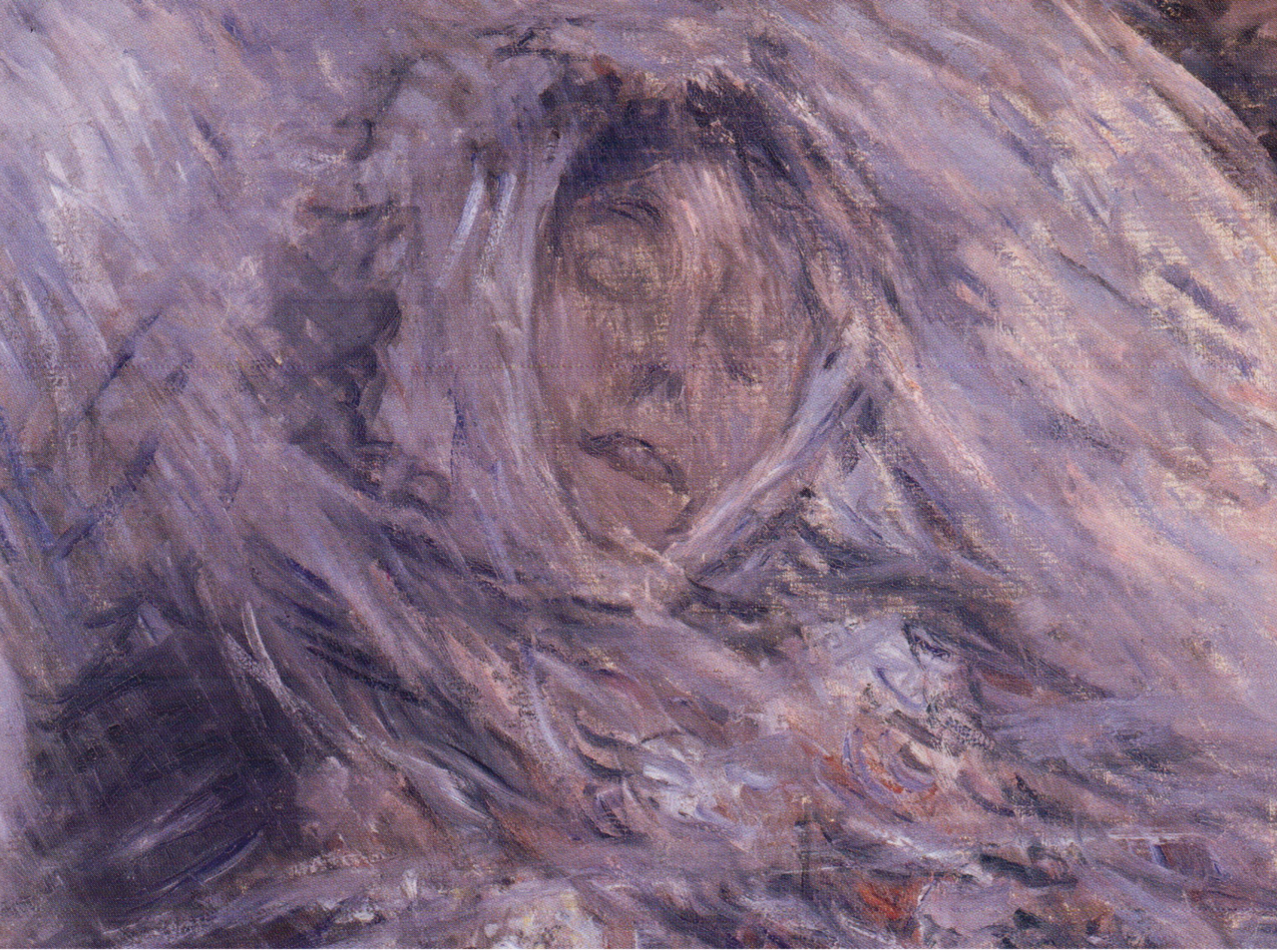
In 1865, painter Claude Monet met a model named Camille Doncieux. He was 25; she was 18.
They fell in love, but circumstances were against them. His family's opposition was fierce. "End the relationship at once," his father and aunt warned — and they meant it. When Monet refused, they cut off his allowance, which had been his only reliable source of income.
The couple pretended to separate, and for a time they actually lived apart. The family's financial support was that desperately needed.
Camille gave birth to their first son, Jean, in August 1867. The three of them lived in a single-room apartment — secured only through a check obtained by deception. The place was cold. Cold beans were about all there was to eat. They moved constantly, fleeing creditors and getting thrown out of inns when they could not pay. Two had become three, and there were now three bowls in the bag — that was all. Things showed no sign of improving. There is even a story that Monet once threw himself into the Seine. When the flames of despair burn hot enough, a blue river can look more beautiful than fire.
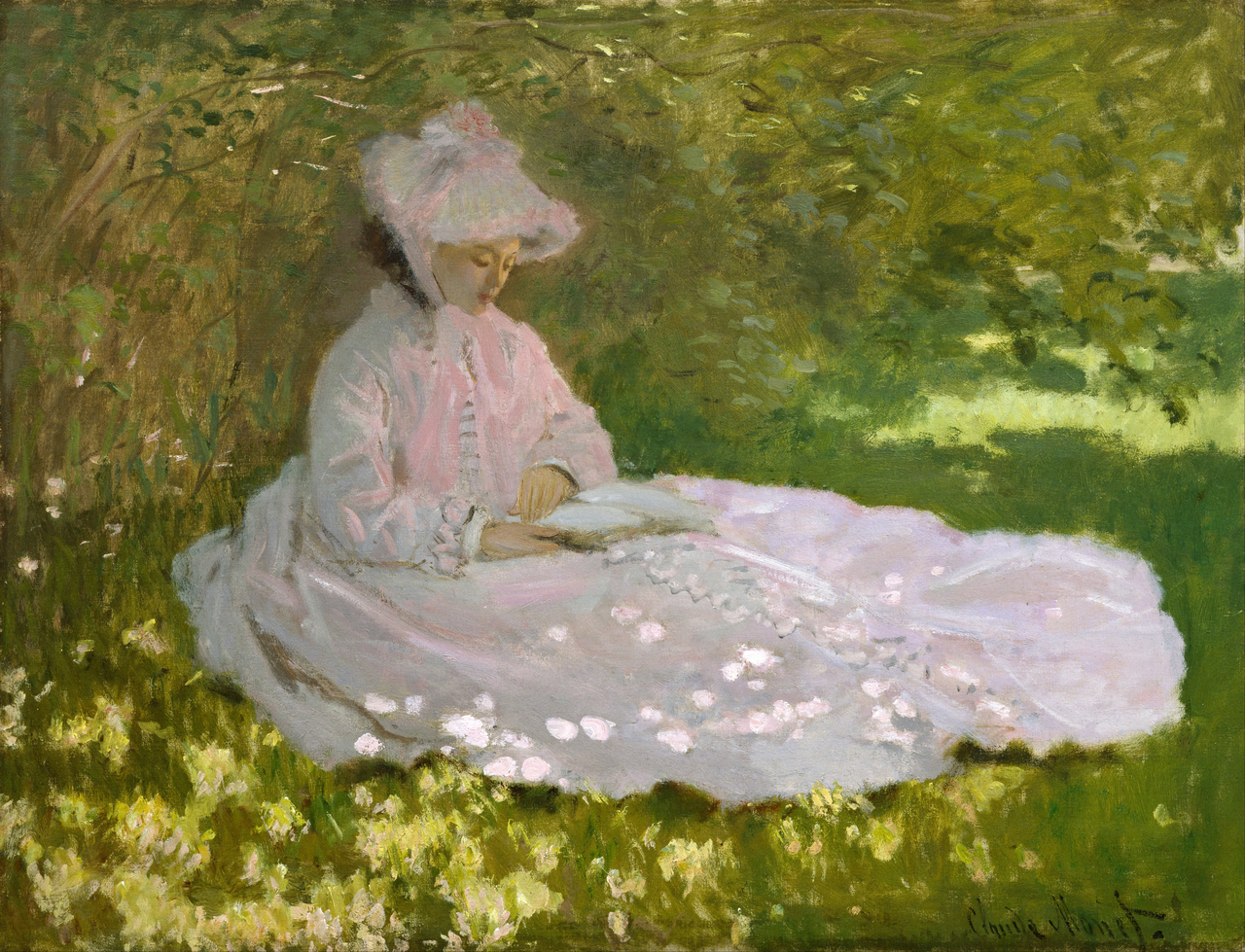
Monet and Camille married in a civil ceremony on June 28, 1870, in the 8th arrondissement of Paris. They held hands tightly. The painter Gustave Courbet served as a witness. There were few guests. The ceremony ended simply, quietly — a little bittersweet, a little lonely.
The couple and their son Jean honeymooned in Trouville-sur-Mer.
The happiness was brief. Creditors came after them again, and they had to dodge conscription for the Franco-Prussian War. They fled to England, and when things quieted down they returned to France, settling in a rented house in Argenteuil on the outskirts of Paris. They lived there from 1871 for seven years, then moved to Vétheuil in 1878 — Monet was 38, Camille 31.
Around that time, Monet's paintings were finally beginning to sell. It was a relief, at least — the work was bringing in a little money at last. The long dark tunnel had stretched on for years, but now there was light at the end of it. He could not yet rest easy; the sums were not enough to build on. Both he and his art still needed time to deepen.
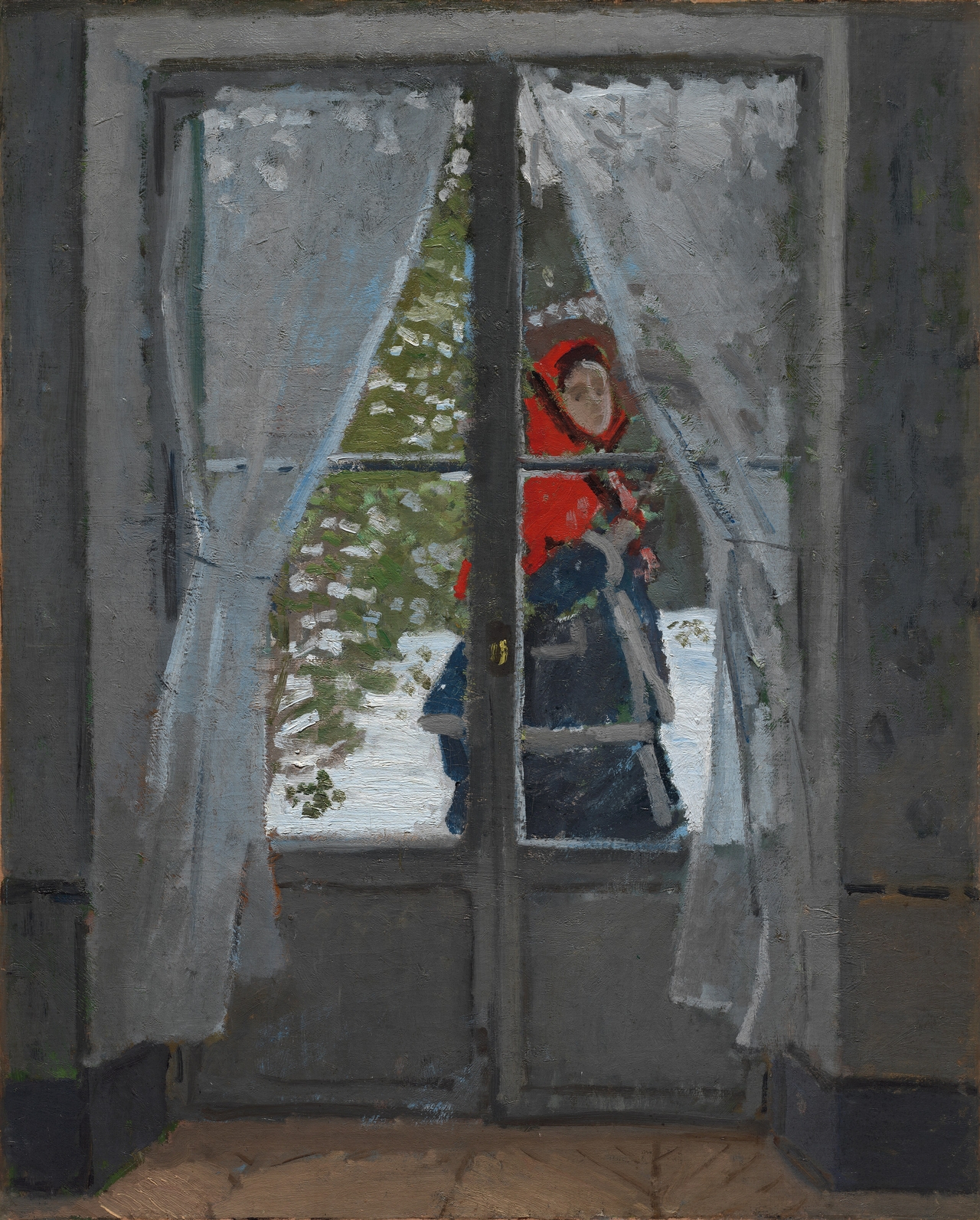
On March 17 of that year, Camille gave birth to their second son, whom they named Michel. From that point on, her health deteriorated rapidly. It was not entirely unexpected — she had pushed her body relentlessly her whole life, exposed to the cold from a young age, walking an endless uphill road.
Her illness was serious.
A further blow came when Monet's patrons, Ernest and Alice Hoschedé, went bankrupt. The couple moved into the Monets' home with their children. Ernest soon left, saying he would find a way to earn money again. Under one roof, the adults now numbered three — one man, two women. Whether Camille, bedridden, sensed the strange tension growing between Monet and Alice, or whether she heard the unsettling rumors about a husbandless woman living under the same roof as a man with an ailing wife, no one can say for certain. What is clear is this: a large share of what Monet earned went toward her treatment. Alice nursed Camille. And still Camille's condition only worsened. On Aug. 31, 1879, a priest administered last rites. On Sept. 5 of that year, she died. She was 32. Uterine cancer is among the causes cited.
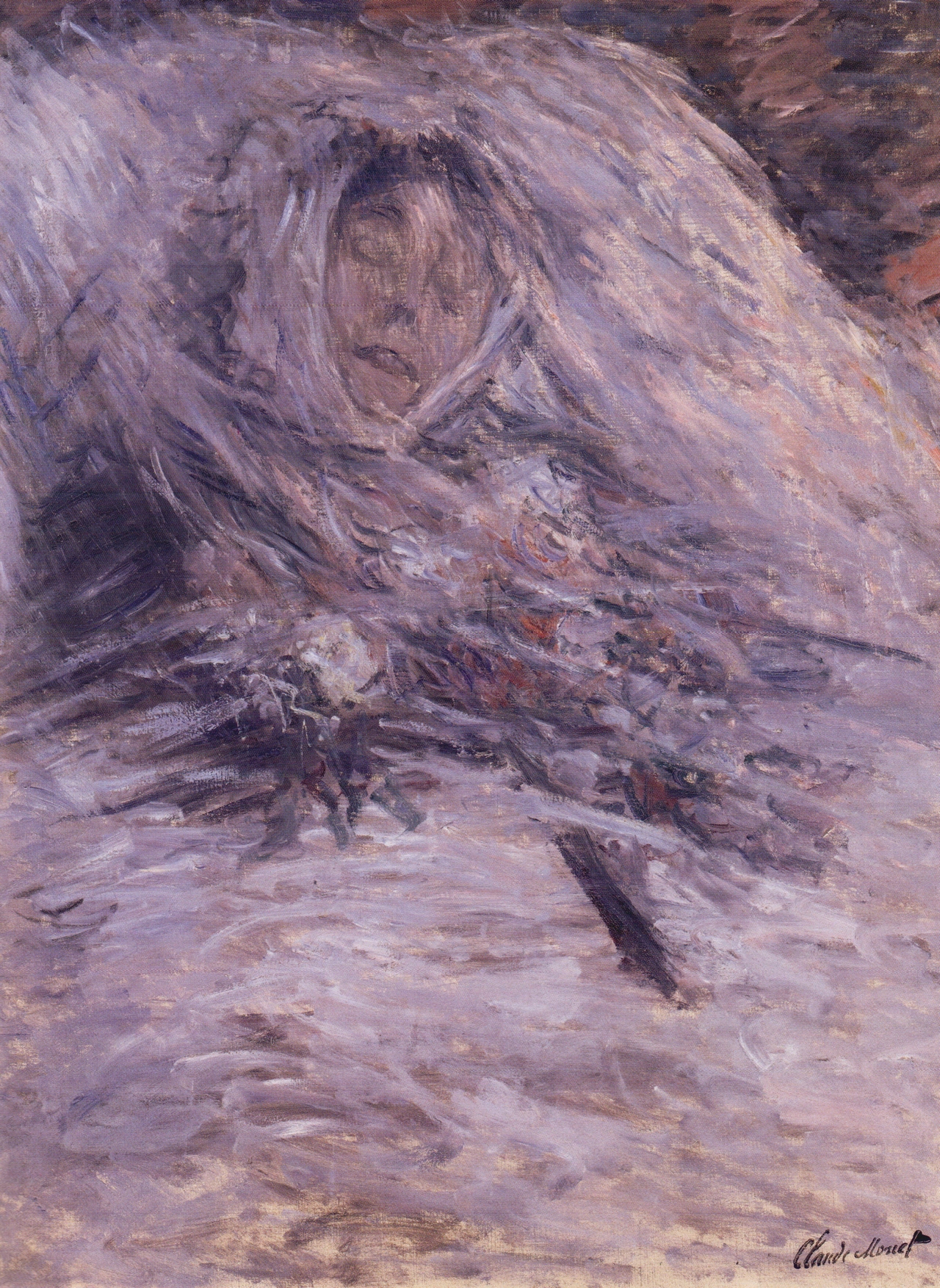
Monet painted Camille after she died, putting her on canvas in "Camille Monet on Her Deathbed."
She looks strikingly small. After a long illness, only this thin, frail body remained.
Her eyes are closed — eyes that would never open again. A bouquet rests on her chest, its whites and reds barely visible, petals pulled down into the darkness, spreading from the heart to the shoulders, to the limbs. It is the shadow of death, unstoppable. Monet used subdued colors — deep, submerged blacks and blues. His brushstrokes are slashing, the paint laid on thick. Was it the expression of a tearing pain, a heavy weight of regret and longing?
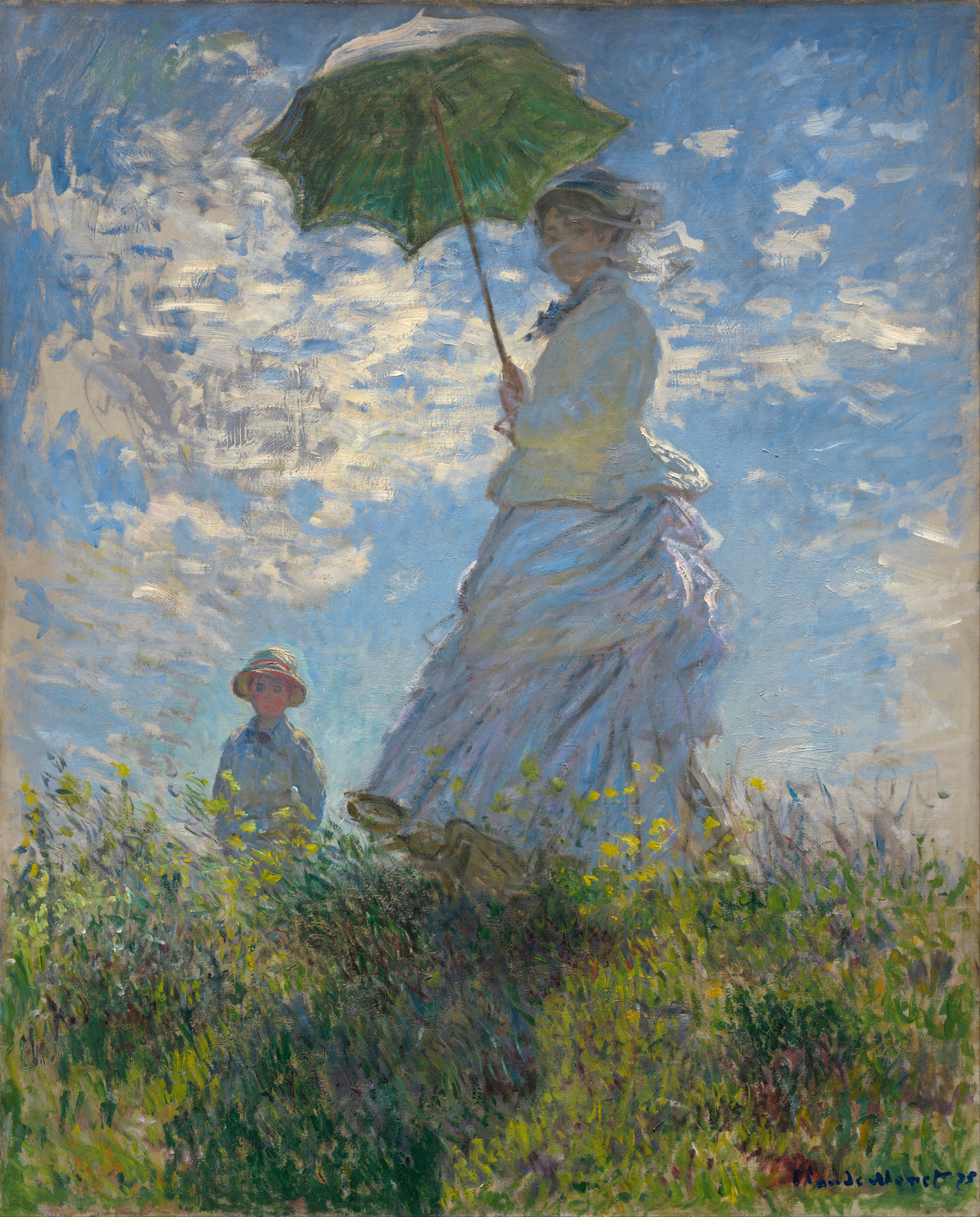
Monet must have thought back to Camille as she had been.
The woman in the green dress. The woman in the red kerchief. The woman holding a parasol, her son's hand in hers. Now it was over — the end of 14 years spent together. Along with love, did he not also feel guilt? About the strange, charged atmosphere that had grown between him and Alice — who would later become his second wife. It was Camille who had walked beside him through the hardest years of his life. No one could deny that.
One morning before dawn,
I found myself at the bedside of a woman
who had been, and always would be, so dear to me.
( ... )
Quite naturally, the desire to record the image
of one who was departing from us forever
took root in my mind.
These were Monet's own words. He kept "Camille Monet on Her Deathbed" close to him for the rest of his life. He never once put it on exhibition.
yul@heraldcorp.com