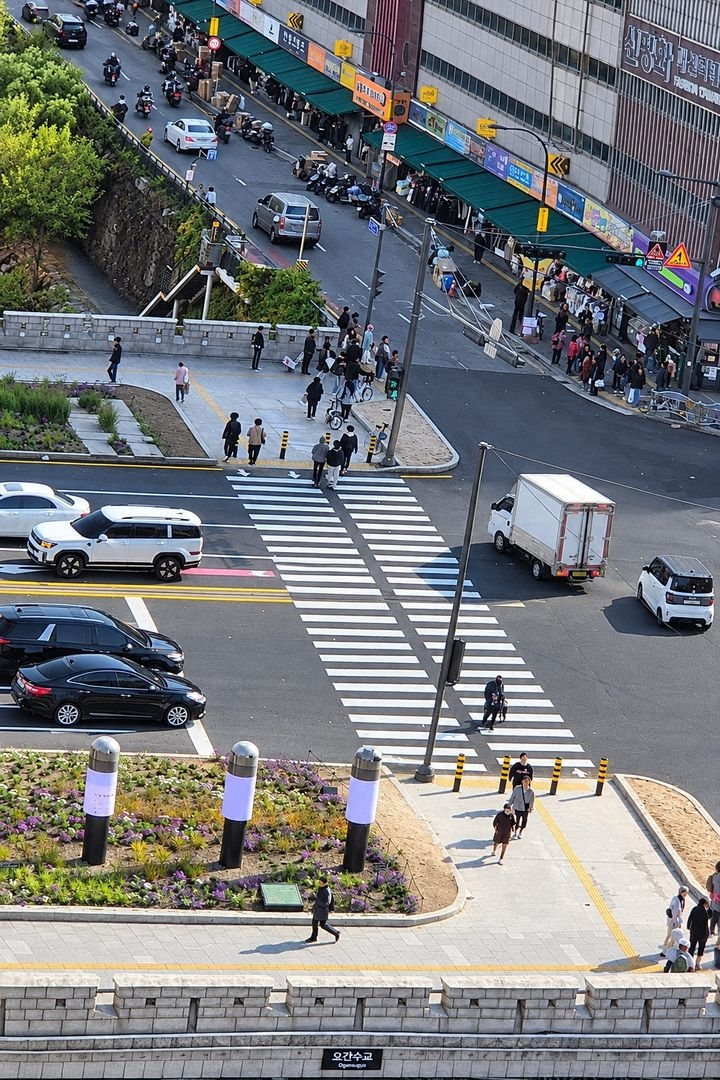
Goals set at 10-minute local access, 30-minute regional links, 60-minute metro travel
The Jeonnam-Gwangju Special Integrated City has announced plans to link Gwangju and South Jeolla Province into a single transport zone through metropolitan express buses, an integrated transport platform, and expanded rail and highway networks.
The city unveiled a long-term transport development plan built around the vision of "integrated transport innovation driving mutual prosperity and growth." The plan sets three targets: public transit access within 10 minutes, connections to regional hubs within 30 minutes, and metropolitan travel within 60 minutes.
Integration of bus services, the transport platform, and fare systems is to be completed by June 2030, while rail and highway projects will be pursued over the long term in line with national infrastructure plans.
The city said connectivity takes priority over punctuality or speed, as other measures can only be implemented once basic links are in place.
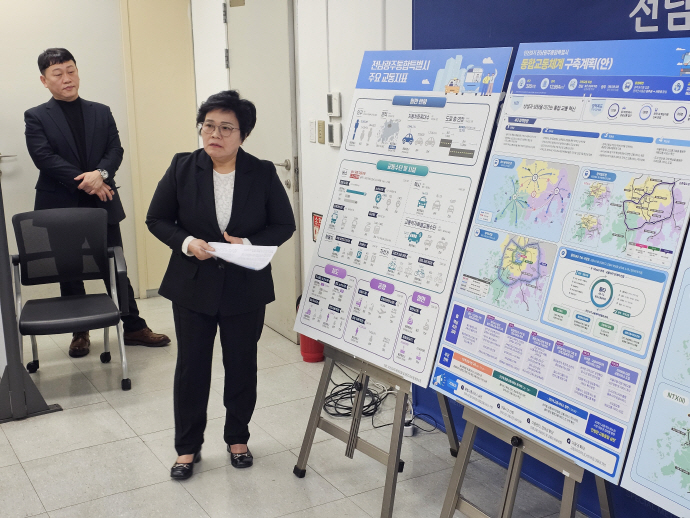
Kim Yeong-seon, the city's director general of integrated transport, said at a press briefing Tuesday that a tour of all 22 cities and counties had revealed many gaps in coverage. Kim also acknowledged that meeting the 10-30-60 targets across all of South Jeolla Province would be difficult.
The Olta Bus service is a metropolitan express bus that stops primarily at major train stations, bus terminals and government offices.
The network is designed around 24 routes — 20 within three zones (seven in the Gwangju zone, eight in the western zone and five in the eastern zone) plus four inter-zone routes. Key hubs are Gwangju Songjeong Station, Mokpo Station and Suncheon Station.
Six routes with 35 buses are currently in operation.
Services launched in September include routes connecting Mokpo Station to Muan Oryong (No. 2001), Suncheon Station to Yeosu Ungcheon (No. 3001), and Suncheon National University to Yeosu City Hall (No. 3002). On Oct. 31, three additional routes were added: Nos. 1001 and 1002 linking Naju Innovation City, and No. 1003 connecting Hwasun.
The current routes are pilot services revised from existing lines as part of the city's first 100-day integration agenda. Daily ridership stands at about 50 on the Mokpo–Muan route and around 240 on the Yeosu–Suncheon route, while the Gwangju–Hwasun route has seen ridership more than double. The city will finalize routes after conducting demand surveys across cities and counties.
The Jeonnam-Gwangju Special Integrated City announced its integrated transport development plan Tuesday, centered on the vision of "integrated transport innovation driving mutual prosperity and growth." The image shows a concept diagram of the Olta integrated transport platform the city is developing. (Provided by Jeonnam-Gwangju Special Integrated City)
The Olta integrated transport platform is set to open in phases in the second half of 2027. A single app will handle route searches, reservations, payments and transfer information. The platform will initially cover buses, demand-responsive transit and public-type taxis, then expand to rail, passenger ferries and air travel.
The Namdo Pass, targeted for introduction in July 2027, will consolidate the separate transport subsidy systems of Gwangju and South Jeolla Province into one. The youth support age ceiling will rise from 34 to 39, and benefits for senior citizens and low-income residents will also be expanded.
An integrated transfer fare system offering transfer discounts for inter-zone travel will be introduced in stages.
Planned rail projects include the West Coast Line (Gunsan–Mokpo), the Dalbit Railway (Daegu–Gwangju) and the New Industry Line (Jangseong–Gwangju industrial complex–Yeonggwang).
Metropolitan rail lines connecting Naju–Gwangju and Hwasun–Gwangju will tie together the Gwangju zone. Gwangju Urban Railway Line 2 is preparing for opening, while Line 3's Gwangcheon-Sangmu segment is undergoing a preliminary feasibility review. Long-term plans include a Honam-zone metropolitan express railway and a circular rail network.
Highway expansion covers nine routes totaling 372.2 kilometers — four in the western zone, three in the Gwangju zone and two in the eastern zone — including corridors linking Jindo–Yeongam–Gwangju, Wando–Gangjin–Gwangju, and Yeosu–Suncheon. A further axis connecting the Fourth Section of the Third Ring Road with the Goheung–Gwangju expressway to reach the Greater Seoul area is also being pursued.
Most of the projects depend on national funding. The first hurdle is securing inclusion in the Fifth National Railway Network Development Plan and the Third National Highway Network Development Plan, both due at year's end. Total project costs and completion timelines by segment have not yet been released; the city said it will disclose progress separately.
Rural and fishing communities will see expanded demand-responsive transit, public-type taxis, 100-won taxi services and village buses, along with a wider free-bus service area. The annual operating cost of a single free-bus route in Gwangju runs around 200 million won ($150,000). Island communities will benefit from stronger links between ferry and land transport, and the city is also reviewing the introduction of maritime demand-responsive transit, island-type urban air mobility and autonomous driving public transit.
Phase 1 (2026–2027) focuses on expanding the Olta Bus network and launching the Namdo Pass and Olta platform. Phase 2 (2028–2029) will increase inter-zone services and reorganize hub transfer systems. Phase 3 (through June 2030) centers on stabilization and service improvements by district.
A metropolitan transport council bringing together all 27 cities, districts and counties will also be established, along with a transport governance body involving carriers and a policy cooperation network open to experts and civil society.
"Citizens will feel the benefits of administrative integration in their daily lives when regions and zones are connected by transport," Kim said. "We will link Jeonnam and Gwangju into a single transport zone."
sij@heraldcorp.com