Yeonwoo posts 7.1 billion won net profit through Q3, swinging to black from year-ago loss
US unit's total equity at negative 73 billion won; factory utilization rate at 8.1%
New global division chief replaced just 8 months in; customer diversification key
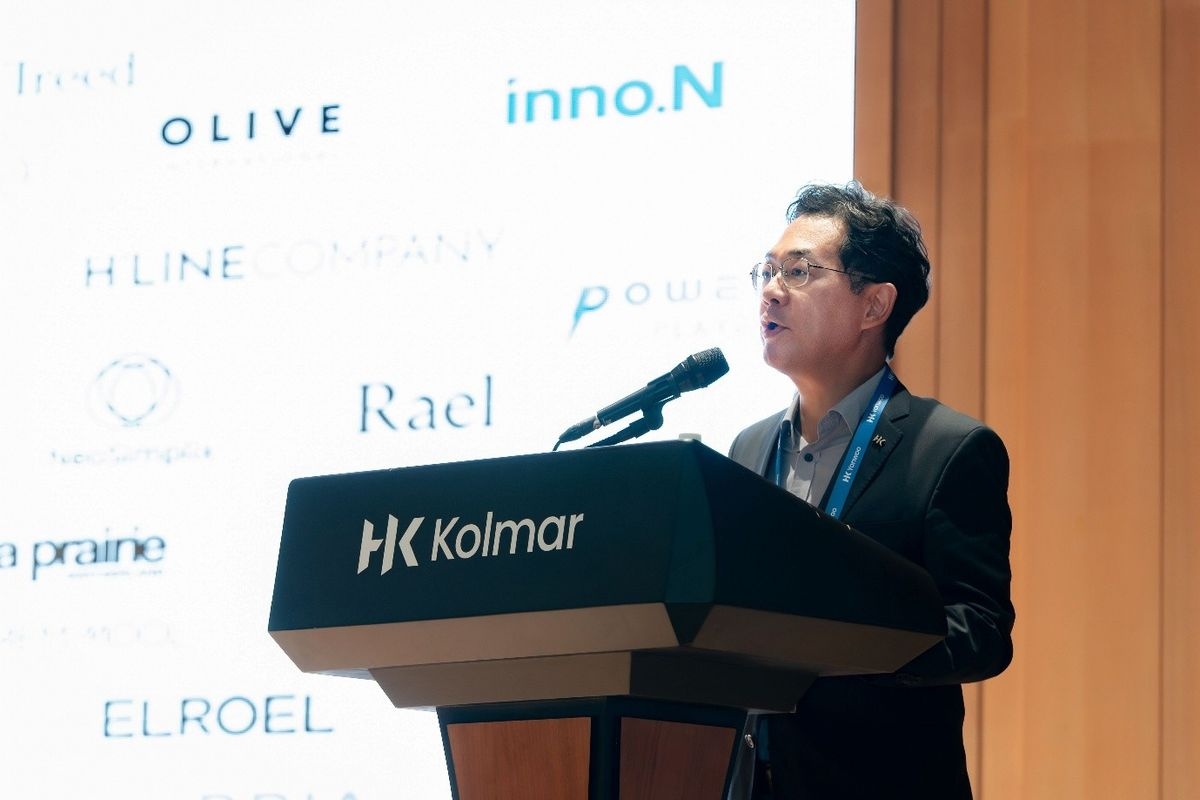
Kolmar Korea has handed its overseas operations to Executive Vice President Park Sang-yong, the executive credited with turning around cosmetics container maker Yeonwoo, a subsidiary. The focal point is the company's North American business. Park led Yeonwoo to profitability by diversifying its customer base, and Kolmar Korea is hoping he can replicate that feat in the United States, where the local subsidiary remains in a state of complete capital impairment. Despite opening a second US factory last year, the plant's utilization rate has yet to reach even 10 percent.
According to Kolmar Korea's third-quarter report released Wednesday, HK Kolmar Laboratories — the company's US subsidiary — had total assets of 79 billion won ($59 million) and total liabilities of 152 billion won on a consolidated basis at the end of the third quarter. Total equity stood at negative 73 billion won, continuing the complete capital impairment that persisted from the end of last year (negative 86 billion won). Kolmar Korea has provided payment guarantees on the US subsidiary's borrowings totaling 101.9 billion won.
The subsidiary's financials remain in the red. Cumulative sales through the third quarter reached 49.2 billion won, a slight increase from 48.1 billion won in the same period last year, while the net loss narrowed from 25.5 billion won to 12.9 billion won. Looking at the third quarter alone, sales came to 18 billion won, up 122.2 percent year on year, and the operating loss shrank from 6.4 billion won to 3.8 billion won. The Canadian subsidiary, by contrast, saw its cumulative sales through the third quarter fall to 25.7 billion won from 28 billion won a year earlier, while its net loss widened from 3.4 billion won to 6.1 billion won.
The most pressing issue for Kolmar Korea's US operations is factory utilization. The quarterly report shows that the US factory had a production capacity of about 221.85 million units in the third quarter, but actual output was only about 17.98 million units. The average utilization rate of 8.1 percent was even lower than in the first half of this year (8.8 percent) — a stark contrast to the domestic factory rate of 82.0 percent and the Wuxi, China factory rate of 49.1 percent in the same period.
Kolmar Korea significantly expanded its US production capacity last year when it began operating a second factory in Pennsylvania. Annual production capacity at the US subsidiary more than tripled, from about 68 million units in 2024 to about 233.4 million units last year, yet actual output fell over the same period from about 33.66 million units to about 27.98 million units. Order volume, in short, failed to keep pace with the investment in production facilities.
A key weakness of the US business is its heavy reliance on a single large customer. In the second quarter of this year, roughly half of the US subsidiary's sales came from its top client alone. Color cosmetics accounted for 88 percent of sales, while sun care and skin care made up just 4 percent and 3 percent, respectively. Securing new customers and broadening the product lineup are essential to raising utilization at the second factory, which produces base cosmetics and sun care products.
Normalizing the North American subsidiary is also the central task for Park, who was appointed head of Kolmar Korea's Global Growth and Innovation Division in early November. The division was established in March to oversee overseas subsidiaries in the United States, China and Canada, as well as the company's global sales operations at headquarters.
Yeonwoo's performance improved sharply under Park's leadership. Cumulative sales through the third quarter reached 237 billion won, up 20.8 percent from 196.1 billion won in the same period last year, and the net result swung from a loss of 600 million won last year to a profit of 7.1 billion won through the third quarter this year. Operating profit, which was limited to about 300 million won for all of last year, rose to 9.7 billion won through the third quarter this year. Kolmar Korea had acquired a 55 percent stake in cosmetics container maker Yeonwoo for 281.4 billion won in 2022, but the subsidiary had struggled to perform.
Park improved Yeonwoo's profitability by reshaping its customer base, which had been heavily concentrated among a handful of large domestic cosmetics companies. The company expanded its lineup of standard molds that multiple clients could share, and in September 2024 opened a sales office in Seongsu-dong, Seoul, a neighborhood dense with emerging cosmetics brands. The combined share of Amorepacific and LG H&H in Yeonwoo's total sales fell from 22 percent in 2022 to 15 percent last year and further to 9 percent in the first half of this year.
Park, born in 1967, graduated from Seoul National University with a degree in microbiology and earned an MBA from the Wharton School at the University of Pennsylvania. He previously worked at Boston Consulting Group and served as head of the future strategy office at Hanwha Life Insurance before joining Kolmar Korea as head of management support in 2020. He was appointed CEO of Yeonwoo in December 2022.
"Park Sang-yong turned Yeonwoo around and delivered a return to profitability — that is what earned him this recognition," a Kolmar Korea official said. "His appointment as head of the Global Growth and Innovation Division is likewise a reflection of that ability. The US subsidiary is still posting weak results, but we expect this to be a turning point."
hong@heraldcorp.com