A tower apartment in Bunkyo-ku's Yushima lists at 200 million yen; a similar unit in Shinjuku cost about half that in 2018
Non-resident Koreans face steep barriers to local bank financing, while Korean-bank loans carry their own collateral, guarantee and foreign-exchange reporting hurdles
Apartment prices in central Tokyo have surged so sharply that investing in Japanese real estate by taking advantage of the weak yen has become, in practice, out of reach for most Koreans. Non-resident Korean investors in particular have little access to local bank financing, meaning they must in effect be able to raise most of the purchase price in cash.
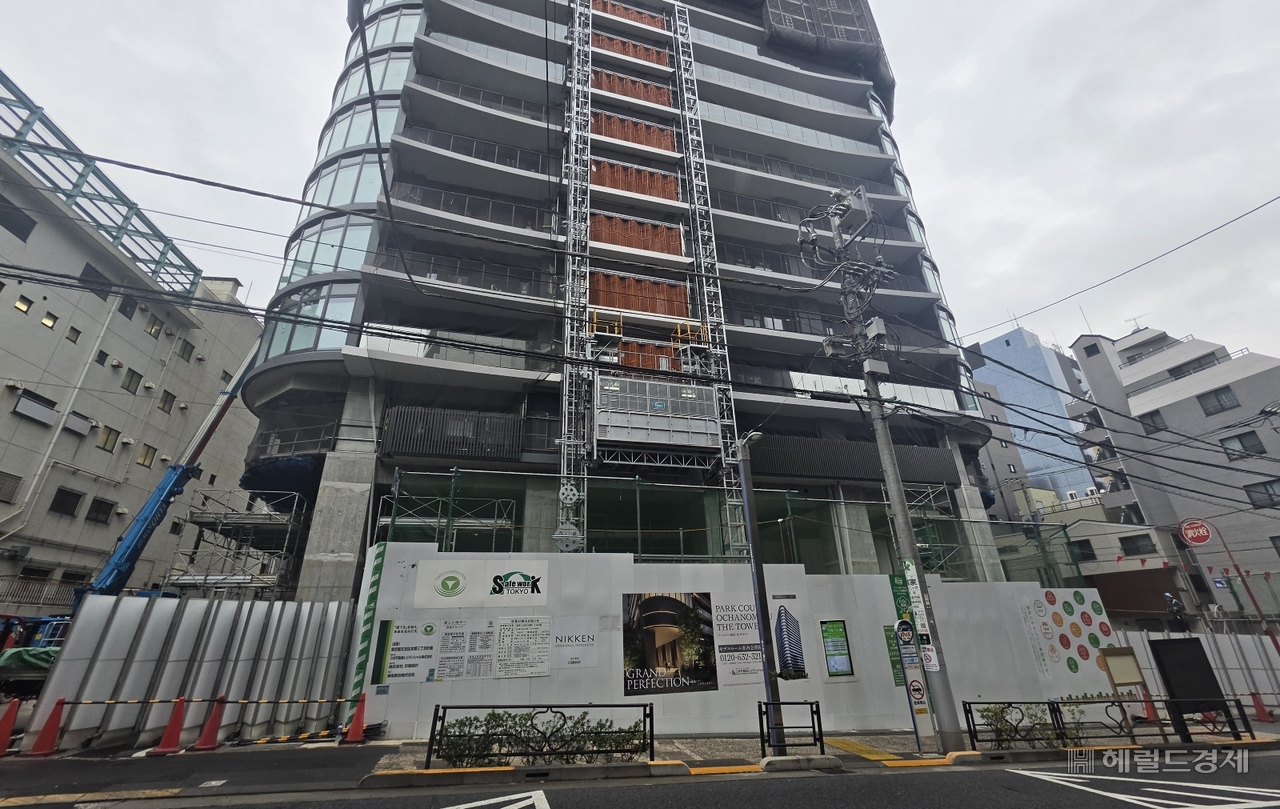
In Yushima, Bunkyo-ku — one of Tokyo's most sought-after residential neighborhoods for its school district — a three-bedroom tower apartment with an exclusive use area of about 73 square meters has been listed for pre-sale starting at 200 million yen ($1.25 million), or roughly 8.6 million yen per 3.3 square meters.
That price stands out even against what central Tokyo apartments cost just eight years ago.
A newly built apartment of similar size in Shinjuku-ku, in a residential area near the Tokyo Korean School, was pre-sold in 2018 for around 100 million yen. At the time, a Japan resident who met standard income and credit requirements could use a local mortgage to finance the purchase. Today the situation has changed significantly: high-end apartments in central Tokyo are now crossing the 200-million-yen mark, and the exchange rate, financing environment and loan terms have all shifted.
The 2018 Shinjuku sale and the current Yushima listing involve different complexes, so it would be an overstatement to say the same apartment has exactly doubled in price. Even so, the amount of capital needed to buy a similarly sized apartment in central Tokyo has clearly risen by a large margin.
The financing conditions differ fundamentally depending on whether the buyer is a Japan resident purchasing a home to live in, or a Korea-based investor buying for rental income.
Standard Japanese mortgages are assessed on the basis of Japan residency, stable income, employment status and owner-occupancy intent. It is in practice extremely difficult for a non-resident foreigner to use a conventional mortgage to buy investment property.
Some financial institutions do offer property-secured loans to non-residents and foreigners, but the screening for equity ratios, collateral valuation, interest rates and repayment capacity is strict. Overseas investors with no stable income base or financial history in Japan face even tighter restrictions.
Raising funds through Korean-affiliated banks also comes with real constraints. Even when a Korean financial institution operating in Japan or a bank in Korea is considered as a funding source, issues arise around collateral, guarantees, income verification and the stated purpose of the loan.
Borrowers who plan to use Korean real estate as collateral to finance a Japanese apartment purchase must verify the lending institution's criteria and any restrictions on how the funds may be used. A bank's Korean ties alone do not mean overseas real estate investment loans are easily approved.
Foreign-exchange reporting requirements for overseas property acquisitions add another layer. When a Korean resident acquires real estate in Japan, the transaction and its financing method must be reported under South Korea's Foreign Exchange Transactions Act, and ongoing compliance obligations may arise after the purchase.
Japan generally permits foreigners to own real estate, but the ability to own property and the ability to finance that purchase through a bank loan are two separate matters.
Ultimately, even with the exchange-rate advantage of a weak yen, non-resident buyers who cannot access local financing need substantial cash reserves. For apartments priced above 200 million yen, the upfront burden grows further once acquisition taxes, registration costs and concessions are factored in on top of the purchase price.
Official data confirm the scale of Tokyo's price surge.
According to figures released Oct. 20 by the Japan Real Estate Economic Institute, the average price of a newly pre-sold apartment in Tokyo's 23 wards during the first half of fiscal 2026 — April through September — was 179.25 million yen, up 34.7 percent from the same period a year earlier. The average across Greater Tokyo also rose 21.1 percent to 114.94 million yen.
In 2018, the average price of a new apartment in Tokyo's 23 wards was 71.42 million yen. Compared with the first-half fiscal 2026 average, that represents roughly a 2.5-fold increase — though the figures compare an annual statistic with a half-year one and do not reflect the price appreciation of any single unit.
Higher prices have not translated uniformly into brisk sales. According to a real estate market analysis released in November by Mitsui Fudosan Realty, the initial contract rate for new apartments in Greater Tokyo stood at just 61.1 percent in August, suggesting that elevated pre-sale prices are weighing on buyers.
Rental yields are another key variable. If a 200-million-yen apartment were leased at 500,000 yen a month, annual rental income would be 6 million yen — a gross yield of 3 percent on the purchase price.
Deducting management fees, repair reserve contributions, property taxes, rental management commissions and vacancy losses would push the actual yield lower still. Non-resident owners face the added burden of having to entrust day-to-day management to a local property management company.
Leveraged investment makes the math even tighter. If 120 million yen of a 200-million-yen purchase were financed at 3 percent annual interest over 30 years, the monthly principal-and-interest payment would be roughly 506,000 yen — more than the assumed monthly rent of 500,000 yen, meaning rental income would not even cover the loan repayment.
Monthly principal payments do build equity, so a negative cash flow does not automatically mean an investment loss. But rising interest rates, vacancies and the possibility of a lower sale price down the road all represent risks that must be weighed carefully.
Paying entirely in cash eliminates financing costs but does not necessarily improve returns. A buyer who ties up 200 million yen in a single property still faces opportunity costs and currency risk that shifts with the exchange rate between purchase and sale.
A straightforward comparison between the investment environment of 2018 and today is difficult. The mortgage terms available to a Japan resident buying a primary residence then are simply not available to a Korea-based investor now. Exchange-rate movements between the time of purchase and the time of sale can also dramatically alter the won-denominated return on any investment.
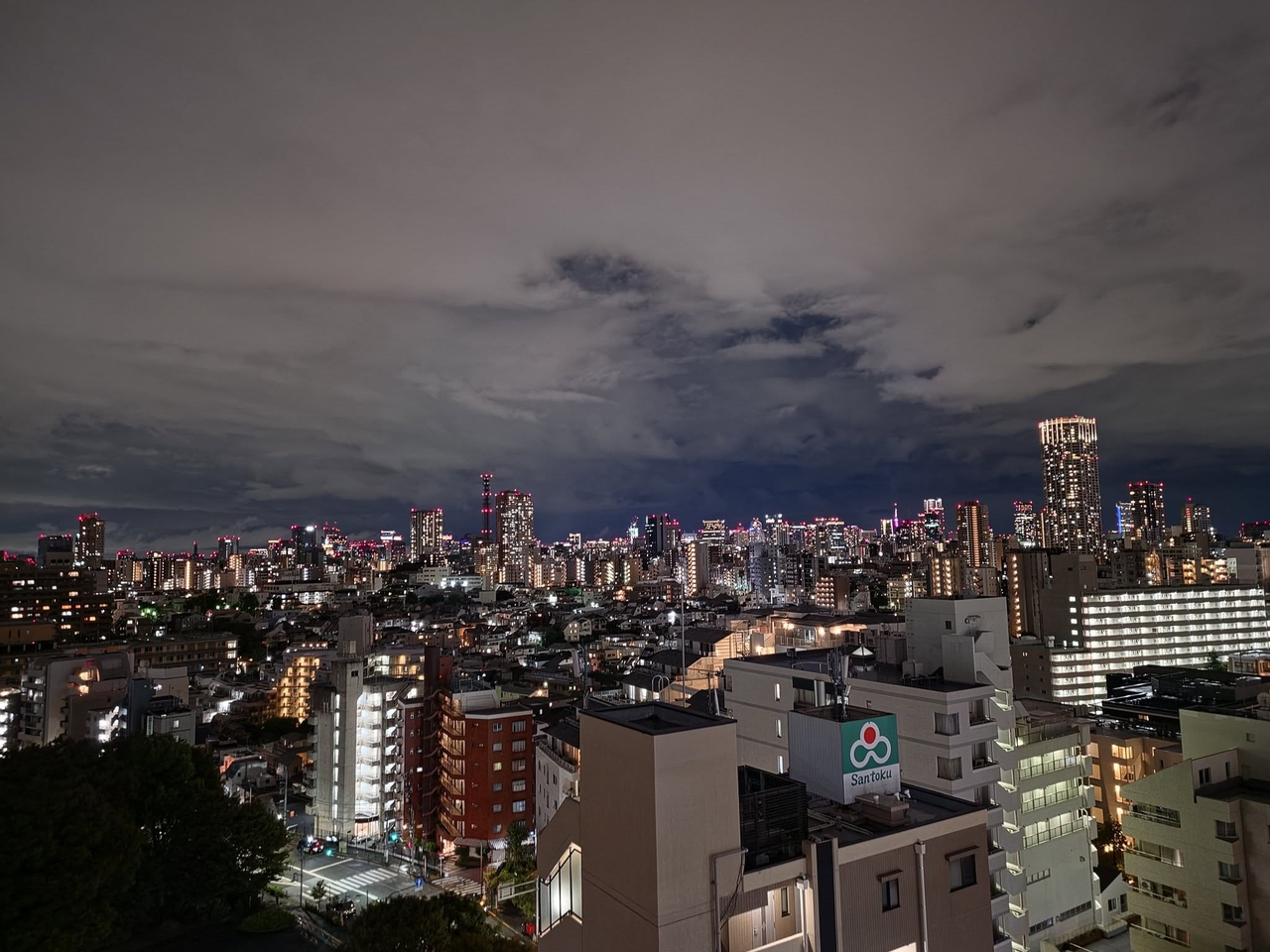
With central Tokyo apartment prices already at elevated levels, further gains cannot be assumed to match the pace of the past several years. Supply shortages and rising construction costs continue to support prices, but high purchase prices and weakening affordability remain a drag on the market.
For someone actually living in Japan with a long-term ownership horizon, a high-end Tokyo apartment can offer both residential value and asset appreciation. For a Korea-based buyer counting solely on rental income and capital gains, the calculus is fundamentally different.
Prices have already risen far enough that a weak yen alone is no longer sufficient justification for investing in Japanese real estate. Non-residents must also clear hurdles around bank financing, overseas property acquisition reporting, and collateral and guarantee requirements. Without substantial cash on hand, completing a purchase is structurally difficult.
For Tokyo real estate investment, the question is no longer simply "how much higher will prices go?" — it is "if I buy at today's price, how much can I actually earn?"
sjkim@heraldcorp.com