First application of vesting contract system to a primary power source
South Korea will introduce a "vesting contract" system for nuclear power starting next year, under which a reference price for electricity trading is set in advance and any difference from the actual market price is settled afterward. The arrangement will run for five years.
Under a vesting contract, the power generator and the electricity buyer agree in advance on the contracted volume and a reference price, then settle the gap between that reference price and the actual market price after the fact.
The Ministry of Climate, Environment and Energy held a signing ceremony for the nuclear power vesting contract Thursday at Korea Electric Power Corporation's Gyeongin Construction Headquarters in Jung-gu, Seoul.
Nuclear power will continue to be dispatched and traded on the electricity market in the same way as other generators. After trading, if the market price exceeds the reference price, the generator pays the buyer the difference; if it falls short, the buyer pays the generator.
The vesting contract regime was introduced through a 2014 amendment to the Electric Utility Act and has previously been applied to by-product gas generators such as those operated by Posco Energy and Hyundai Green Power. This marks the first time it has been applied to a primary power source — one that accounted for 32.1 percent of total electricity traded last year.
Korea Electric Power Corporation, the purchasing entity, and Korea Hydro & Nuclear Power, the generating entity, signed the vesting contract agreement after their respective boards approved it in late October. The ministry received the signed documents and completed a review by the Electricity Commission on Friday.
Electricity trading under the contract is set to begin Jan. 1 next year and continue for five years, pending ministry approval.
The ministry said the vesting contract system will allow it to reasonably regulate returns on low-cost nuclear power, ensuring that the resulting savings are passed on to consumers.
It also expects the arrangement to strengthen financial predictability for both Korea Electric Power Corporation and Korea Hydro & Nuclear Power, improving management stability.
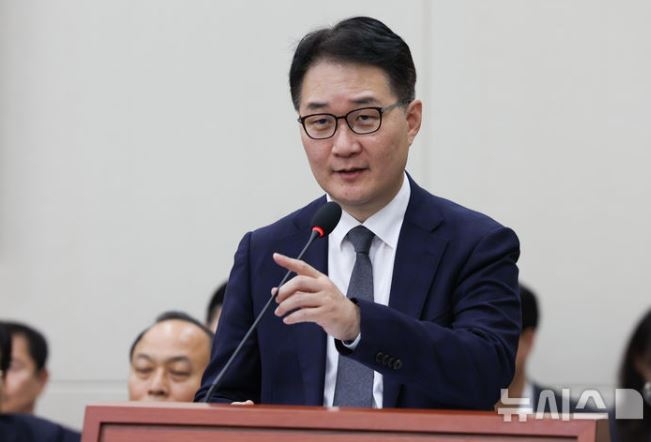
Ahn Se-jin, director general of the energy transition policy bureau at the ministry, said achieving the goal of 100 GW of renewable energy requires modernizing the electricity market. "We will restructure the current spot-market-centered electricity market into one where contracts and market mechanisms work in harmony," Ahn said.
oskymoon@heraldcorp.com